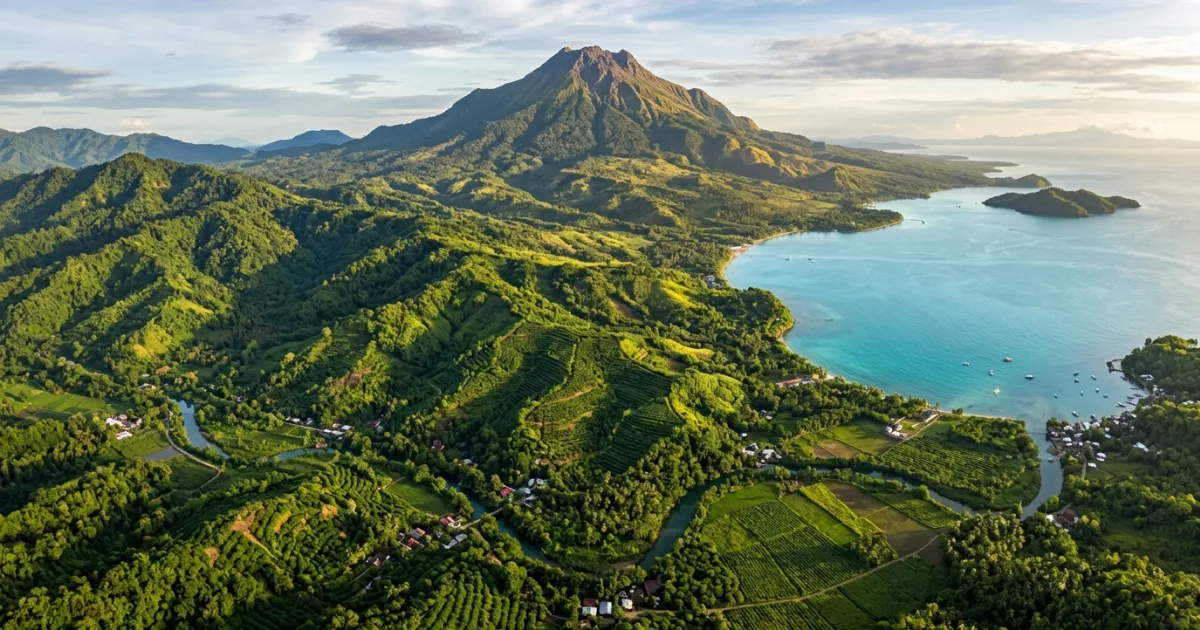
The Davao Region, designated administratively as Region XI in the Philippines, covers five diverse provinces: Davao de Oro, Davao del Norte, Davao del Sur, Davao Occidental, and Davao Oriental, wrapping around the deep waters of the Davao Gulf. The area is anchored economically and culturally by Davao City, one of the largest cities in the world by land area. This geographic footprint allows for dramatic elevation shifts, ascending from coastal barrier reefs to the 2,954-meter summit of Mount Apo, the highest mountain in the Philippine archipelago.
Ecologically, the region represents one of the country's most vital biodiversity strongholds. Pristine cloud forests host the Philippine Eagle Foundation, an internationally acclaimed sanctuary dedicated to saving the critically endangered national raptor. Beyond wildlife conservation, the region is recognized as the agricultural powerhouse of southern Mindanao, supplying the nation with export-grade bananas, high-grade robusta and arabica coffee, single-origin cacao, and a famous bounty of tropical fruits including durian and pomelo. For travelers, this geography yields rewarding journeys combining deep mountain trekking, cacao estate tours, and Pacific coastal escapes.
Reasons to Visit
- Mount Apo National Park: Summit the highest volcanic peak in the Philippines across ancient mossy forests, boulder trails, and sulfur vents.
- Philippine Eagle Center: Observe majestic raptors and endemic wildlife within a dedicated forest conservation sanctuary in Malagos.
- Samal Island & Talikud: Bask on white sand beaches, dive sunken cargo shipwrecks, and visit the massive bat colony of Monfort Cave.
- Mati's Pacific Coastline: Catch Pacific swells at Dahican Beach, famous for surf breaks, skimboarding culture, and nesting sea turtles.
- Cacao & Fruit Agritourism: Taste award-winning artisanal chocolates and sample exotic fruits straight from highland plantations.
Things to Avoid
- Do not smoke or vape in public areas; Davao City strictly enforces an anti-smoking ordinance with on-the-spot monetary fines.
- Avoid bringing strong-smelling durian fruit into hotel rooms, taxis, or commercial flights where it is universally banned.
- Do not embark on backcountry hiking routes near Mount Apo without registered indigenous guides and official DENR clearance.
- Avoid touching or disturbing marine wildlife, coral reefs, and nesting turtles along the shores of Dahican Beach and Talikud Island.
- Do not skip highway security checkpoints; always have photo identification ready and cooperate courteously with standard vehicle inspections.
Local Transportation Tips
Urban transit in Davao City and regional provincial capitals relies primarily on clean metered taxis and traditional route-based passenger jeepneys. For shorter point-to-point hops in smaller coastal towns and Samal Island, motorized tricycles and motorcycle taxis ('habal-habal') operate everywhere at negotiable, modest fares. Traveling across provinces is straightforward via large bus operators like Mindanao Star and Bachelor Express, which run frequent, air-conditioned routes between Davao Overland Transport Terminal (Ecoland), Digos, Tagum, and Mati. Reaching Samal Island is achieved via regular roll-on/roll-off (RoRo) passenger ferries departing from Sasa Wharf.
Travel Etiquette
- Always respect local ordinances; Davao maintains strict policies regarding nighttime public alcohol consumption and littering.
- Dress modestly and seek permission from tribal elders before photographing indigenous Lumad communities during cultural events.
- Gently nod or say 'Salamat' to service workers, drivers, and market vendors; polite hospitality is deeply valued across Mindanao.
- Remove your footwear when entering traditional homes or designated eco-lodge resting huts.
Recommended Age Group
The Davao Region offers varied infrastructure suitable for active adventurers and families, though mountainous interiors require physical stamina.
- Babies (0-2 years): Neutral. Davao City hotels provide standard nursery comforts, but bumpy inter-provincial roads and tropical humidity present logistical challenges.
- Kids (3-12 years): Recommended. Educational visits to the Philippine Eagle Center, Malagos Chocolate Spa, and gentle beach coves on Samal Island offer engaging, family-friendly experiences.
- Teens (13-19 years): Recommended. Thrilling activities like skimboarding in Mati, water park rafting, and beginner trekking trails provide high excitement.
- Adults (20-64 years): Recommended. Excellent opportunities for summit trekking, eco-resort escapes, coastal scuba diving, and deep culinary exploration.
- Seniors (65+ years): Neutral. Urban areas and curated garden resorts are comfortable, but remote nature reserves involve uneven terrain and limited handrails.
Accessibility Level: Medium
- Modern shopping centers and major international chain hotels in Davao City feature step-free ramps and ADA-compliant elevators.
- Public transportation, including jeepneys, tricycles, and ferry gangways, lacks wheelchair access and requires physical stepping assistance.
- Paved pathways are available at the Philippine Eagle Center and Malagos Garden Resort, though some sections feature exposed tree roots and gravel.
- Adventure locations, such as Mount Apo trailheads and remote Mati beaches, are rugged and not suitable for mobility-restricted travelers.
Did You Know?
Mount Apo in the Davao Region is technically a dormant stratovolcano whose name translates to 'Grandfather of all Mountains' in local indigenous dialects, featuring active geothermal sulfur vents near its pinnacle crater.
Cool Statistics
- Home to Mount Apo, the highest elevation in the Philippines at 2,954 meters (9,692 feet).
- The region accounts for over 70% of the entire cacao production in the Philippines.
- Monfort Bat Cave on Samal Island holds the Guinness World Record for the largest single colony of Geoffroy's rousette fruit bats.






Buy a compatible power adapter for your trip