Disclosure: This site contains affiliate links. We may earn a commission if you make a purchase, at no extra cost to you.
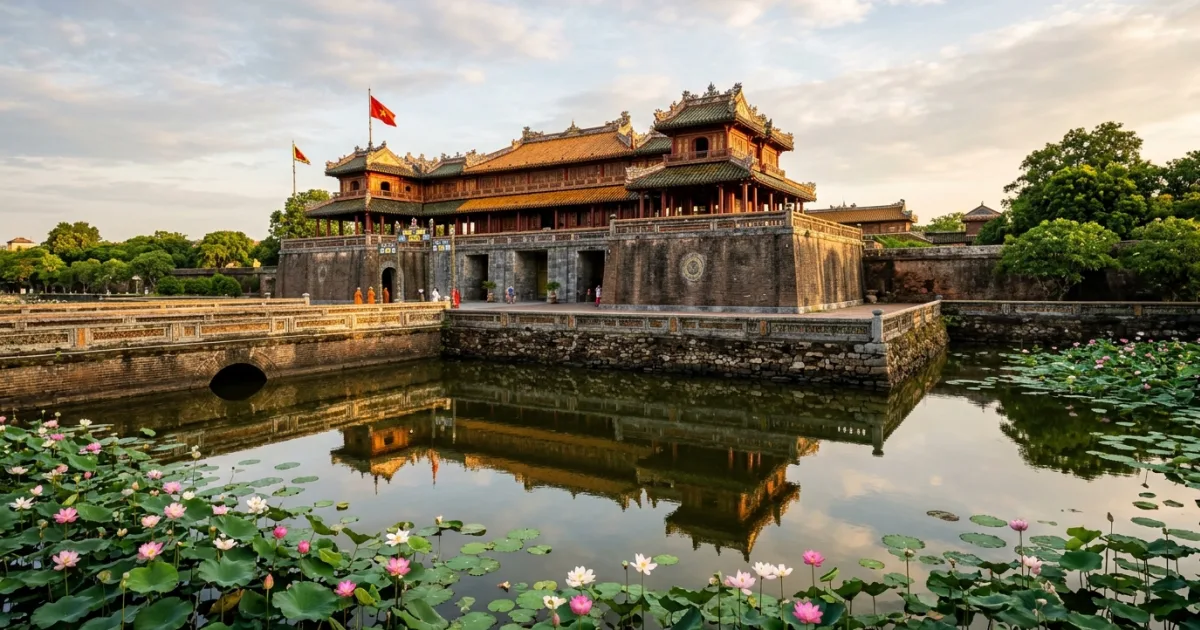
Ngo Mon Gate entrance to the Imperial Citadel of Hue with moat and lotus flowers

Basic Info

COUNTRY & Region

Vietnam,
Asia

ACCESSIBILITY LEVEL​

  • High: Widely accessible with good facilities for disabilities.
  • Medium: Some accessible options, but limitations exist.
  • Low: Limited accessibility; many barriers for disabilities.
Medium

LOCAL CURRENCY​

Vietnamese Dong (VND)

Price Level

Low – budget‑friendly basics

Medium – moderate mid‑range costs

High – pricey lodging, dining & transport

Low

SAFETY LEVEL

5 shields = Excellent – very low crime or conflict.

4 shields = Safe – low risk, routine care.

3 shields = Relatively safe – use normal street smarts.

2 shields = Use caution – higher crime or periodic unrest.

1 shields = Avoid – active conflict or extreme danger.

Scores are derived from multi-year peace, homicide and security indices blended into a single 1-to-5 scale.

Recommended Duration

1-7 days

Hue Overview & Key Highlights

Hue served as the imperial capital of Vietnam under the Nguyen Dynasty from 1802 to 1945. Located along the banks of the Perfume River in Central Vietnam, the city remains the cultural and spiritual anchor of the country. Its sprawling Imperial City, surrounded by imposing moats and stone ramparts, contains the Forbidden Purple City, ornate royal reception halls, and ancestral temples. Beyond the urban core, elaborate royal tombs such as those of Khai Dinh, Tu Duc, and Minh Mang lie scattered across the forested hills, reflecting a synthesis of traditional Vietnamese geomancy, Confucian design, and European stylistic influences. In addition to its monumental architecture, Hue is renowned for its refined culinary arts, which include both complex royal banquet dishes and distinct fiery street foods. The city operates at a noticeably gentler pace than Hanoi or Ho Chi Minh City, making it ideal for contemplative exploration via bicycle, river cruise, or walking tour. Ancient Buddhist pagodas, such as the seven-story Thien Mu Pagoda, stand alongside tranquil garden houses and craft villages specializing in bronze casting and conical hats. Hue offers a deep encounter with traditional Vietnamese craftsmanship, courtly history, and regional spirituality.

Hue Travel Guide: Logistics & In-Depth Tips

Hue functions as an open-air museum of late pre-modern Vietnamese history. Designated a UNESCO World Heritage site in 1993, the Complex of Hue Monuments encompasses administrative palaces, defensive citadels, private royal chambers, and elaborate dynastic mausoleums. The city's geography is defined by the Perfume River (Song Huong), which bisects the modern southern districts from the northern historic quarter enclosed by the Vauban-style fortress walls.

Hue's identity is equally shaped by its spiritual heritage and architectural preservation. Home to over 300 active pagodas and temples, Hue remains the preeminent center of Vietnamese Zen Buddhism. Traditional garden houses (nha vuon) preserve aristocratic domestic architecture with geomantically aligned courtyards, wooden pillars, and fruit orchards. Today, Hue blends historic preservation with a burgeoning contemporary arts scene, making it a vital stop for culturally minded travelers.

Reasons to Visit

  • UNESCO World Heritage sites including the grand Imperial Citadel and the Forbidden Purple City.
  • Magnificent dynastic tombs featuring distinct architectural styles, from the classic Chinese-Vietnamese symmetry of Minh Mang to the European-gothic mosaic extravagance of Khai Dinh.
  • World-renowned culinary traditions, ranging from aristocratic imperial recipes to fiery street food staples like Bun Bo Hue and savory rice cakes.
  • Serene river culture with peaceful boat journeys along the Perfume River visiting sacred landmarks like Thien Mu Pagoda.
  • Rich cultural crafts such as bronze casting at Phuong Duc, paper flower making in Thanh Tien, and traditional conical hat production.

Things to Avoid

  • Do not enter temples or sacred ancestral halls with bare shoulders or exposed knees; staff will deny entry or require a cover-up.
  • Avoid accepting cyclo rides without explicitly confirming whether the negotiated price is per person or for the entire group, and whether it covers a one-way trip or round trip.
  • Do not plan extensive outdoor walking tours during midday hours between May and August due to extreme heat and humidity.
  • Avoid swimming in the Perfume River due to underwater currents and commercial boat traffic.

Local Transportation Tips

Hue's historic center is flat and easily navigated on foot or by rental bicycle. For longer journeys to royal tombs located 5 to 12 kilometers outside the city center, metered taxis (such as Mai Linh or Taxi Vinasun) and app-based transport (Grab) offer reliable service. Traditional cyclos provide a leisurely way to tour the Citadel perimeter. Dragon boats depart from Toa Kham pier for scenic river transport to Thien Mu Pagoda and outlying sites.

Travel Etiquette

  • Remove shoes when entering temple interiors, traditional private homes, and select heritage pagodas.
  • Use both hands when giving or receiving money, tickets, or business cards as a sign of respect.
  • Maintain quiet composure and avoid loud conversation when exploring active places of worship and royal mausoleums.
  • Always ask permission before taking close-up portraits of monks, artisans, or market vendors.

Recommended Age Group

Hue welcomes travelers of all generations, though historic sites require significant walking across uneven surfaces.

  • Babies (0-2 years): Neutral. Cobblestone paths, high door sills in palaces, and steps at royal tombs make navigating with strollers difficult; baby carriers are recommended.
  • Kids (3-12 years): Recommended. Children enjoy dragon boat rides on the Perfume River, spacious citadel gardens, and colorful royal architecture.
  • Teens (13-19 years): Recommended. Excellent destination for teenagers interested in photography, military history, hands-on craft workshops, and cycling.
  • Adults (20-64 years): Recommended. Outstanding destination for cultural exploration, culinary discoveries, and historical appreciation.
  • Seniors (65+ years): Recommended. The calm pace of life and rich heritage appeal strongly to mature travelers, though those with mobility challenges should take care with steep tomb stairs.

Accessibility Level: Medium

  • The Imperial Citadel features ramped access to major courtyards, but high traditional thresholds (wooden door sills) and cobblestone walkways present barriers for standard wheelchairs.
  • Royal tombs such as Khai Dinh feature numerous steep staircases and lack elevator or ramp infrastructure.
  • Pavements in modern Hue are frequently occupied by parked motorbikes, requiring pedestrians to walk along street edges.
  • Private accessible transport with specialized ramps can be arranged via major regional tour operators based in Da Nang or Hue.

Did You Know?

During the 1968 Tet Offensive, the Battle of Hue was one of the longest and bloodiest engagements of the Vietnam War. Major sections of the Citadel and the Forbidden Purple City were heavily damaged by artillery and airstrikes, prompting decades of meticulous international restoration work that continues to this day.

Cool Statistics

  • 143 years: The duration Hue served as the capital of unified Vietnam under the Nguyen Dynasty (1802–1945).
  • 13: The total number of Nguyen Dynasty emperors who ruled from the Imperial City.
  • 10 kilometers: The total perimeter of the thick stone walls enclosing the outer Citadel fortress.

Address:

Hue, Vietnam

Find Nearby Accommodations

Electricity

220-240V, 
50Hz

Plug Type

Type A (Flat blade), Type C (Round pin), Type F (Two round pins with earth clips)
Plug types
Click To View Plug Types
Hue is part of our
Solo Female Friendly collection

Activities To Do In Hue

Best Time To Visit Hue

Hue experiences a distinct two-season tropical climate featuring a hot, dry period and an intense rainy season influenced by the northeast monsoon.

  • February to April: Ideal travel window with pleasant temperatures ranging from 20°C to 28°C, minimal rainfall, and clear skies suitable for sightseeing.
  • May to August: Hot and dry months with temperatures frequently exceeding 35°C; outdoor exploration is best conducted during early mornings and late afternoons.
  • September to January: The monsoon season brings heavy, persistent rains and occasional flooding along the Perfume River; November typically records the highest rainfall.

Average Temperatures Per Month

Average monthly temperaturesMonthly source values, with Celsius and Fahrenheit equivalents in the following data table.15°59°20°68°25°77°30°86°35°95°JanJan: 21°C / 70°FFebFeb: 22°C / 72°FMarMar: 25°C / 77°FAprApr: 27°C / 81°FMayMay: 29°C / 84°FJunJun: 30°C / 86°FJulJul: 30°C / 86°FAugAug: 30°C / 86°FSepSep: 28°C / 82°FOctOct: 25°C / 77°FNovNov: 24°C / 75°FDecDec: 21°C / 70°F
View temperature data
Average monthly temperatures
Month°C°F
Jan2170
Feb2272
Mar2577
Apr2781
May2984
Jun3086
Jul3086
Aug3086
Sep2882
Oct2577
Nov2475
Dec2170

Remember to check the weather forecast a few days before the trip and before heading to the airport.

Safety Level

5 shields = Excellent – very low crime or conflict.

4 shields = Safe – low risk, routine care.

3 shields = Relatively safe – use normal street smarts.

2 shields = Use caution – higher crime or periodic unrest.

1 shields = Avoid – active conflict or extreme danger.

Scores are derived from multi-year peace, homicide and security indices blended into a single 1-to-5 scale.

Hue is exceptionally safe with low violent crime rates. Exercise standard vigilance regarding personal belongings in crowded areas such as Dong Ba Market to prevent opportunistic pickpocketing. When hiring cyclos or non-metered taxis, negotiate and agree firmly on the full fare prior to departure. Take care crossing busy roundabouts and roads, as motorcycle traffic moves fluidly without stopping completely for pedestrians.

The rating is based on multi-year peace, crime, and security indices. Before you go, always verify current conditions through official government travel advisories.

Emergency Numbers

Police: 113
Ambulance: 115

No internet needed • Includes local translations • Free for TravelingWiz readers

Spoken Languages

Vietnamese (Central dialect); basic English is widely spoken in hotels, restaurants, and key tourist attractions.
Travel Booking Partner - TravelingWiz

Learn The Language

  • Xin chào – Hello
  • Cảm ơn – Thank you
  • Làm ơn – Please
  • Bao nhiêu tiền? – How much is this?
  • Cái này ngon quá – This is delicious
  • Xin lỗi – Excuse me / Sorry
  • Nhà vệ sinh ở đâu? – Where is the restroom?
  • Tạm biệt – Goodbye

Trip Cost & Budgeting for Hue, 2026

Everything you need to know about money while traveling
Is Hue expensive for tourists in 2026? No, Hue remains one of the most budget-friendly cultural destinations in Southeast Asia. Based on Human Verified prices, you can expect to pay around 25,000 VND for a coffee, 20,000 VND for a local Huda beer, and 150,000 VND for a main meal at a mid-range restaurant. Daily costs for accommodation, food, and transport are very affordable. Use the data table below to calculate your specific daily budget based on your travel style.

LOCAL CURRENCY​:

Vietnamese Dong (VND)

Price Level:

Low – budget‑friendly basics

Medium – moderate mid‑range costs

High – pricey lodging, dining & transport

Low

Cards Vs. Cash

Cash is essential in Hue for markets, street stalls, and taxis, while mid-range hotels and restaurants accept credit cards.

How Much Cash to Carry (on you)

Per person, per day – pocket cash for small purchases.

Local: 147500
Vietnamese Dong (VND)
≈ 6 USD

Average Daily Costs (per person)

Full daily spend estimation (accommodation, food, transportation, attractions).

Travel Style
Vietnamese Dong (VND)
≈ USD ($)
Budget
811250
32
Mid-range
1475000
57
Comfort
3245000
126
Note

The Prices, Daily costs, and calculator results are estimates for planning purposes only. Actual costs may vary based on season, booking timing, personal spending habits, and currency fluctuations. TravelingWiz cannot be held responsible for discrepancies between these estimates and your final trip expenses.

Best Value Tips

  • • Rent a scooter or use ride-hailing apps like Grab to avoid inflated taxi fares around the Citadel and royal tombs.
  • • Try iconic local street dishes like Bun Bo Hue and Banh Ram It at neighborhood eateries for a fraction of restaurant prices.
  • • Purchase combo entry tickets for the Imperial City and major royal tombs to save money on individual admission fees.
  • • Withdraw larger sums from low-fee local ATMs like VPBank or TPBank to minimize international transaction fees.

Tours & Tickets

Explore tours, attractions, and ticket options to plan your visit.
Plan ahead

Travel Offers & Coupons

Browse travel offers and coupons from our affiliate partners.
Affiliate partner offers

What To Pack

  • Breathable, modest clothing (lightweight trousers and shirts covering shoulders and knees) for visiting sacred pagodas and the Imperial Citadel.
  • Slip-on walking shoes that are easy to remove at temple entrances.
  • Compact umbrella and waterproof poncho, particularly if traveling between September and January.
  • Sun protection including high-SPF sunscreen, polarized sunglasses, and a wide-brimmed hat.
  • Mosquito repellent with DEET for evening strolls along the Perfume River and exploring rural royal tombs.
  • Universal travel adapter compatible with round and flat two-pin sockets.
Only the good stuff!
Browse recommended travel gear
Check out our free packing list tool

Recommended Itineraries for Traveling to Hue

Take your itinerary with you

Choose a ready-made itinerary, plan your own trip, and keep TravelingWiz by your side while you travel.

Get the TravelingWiz app

Food & Drink Highlights

Local Food Overview

Hue cuisine is distinguished by its royal heritage, balanced use of chili heat, and intricate visual presentation. The imperial court demanded complex dishes served in miniature, aesthetic portions, giving rise to specialty rice cakes like Banh Beo, Banh Nam, and Banh Bot Loc. At the same time, Hue is home to vibrant folk dishes characterized by bold lemongrass broths, fermented shrimp paste (mam ruoc), and aromatic fresh herbs. Vegetarian dining is also deeply rooted here due to the city's strong Buddhist monastic culture.

Must Try Dish

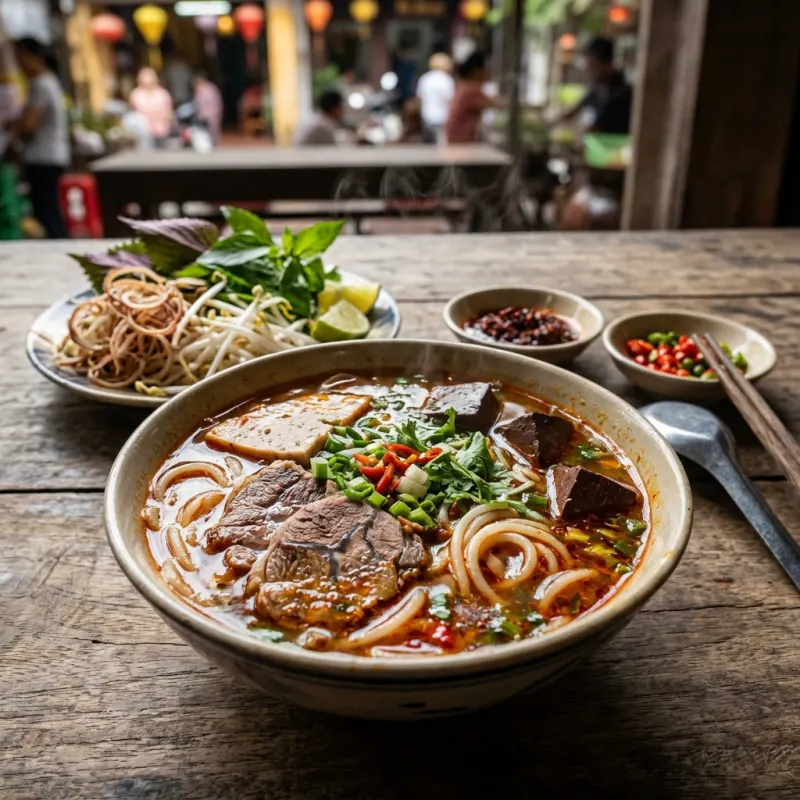
Bun Bo Hue – A deeply savory and spicy beef noodle soup featuring thick round rice noodles, tender beef shank, pork knuckle, and congealed blood cubes in a broth rich with simmered beef bones, lemongrass, and fermented shrimp paste. Served with shredded banana blossoms, mint, bean sprouts, and fresh lime.
Authentic bowl of Bun Bo Hue spicy noodle soup with beef and herbs

Maya’s Final Checklist for Hue

Logistics shouldn’t be the focus of your trip—the experience should. I’ve hand-vetted these essential partners to ensure your arrival, stay, and exploration are as smooth as an Athenian breeze.

Maya, the human travel expert at TravelingWiz, offering curated, non-AI expertise

Where to Stay

Compare accommodation options and choose a stay that suits your plans and budget.

Air Travel

Compare flight options and find a route that fits your plans.

Local Guides

Connect with local guides for personalized help planning and exploring.

Travel Protection

The “Engineer’s” rule: always have a backup. Secure your trip with a plan that covers every “what if” and unexpected change.

Car Rentals

Compare rental options and choose a car that suits your trip.

Visa Information

Don’t let paperwork slow you down. Get expert assistance with your application to ensure all your entry documents are in order.

FAQs

Two full days provide adequate time to tour the Imperial Citadel, three major royal tombs, Thien Mu Pagoda, and sample the regional cuisine. A third day allows for excursions to Bach Ma National Park or the DMZ.
The most scenic route is crossing the Hai Van Pass via private car, motorbike, or the tourist railway line, which hugs the coastal cliffs and offers dramatic views over the ocean.
No, the royal tombs are spread over several kilometers south of the city along the Perfume River. Visiting them requires hiring a car, booking an organized tour, riding a scooter, or taking a river boat.
Yes, modest attire covering shoulders and knees is strictly required inside the working temples, ancestral shrines of the Citadel, and royal tomb complexes.

Your Insights Matter

TravelingWiz grows through the stories of our community. If you’ve recently explored ,Hue share your tips and stories to help us perfect our guides for the next traveler.

Where should we send your offline card?

We hate spam just as much as you do

newsletter_consent *