Ha Giang sits at Vietnam's northernmost boundary, bordered by Yunnan and Guangxi provinces in China. Characterized by dramatic vertical topography, the province encompasses the Dong Van Karst Plateau, recognized by UNESCO for its rare geological formations, deep canyons, and prehistoric marine fossils dating back hundreds of millions of years. The provincial landscape shifts dynamically from lush bamboo forests in the lowlands to jagged, slate-grey limestone crags in the high-altitude north.
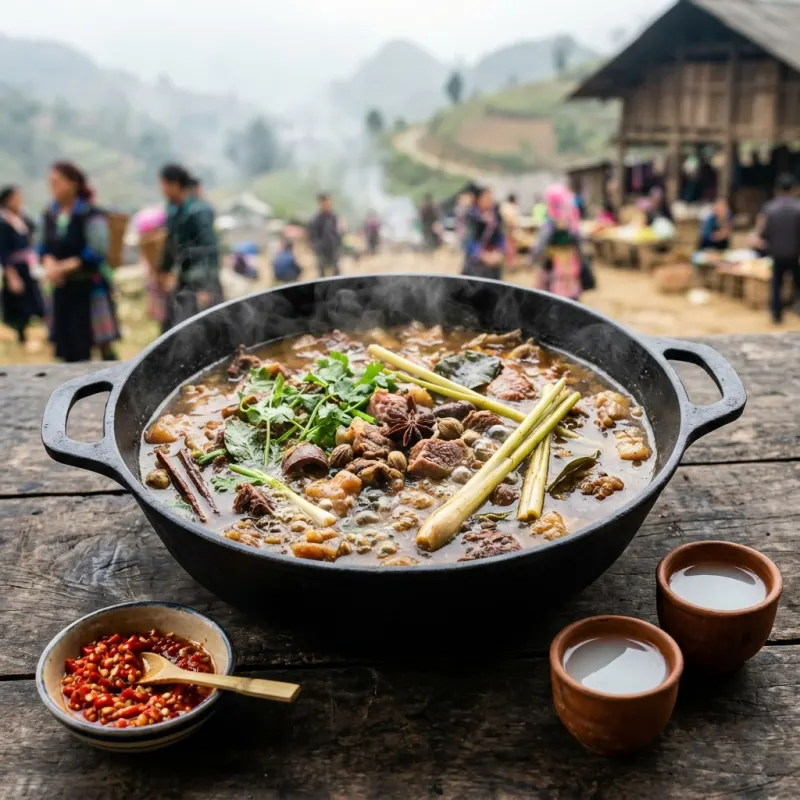
The region remains the ancestral home of numerous ethnic minority populations who cultivate corn, buckwheat, and rice on sheer stone hillsides. Towns such as Dong Van, Meo Vac, and Yen Minh serve as bustling communal gathering points where hill tribe traders congregate for weekly Sunday markets dressed in bright traditional textiles. As modern paving has connected formerly isolated mountain passes, Ha Giang has evolved into a global bucket-list overland destination without forfeiting its unvarnished rural identity.
Reasons to Visit
- Traverse Ma Pi Leng Pass, one of Vietnam's legendary mountain passes offering dizzying views over the Nho Que River.
- Experience genuine highland hospitality and hearty home cooking through community-based ethnic minority homestays.
- Explore Dong Van Karst Plateau UNESCO Global Geopark's striking limestone forest formations and geological wonders.
- Visit vibrant weekend ethnic markets in Meo Vac and Dong Van to observe rich local trade traditions and handwoven textiles.
- Cruise by wooden boat or kayak along the emerald-green waters slicing through the vertical walls of Tu San Canyon.
Things to Avoid
- Avoid driving motorbikes after dusk; mountain routes lack safety barriers, street lighting, and clear road markings.
- Do not hand out candy or cash to children along the road, as it fuels school absenteeism and roadside panhandling.
- Avoid booking automatic mopeds with tiny wheels and weak engine braking for steep downhill pass descents.
- Do not photograph local ethnic minority villagers or sacred village altars without asking for prior consent.
Local Transportation Tips
Overnight sleeper buses run regularly from Hanoi's My Dinh or Giap Bat stations to Ha Giang City, taking approximately six to seven hours. Once in Ha Giang City, the primary mode of travel is by motorbike or private four-wheel-drive car. Travelers with motorcycle experience can rent 110cc to 125cc semi-automatic bikes from reputable agencies. Alternatively, booking an 'Easy Rider'—a vetted local driver who steers while you ride on the back—remains the most popular and safest way to experience the high mountain passes.
Travel Etiquette
- Remove shoes before stepping into the main living quarters of traditional stilt and rammed-earth homestays.
- Dress modestly with covered shoulders and knees when visiting rural tribal hamlets, historic sites, and communal halls.
- Accept food and drink offered by hosts using both hands to show respect during communal family dinners.
- Never touch someone on the head or point your feet directly at elders or family altars inside village dwellings.
Recommended Age Group
Ha Giang is a physically demanding highland region best suited for adventurous travelers comfortable with rugged road travel and basic amenities.
- Babies (0-2 years): Not Recommended. Extreme road elevation, long transit hours, and remote access to specialized pediatric emergency care make it unsuited for infants.
- Kids (3-12 years): Neutral. Viable only via private chauffeur-driven vehicle tours with flexible pacing, though mountain road travel can cause severe car sickness.
- Teens (13-19 years): Recommended. Thrilling scenery, outdoor trekking, and riding pillion behind experienced Easy Riders offer remarkable adventure experiences.
- Adults (20-64 years): Recommended. Perfect demographic for self-guided motorcycling, hiking limestone ridges, and cultural homestay immersion.
- Seniors (65+ years): Neutral. Older travelers who book private comfortable SUVs can safely enjoy the dramatic scenery, though winding roads and basic homestay bedding require moderate physical resilience.
Accessibility Level: Medium
- Wheelchair accessibility is virtually nonexistent due to steep natural terrain, gravel pathways, and multi-tier stilt homes.
- Public buses and regional transport vans do not possess hydraulic wheelchair lifts or specialized restraint systems.
- Key lookout spots along Ma Pi Leng Pass feature uneven natural rock staircases lacking handrails.
- Accessible travel is realistically restricted to viewing the landscapes through private chartered SUVs along paved arterial roads.
Did You Know?
The famous Ma Pi Leng Pass road—known locally as the 'Happiness Road'—was hand-carved out of sheer vertical limestone cliffs between 1959 and 1965 by tens of thousands of young volunteers and ethnic minority workers, many of whom hung from ropes along sheer drop-offs to chisel the roadbed.
Cool Statistics
- The Dong Van Karst Plateau sits at an average elevation ranging between 1,000 and 1,600 meters above sea level.
- Tu San Canyon reaches depths of up to 800 meters, making it one of the deepest river canyons in Southeast Asia.
- Ha Giang province encompasses 22 distinct ethnic minority groups, comprising nearly 90% of the total provincial population.






Buy a compatible power adapter for your trip