Disclosure: This site contains affiliate links. We may earn a commission if you make a purchase, at no extra cost to you.

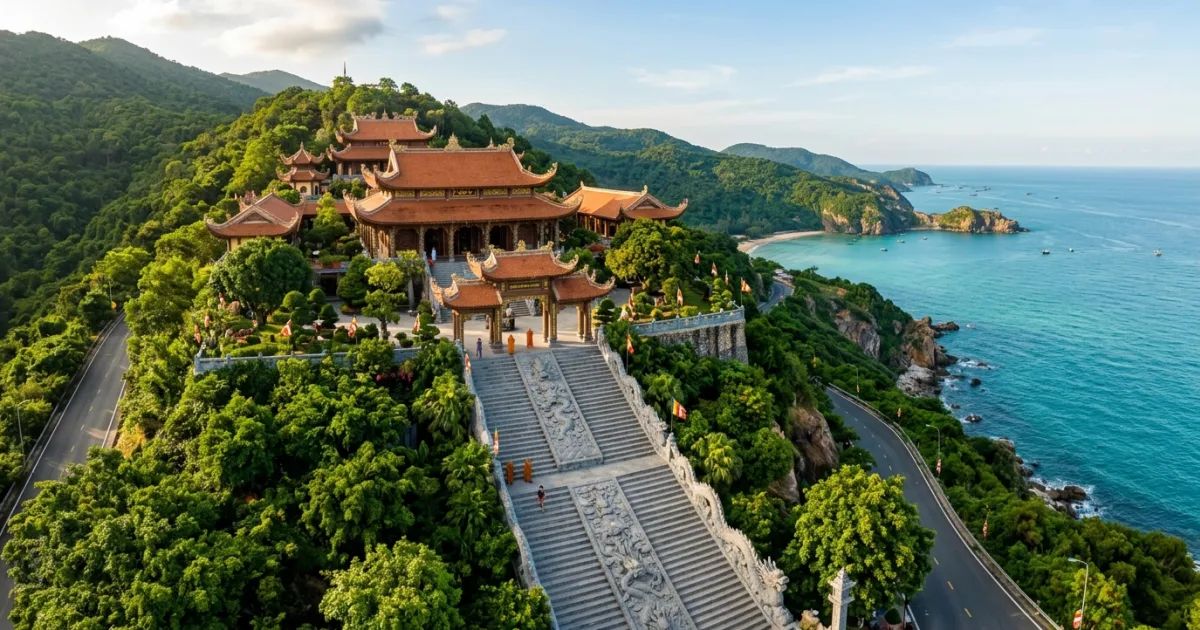
Panoramic view of Hu Quo pagoda overlooking the turquoise ocean in Southern Vietnam

Hu Quo Overview & Key Highlights

Hu Quo, widely known as Ho Quoc Pagoda (Chùa Hộ Quốc) or Truc Lam Ho Quoc Zen Monastery, is the largest Buddhist temple complex situated on the southeastern coast of Phu Quoc in Southern Vietnam. Inaugurated in 2012 along the forested slopes of Mount Dam, the sanctuary faces directly out across the Gulf of Thailand, seamlessly integrating Mahayana and Zen architectural principles with sweeping maritime vistas. Its towering carved dragon staircases, serene jade Buddha statues, and ornate carved timber pavilions create an atmosphere of quiet reverence and architectural majesty. Visitors ascend wide stone staircases flanked by imperial stone carvings to access the elevated main sanctuary, which offers unobstructed views over the azure sea. The monastery grounds encompass a massive bell tower, bronze-cast spiritual artifacts, manicured bonsai gardens, and peaceful contemplation courtyards. Accessible via scenic coastal highways south of Duong Dong, Hu Quo functions as both an active pilgrimage site for local devotees and a peaceful retreat for international travelers exploring the natural beauty of southern Kien Giang province.

Hu Quo Travel Guide: Logistics & In-Depth Tips

Hu Quo, also known as Truc Lam Ho Quoc Zen Monastery, stands on the eastern foothills of Phu Quoc Island overlooking the Gulf of Thailand. Built in 2012 with classic Ly and Tran dynasty architectural aesthetics, the temple complex covers over 110 hectares of preserved coastal forest. The sanctuary was designed deliberately according to classical geomancy (feng shui), nestled against lush green mountains while opening directly onto the tranquil sea.

The monastery grounds feature a towering entrance gate (Tam Quan), intricate bas-relief dragon staircases sculpted from green marble, and an expansive courtyard centered around an enormous monolith of jade representing the Buddha. The central shrine houses solemn bronze statues and carved cedar pillars sourced specifically for their enduring resilience against maritime humidity. Hu Quo offers visitors an unparalleled setting where peaceful meditation converges with spectacular coastal geography.

Reasons to Visit

  • Witness breathtaking panoramic views of the Gulf of Thailand from elevated temple courtyards.
  • Admire masterful Buddhist wood carving and monumental green marble dragon balustrades.
  • Enjoy a serene spiritual retreat surrounded by natural national park forest and sea breezes.
  • Experience an authentic glimpse into contemporary Vietnamese Truc Lam Zen Buddhist monastic life.
  • Completely free admission make it an accessible highlight for all travelers to Southern Vietnam.

Things to Avoid

  • Avoid wearing sleeveless tops, short skirts, or beachwear inside the prayer halls; temple guards will enforce modesty guidelines.
  • Do not touch sacred religious relics, statues, or monastic prayer drums.
  • Avoid visiting during the midday sun between 11:30 AM and 2:00 PM when the stone courtyards become uncomfortably hot.
  • Do not drive recklessly on the coastal access road, as stray gravel and steep turns require steady handling.

Local Transportation Tips

Reaching Hu Quo is most conveniently accomplished by renting an automatic motorbike or hiring a private taxi from Duong Dong or An Thoi. The road leading to the pagoda is fully paved and clearly signposted along the eastern coast of Phu Quoc. Free parking is available for both scooters and vehicles at the base of the monastery entrance.

Travel Etiquette

  • Remove your shoes and hat prior to stepping inside the main sanctum or shrine halls.
  • Keep your voice low and silent your mobile phone to preserve monastic peace.
  • Walk clockwise around stupas and shrines in accordance with Buddhist tradition.
  • Ask permission before photographing resident monks or local worshipers engaged in prayer.

Recommended Age Group

Hu Quo accommodates a wide range of visitors, though mobility across its stepped terraces requires careful pacing for certain ages.

  • Babies (0-2 years): Neutral. The extensive outdoor staircases and open terraces make strollers impractical, requiring a baby carrier.
  • Kids (3-12 years): Recommended. Children will marvel at the giant dragon sculptures, ocean views, and wide open marble courtyards.
  • Teens (13-19 years): Recommended. Outstanding photography opportunities, coastal road trip scenery, and cultural immersion appeal strongly to teenagers.
  • Adults (20-64 years): Recommended. Perfect balance of spiritual heritage, architectural exploration, and scenic coastal relaxation.
  • Seniors (65+ years): Recommended. While climbing the full dragon staircase requires stamina, ramps and gentle side paths allow seniors to enjoy the lower courtyards and sea vistas comfortably.

Accessibility Level: Medium

  • Paved ramps provide access from the parking area to the lower terraces and gift shops.
  • The upper sanctuary requires ascending steep stone staircases; visitors with limited mobility can access mid-level viewpoints via side vehicular ramps with prior arrangement.
  • Wide, flat stone courtyards provide stable footing throughout the primary grounds.
  • Restrooms with ground-level access are available near the main parking entrance.

Did You Know?

Despite its classic ancient appearance reminiscent of medieval Vietnamese imperial monasteries, Hu Quo was completed in December 2012 at an investment cost of over 100 billion VND, constructed entirely from natural stone, ironwood, and traditional terracotta roof tiles.

Cool Statistics

  • 110 hectares: total area encompassed by the monastery grounds and protected forest backdrop.
  • 70: number of stone steps along the central dragon stairway leading to the main shrine.
  • 2012: year the sanctuary was officially consecrated and opened to pilgrims.
  • 0 VND: official entry fee to explore the entire temple complex.

Address:

Duong To, Phu Quoc, Kien Giang, Vietnam

Find Nearby Accommodations

Basic Info

address icon

COUNTRY & Region

Vietnam,
Asia

ACCESSIBILITY LEVEL​

Medium
Currency icon

LOCAL CURRENCY​

Vietnamese Dong (VND)
Price level icon
Low
Safety Level icon

SAFETY LEVEL

Duration icon

Recommended Duration

• 1-2 hours
• 3-5 hours (Half a day)

Electricity

electricity icon

Electricity

220-240V, 
50Hz
Plug Socket icon

Plug Type

• Type A (Flat blade)
• Type C (Round pin)
• Type G (Three rectangular pins in a triangular pattern)
Plug types
Click To View Plug Types
Hu Quo is part of our
Slow Travel & Nature collection

Things To Do In Hu Quo

Total: 2

Activities To Do In Hu Quo

Best Time To Visit Hu Quo

Hu Quo enjoys a tropical monsoon climate characterized by distinct dry and wet seasons, with calm seas and sunny skies prevailing for most of the high-travel period.

  • November to April (Dry Season): The ideal window to visit, offering clear skies, calm waters, lower humidity, and breathtaking ocean panoramas from the temple terraces.
  • May to October (Rainy Season): Expect regular tropical downpours and higher ocean swells, though the mountain scenery turns intensely lush and temple crowds drop significantly.

Average Temperatures Per Month

Remember to check the weather forecast a few days before the trip and before heading to the airport.

Safety Level icon

Safety Level

Hu Quo is extremely peaceful and safe with zero violent crime reported on sanctuary grounds. Exercise standard care on the winding coastal access road, especially if operating a scooter during sudden rain showers. Watch your footing on polished granite steps and tiled terraces when wet, and always respect the posted sanctuary rules regarding photography and quiet conduct.

The rating is based on multi-year peace, crime, and security indices. Before you go, always verify current conditions through official government travel advisories.

Emergency Numbers

Police: 113
Ambulance: 115

No internet needed • Includes local translations • Free for TravelingWiz readers

Spoken Languages

Vietnamese (official), with basic English spoken by tourism staff and drivers across Phu Quoc.

Learn The Language

  • Xin chào – Hello
  • Cảm ơn – Thank you
  • Làm ơn – Please
  • Bao nhiêu tiền? – How much is it?
  • Chùa ở đâu? – Where is the pagoda?
  • Vâng / Dạ – Yes
  • Không – No
  • Tạm biệt – Goodbye
Travel Booking Partner - TravelingWiz

Trip Cost & Budgeting for Hu Quo, 2026

Everything you need to know about money while traveling
Hu Quo is an exceptionally budget-friendly cultural destination as entry to the monastery grounds remains completely free of charge. Travel expenses in this part of Southern Vietnam are remarkably modest, consisting primarily of private scooter rentals, taxi fares, and refreshing fresh fruit drinks. With TravelingWiz's Human Verified data, a typical traveler should expect to spend around $45 USD per day for a mid-range trip exploring the area. A fresh coconut on the coastal drive costs roughly 30,000 VND ($1.20 USD) while a hearty local bowl of seafood noodle soup costs around 60,000 VND ($2.40 USD). Click the Trip Cost Calculator button below the table to work out your personal budget for this trip.
Currency icon

LOCAL CURRENCY​:

Vietnamese Dong (VND)
Price level icon
Low
Cash in Vietnamese Dong (VND) is essential for local purchases, parking attendants, small temple donations, and coastal snack stands. Credit cards are accepted only at major resorts and tourist restaurants in Phu Quoc.

Per person, per day – pocket cash for small purchases.

Local: 500000
Vietnamese Dong (VND)
≈ 20 USD

Full daily spend estimation (accommodation, food, transportation, attractions).

Travel Style
Vietnamese Dong (VND)
≈ USD ($)
Budget
500000
20
Mid-range
1125000
45
Comfort
2750000
110

The Prices, Daily costs, and calculator results are estimates for planning purposes only. Actual costs may vary based on season, booking timing, personal spending habits, and currency fluctuations. TravelingWiz cannot be held responsible for discrepancies between these estimates and your final trip expenses.

  • Entrance to the entire Hu Quo temple complex is entirely free for both domestic and international visitors.
  • Rent an automatic scooter for roughly 150,000 VND ($6 USD) per day from your accommodation to avoid elevated private taxi fees.
  • Arrive at sunrise around 5:45 AM to witness spectacular dawn lighting over the ocean with zero crowds and no midday heat.
  • Bring your own water bottle to refill rather than purchasing single-use plastic bottles from perimeter vendors.

Pre-Order Tickets

Avoid disappointment when tickets sell out — and skip the long lines by booking online in advance. You’ll often save up to 20% too.
Save up to 20%

Travel Discounts & Coupons

Save on hotels, attractions, transport, and gear — find verified discounts for smarter travel spending.
Verified Coupons

What To Pack

  • Modest clothing covering shoulders and knees required for entering sacred temple halls.
  • Slip-on walking shoes or sandals for easy removal before stepping onto monastery thresholds.
  • Wide-brim sun hat and UV-protective sunglasses for bright coastal courtyard reflection.
  • Reef-safe sunscreen and a refillable stainless steel water bottle to stay hydrated under tropical heat.
  • Lightweight rain poncho or compact umbrella if traveling during the monsoon fringe months.
  • Insect repellent formulated for humid tropical coastal forests.
We couldn't find tips for Hu Quo.
If you got any, please share

Recommended Itineraries for Traveling to Hu Quo

We couldn't find itineraries for Hu Quo.
you can contact us for custom trip plan

Food & Drink Highlights

Local Food Overview

Phu Quoc gastronomy is world-famous for its artisan fish sauce (nuoc mam), pungent black peppercorns, and fresh seafood harvested daily from coastal waters. Surrounding Duong To and nearby fishing communities, roadside eateries and night markets offer exquisite grilled sea urchin topped with scallion oil and crushed peanuts, as well as fragrant noodle broths flavored with coastal herbs.
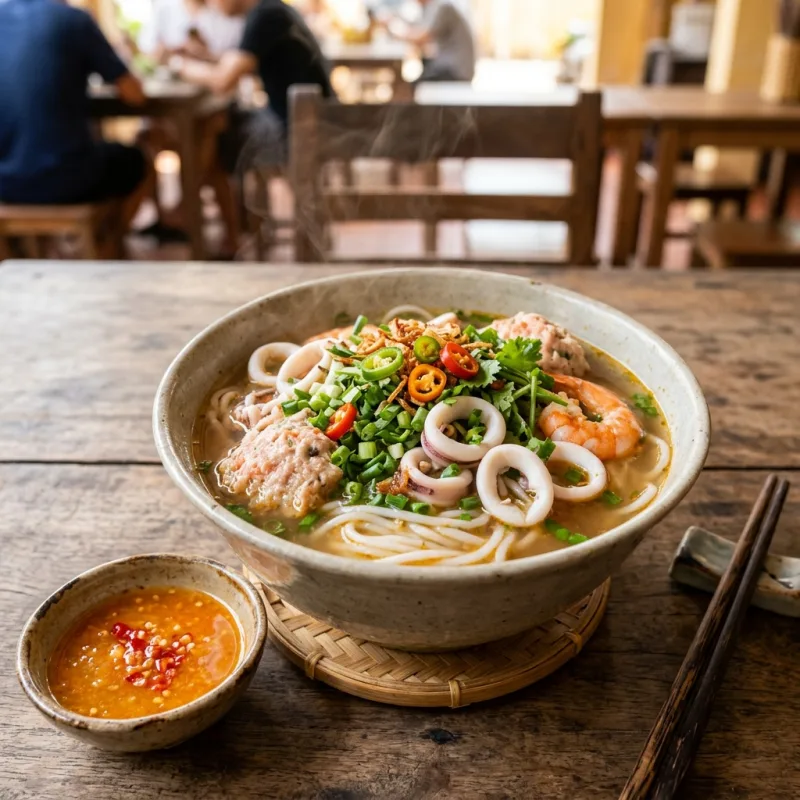
Fresh bowl of Bun Quay Phu Quoc seafood noodles with shrimp and squid

Must Try Dish

Bún Quậy Phú Quốc - A signature stir-and-whisk fresh seafood noodle soup featuring hand-pounded shrimp and fish paste swirled in boiling broth over fresh rice vermicelli, served with a customizable kumquat, chili, and salt dipping sauce.
Food Experiences Title Icon

Food
Experiences

Discover cooking classes, tastings and local food tours

No food experience found
Maya, the human travel expert at TravelingWiz, offering curated, non-AI expertise

Maya’s Final Checklist for Hu Quo

Logistics shouldn’t be the focus of your trip—the experience should. I’ve hand-vetted these essential partners to ensure your arrival, stay, and exploration are as smooth as an Athenian breeze.

Where to Stay

From boutique hotels to local apartments—compare thousands of options and find the perfect stay in the best neighborhood.

Air Travel

Getting there should be seamless. Compare the best routes and prices across top airlines to start your journey on the right note.

Local Guides

Connect with experts who know the destination best. Get personalized advice and insider tips to help you plan your perfect trip.

Travel Protection

The “Engineer’s” rule: always have a backup. Secure your trip with a plan that covers every “what if” and unexpected change.

Car Rentals

Explore at your own pace with total freedom. Compare reliable rental options and find the right vehicle for your adventure.

Visa Services

Don’t let paperwork slow you down. Get expert assistance with your application to ensure all your entry documents are in order.

FAQs

No, entrance to Hu Quo (Ho Quoc Pagoda) is completely free for all domestic and international visitors, though voluntary donations are welcome.
Visitors must dress respectfully with shoulders and knees covered when entering worship halls. Revealing beachwear or swimwear is strictly prohibited inside the temple complex.
Hu Quo is located approximately 25 kilometers (about 35 to 45 minutes by car or motorbike) south of Duong Dong, accessed via well-paved coastal roads.
Early morning at sunrise between 5:30 AM and 7:00 AM provides stunning soft light, calm ocean waters, and cooler temperatures without daytime crowds.

Your Insights Matter

TravelingWiz grows through the stories of our community. If you’ve recently explored ,Hu Quo share your tips and stories to help us perfect our guides for the next traveler.

Related Articles

Check out our related articles and blog posts to learn even more about the destination.

No related articles found

Don’t Travel Alone

Share with your friends and family

Where should we send your offline card?

We hate spam just as much as you do

newsletter_consent *