Veraguas Province is Panama's geographical bridge between two oceans, yet its Pacific coast remains a tranquil preserve of primary forests, volcanic headlands, and unhurried coastal communities. The regional hub, Santiago, acts as the primary transit artery along the Inter-American Highway, while the southern peninsula leads down to Santa Catalina, an international surfing destination that preserves a laid-back fishing town character.
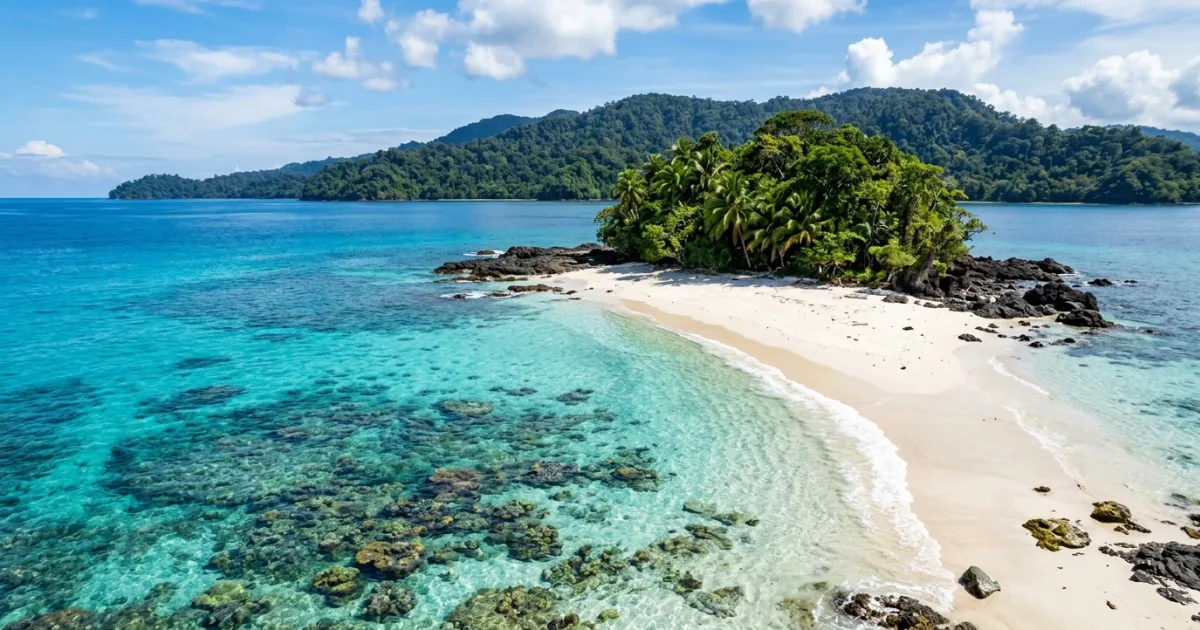
Coiba National Park spans over 2,700 square kilometers across marine reserves and 38 islands. Isolated from mainland Panama for over 12,000 years, the archipelago evolved distinct sub-species, including the Coiba howler monkey and the Coiba spinetail. Because the main island served as a high-security penal colony from 1919 until 2004, human development was entirely barred, leaving 80% of its original virgin forest pristine and protecting the surrounding reef system—the second largest coral reef in the Eastern Tropical Pacific.
Reasons to Visit
- Snorkel alongside whitetip reef sharks, sea turtles, and massive schools of jacks in the crystalline shallows of Isla Granito de Oro.
- Ride world-class reef breaks and gentle beach swells in Santa Catalina.
- Encounter migratory humpback whales and pods of spinner dolphins in the Gulf of Chiriquí between July and October.
- Explore untouched primary rainforests hosting endemic flora and fauna untouched by commercial logging.
- Visit the evocative ruins of the former Coiba penal colony enveloped by dense tropical jungle.
Things to Avoid
- Do not travel to Santa Catalina without sufficient US Dollar cash, as electronic payment networks are unreliable.
- Avoid touching or standing on coral formations while snorkeling around Granito de Oro and Canales de Afuera.
- Do not embark on open ocean boat trips without checking maritime weather advisories and ensuring proper safety gear.
- Avoid swimming at dark or near estuarine river deltas where saltwater crocodiles inhabit coastal mangroves.
Local Transportation Tips
Reaching Veraguas begins via the Inter-American Highway from Panama City to Santiago (approximately 4 to 5 hours by express bus or rental car). From Santiago, public minibuses (chivas) depart regularly toward Soná, where connecting buses continue to Santa Catalina. Transit to Coiba National Park is exclusively maritime via 26- to 32-foot twin-engine skiffs departing directly from the beach at Santa Catalina.
Travel Etiquette
- Pack out all personal garbage from Coiba National Park; zero waste disposal facilities exist on the islands.
- Use only certified mineral, oxybenzone-free reef-safe sunscreen prior to entering the marine sanctuary.
- Respect the quiet rhythm of local fishing villages; ask permission before photographing residents or local fishermen at work.
- Tip dive masters, boat captains, and local nature guides appropriately (typically 10-15% of the excursion fee).
Recommended Age Group
Veraguas and Coiba feature wild geography that requires careful physical readiness.
- Babies (0-2 years): Not Recommended. Humid tropical conditions, long bumpy skiff rides across open water, and distant medical facilities present logistical hurdles for infants.
- Kids (3-12 years): Neutral. Older children with solid swimming skills will appreciate snorkeling with marine life, though long boat journeys can be tiring.
- Teens (13-19 years): Recommended. Excellent destination for active teenagers interested in surfing, open-water snorkeling, wildlife observation, and adventure sports.
- Adults (20-64 years): Recommended. An optimal destination for eco-conscious travelers, hikers, advanced scuba divers, and wildlife photographers.
- Seniors (65+ years): Neutral. Wet beach landings from skiffs and unpaved, uneven roads require good mobility and moderate fitness.
Accessibility Level: Low
- Boat transits to Coiba require boarding from sandy beaches in shallow surf (wet landings) with no fixed ramps or docks.
- Roadways in Santa Catalina and trails on Isla Coiba consist of loose sand, dirt, and exposed tree roots, making them inaccessible for standard wheelchairs.
- Lodgings throughout the region predominantly feature multi-level eco-bungalows with stair access and gravel walkways.
Did You Know?
Isla Coiba operated as Panama's most dreaded penal colony for 85 years, housing up to 3,000 prisoners known as 'los desaparecidos' during political dictatorships. The fearsome reputation of the prison, coupled with legends of shark-infested waters, completely deterred illegal logging, developers, and poachers, inadvertently creating one of the best-preserved biological corridors on Earth.
Cool Statistics
- 38: The number of islands and islets comprising the Coiba National Park marine reserve.
- 1,700 hectares: The total area of coral reef protected within the archipelago.
- 12,000 years: The estimated time Isla Coiba has been ecologically isolated from mainland Panama.
- 760: The approximate number of marine fish species cataloged in the surrounding waters.






Buy a compatible power adapter for your trip