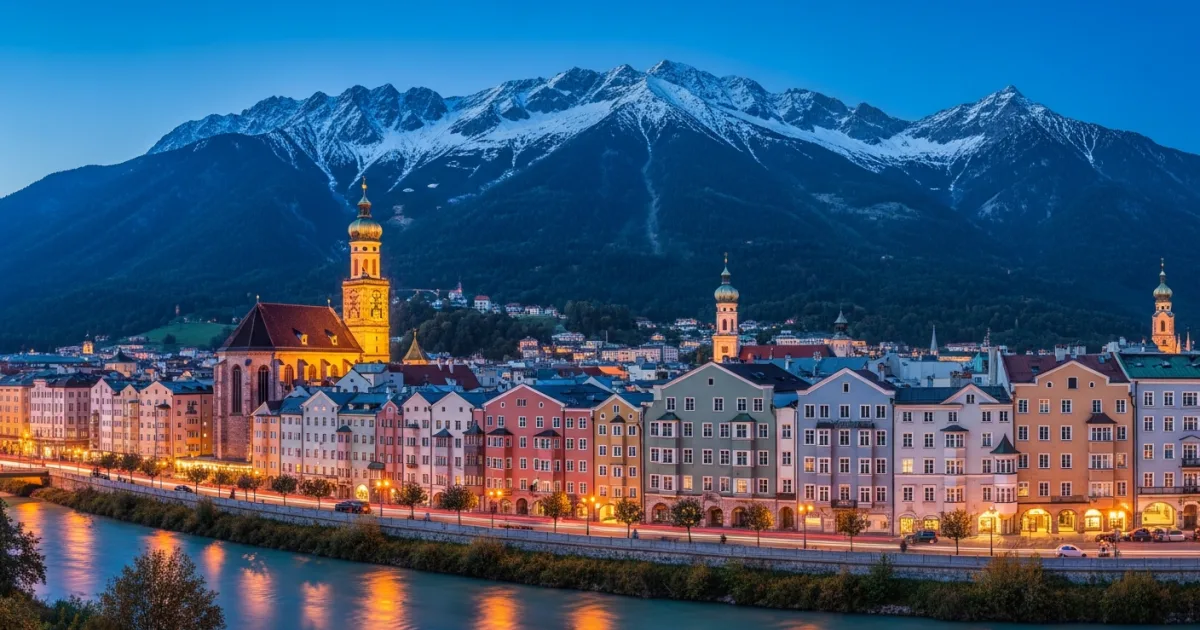
Innsbruck occupies a strategic position in the Inn Valley, functioning as a vital transit route between Germany and Italy via the Brenner Pass. The city's population exceeds 130,000 residents, making it the fifth-largest city in Austria. Urban development is heavily constrained by the surrounding alpine terrain, resulting in a densely populated valley floor. The Nordkette cable car system transports passengers from the urban elevation of 574 meters to the Hafelekar peak at 2,256 meters, offering immediate access to high-alpine environments. Historical records indicate continuous settlement since the early Stone Age, though the city gained prominence under the Habsburgs in the 15th century.
Reasons to Visit
- Winter Sports Infrastructure: Access to 13 ski resorts via the SKI plus CITY pass, encompassing over 300 kilometers of pistes.
- Imperial History: The Hofkirche houses the cenotaph of Emperor Maximilian I, featuring 28 larger-than-life bronze statues.
- Alpine-Urban Connectivity: The Hungerburgbahn funicular connects the historic city center to mountain hiking trails in exactly 20 minutes.
- Swarovski Crystal Worlds: Located 20 kilometers east in Wattens, this attraction features contemporary art installations and crystal exhibits.
Things to Avoid
- Driving in the Altstadt: The historic center is a strictly enforced pedestrian zone with heavy fines for unauthorized vehicles.
- Underestimating Alpine Weather: Mountain temperatures drop rapidly; hikers frequently require rescue due to inadequate clothing or footwear.
- Ignoring Sunday Closures: Austrian retail laws mandate that most supermarkets and shops remain closed on Sundays, excluding transit hubs.
Local Transportation Tips
Public transportation in Innsbruck relies on an integrated network of trams and buses operated by the Innsbrucker Verkehrsbetriebe (IVB). The network covers the entire city and surrounding villages, with single tickets costing approximately €2.80 when purchased in advance. The Innsbruck Card provides unlimited access to public transit, including the hop-on hop-off Sightseer bus, and includes entry to 22 museums and attractions. Bicycles serve as a primary mode of transport for locals, supported by extensive dedicated bike lanes along the Inn River. Regional trains (S-Bahn) connect the central station (Hauptbahnhof) to Tyrolean suburbs and neighboring valleys efficiently.
Travel Etiquette
- Greeting Customs: Entering small shops or elevators requires a polite 'Grüß Gott' (formal greeting) and 'Auf Wiedersehen' upon exiting.
- Tipping Practices: Restaurant bills include a service charge, but rounding up the bill by 5-10% is standard practice for good service.
- Punctuality: Austrian culture highly values exactness; arriving late for tours, reservations, or meetings is considered disrespectful.
Recommended Age Group
Innsbruck provides diverse infrastructure and attractions suitable for all age demographics, balancing urban accessibility with alpine adventure.
- Babies (0-2 years): Recommended. The city center is highly walkable with paved pedestrian zones, and public transport is stroller-accessible, though mountain excursions require specialized carriers.
- Kids (3-12 years): Recommended. Attractions like the Alpine Zoo (Alpenzoo), Europe's highest-elevation zoo, and interactive exhibits at Swarovski Crystal Worlds cater specifically to children.
- Teens (13-19 years): Recommended. The region offers high-adrenaline activities including snowboarding at Nordkette, mountain biking, and the Area 47 outdoor adventure park nearby.
- Adults (20-64 years): Recommended. Extensive hiking networks, advanced ski pistes, historical museums, and a vibrant culinary and nightlife scene provide diverse options.
- Seniors (65+ years): Recommended. Excellent public transportation, accessible cable cars offering mountain views without hiking, and flat walking paths along the Inn River accommodate mobility needs.
Accessibility Level: Medium
- Public Transit: All IVB city buses and trams feature low-floor access and designated spaces for wheelchairs.
- Attractions: Major sites including the Goldenes Dachl museum, Hofburg, and the Nordkette cable car system are fully wheelchair accessible.
- Urban Terrain: The Altstadt features cobblestone streets which may present minor challenges, though the majority of the city center is flat and easily navigable.
Did You Know?
Innsbruck is one of only three cities globally to have hosted the Winter Olympic Games twice, in 1964 and 1976. The Bergisel Ski Jump, redesigned by architect Zaha Hadid in 2001, serves as a functional sports venue and a panoramic viewing platform. The city's name translates directly to 'Bridge over the Inn,' referencing its historical importance as a river crossing.
Cool Statistics
- Elevation: 574 meters (1,883 feet) above sea level at the city center.
- Student Population: Approximately 35,000 students attend the city's universities, comprising over 25% of the total population.
- Golden Roof Tiles: Exactly 2,657 fire-gilded copper tiles cover the Goldenes Dachl.
- Mountain Peak Access: The Hafelekar peak reaches 2,256 meters, accessible via a 30-minute cable car ride from the center.







Buy a compatible power adapter for your trip