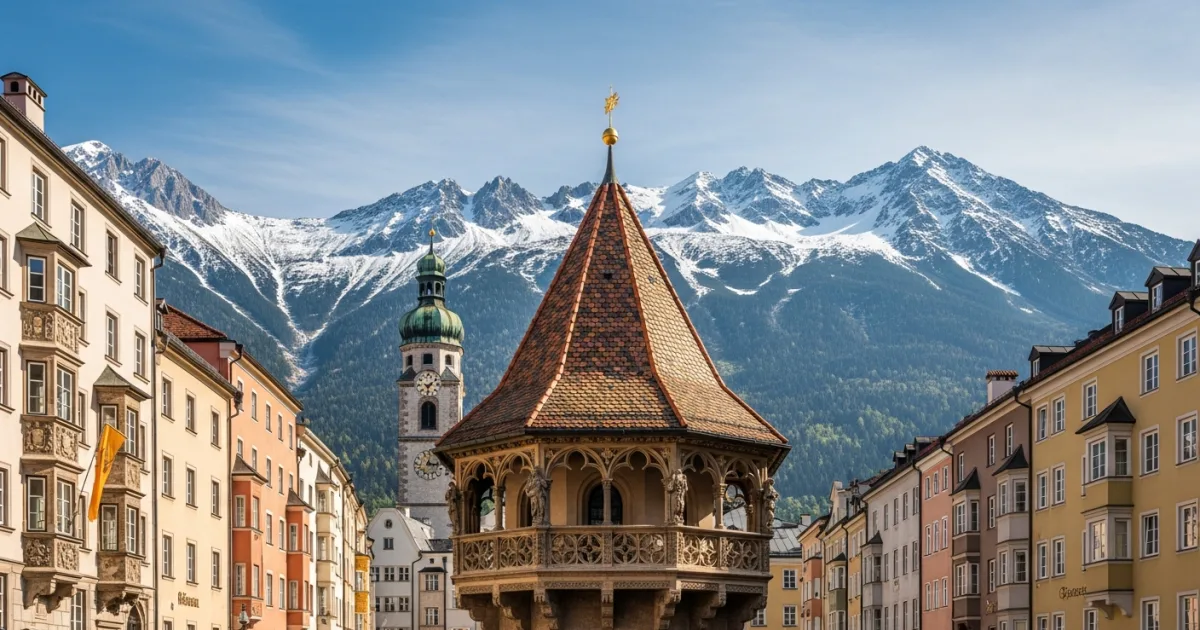
The Goldenes Dachl is more than just a beautiful facade; it is a masterclass in late-Gothic architecture and political propaganda. Emperor Maximilian I used the balcony to present himself to his subjects and to demonstrate his wealth and power to visiting dignitaries. The intricate frescoes and reliefs adorning the loggia depict scenes from the Emperor's life, including his two wives, his court jester, and various coats of arms representing his vast territories.
Inside, the museum provides a fascinating context to the era of Maximilian I, often referred to as the 'last knight.' The exhibits bridge the gap between the Middle Ages and the Renaissance, showcasing how Innsbruck became a central hub of the Holy Roman Empire. The contrast between the bustling modern cafes in the square below and the 500-year-old history of the building makes it a captivating stop for any traveler.
Reasons to Visit
- It is the most iconic and photographed landmark in Innsbruck.
- The museum offers excellent historical context about the Holy Roman Empire.
- The surrounding Old Town is incredibly picturesque and pedestrian-friendly.
- It provides a stunning juxtaposition of medieval architecture against the dramatic Alps.
Things to Avoid
- Avoid visiting the square at midday during peak summer if you want photos without large tour groups.
- Don't forget to look closely at the reliefs; many visitors miss the intricate details of the court jester and the Emperor's wives.
- Avoid driving into the Old Town, as it is a pedestrian-only zone; use public transport or park outside the center.
Local Transportation Tips
The Goldenes Dachl is located in a pedestrian zone, so the best way to reach it is on foot. Innsbruck's public transportation system is excellent; you can take various bus or tram lines to the 'Marktplatz' or 'Museumstraße' stops, both of which are just a short walk from the Old Town. If you are arriving by train, Innsbruck Hauptbahnhof (Main Station) is about a 15-minute walk away.
Travel Etiquette
- Respect the pedestrian zones by not riding bicycles or e-scooters through the crowded areas of the Old Town.
- When taking photos, be mindful not to block the pathways for locals and other tourists.
- In Austrian culture, a polite 'Grüß Gott' (formal greeting) or 'Hallo' is appreciated when entering nearby shops or cafes.
Recommended Age Group
The Goldenes Dachl and its surrounding square offer an accessible and enjoyable experience for visitors of all ages.
- Babies (0-2 years): Recommended. The pedestrian square is stroller-friendly, though the museum inside has some stairs and tight spaces.
- Kids (3-12 years): Recommended. Children are often fascinated by the shiny roof and the interactive elements in the museum, including armor displays.
- Teens (13-19 years): Recommended. The historical context and the highly photogenic nature of the landmark appeal to older kids and teens.
- Adults (20-64 years): Recommended. Adults will appreciate the deep historical significance, the architecture, and the nearby cafes and shopping.
- Seniors (65+ years): Recommended. The area is flat and easy to navigate, with plenty of benches and cafes nearby to rest and admire the view.
Accessibility Level: Medium
- The exterior square is completely flat, paved, and wheelchair accessible.
- The Goldenes Dachl Museum has an elevator, making the exhibitions accessible to wheelchair users and those with limited mobility.
- Accessible restrooms are available within the museum facilities.
- Service animals are generally permitted, but it is best to confirm with museum staff upon arrival.
Did You Know?
Did you know that the Goldenes Dachl was built to dispel rumors of the Emperor's financial difficulties? By covering the roof in fire-gilded copper tiles, Maximilian I publicly demonstrated his immense wealth and silenced his critics.
Cool Statistics
- Number of tiles: 2,657
- Year completed: 1500
- Material: Fire-gilded copper
- Commissioner: Emperor Maximilian I







Buy a compatible power adapter for your trip