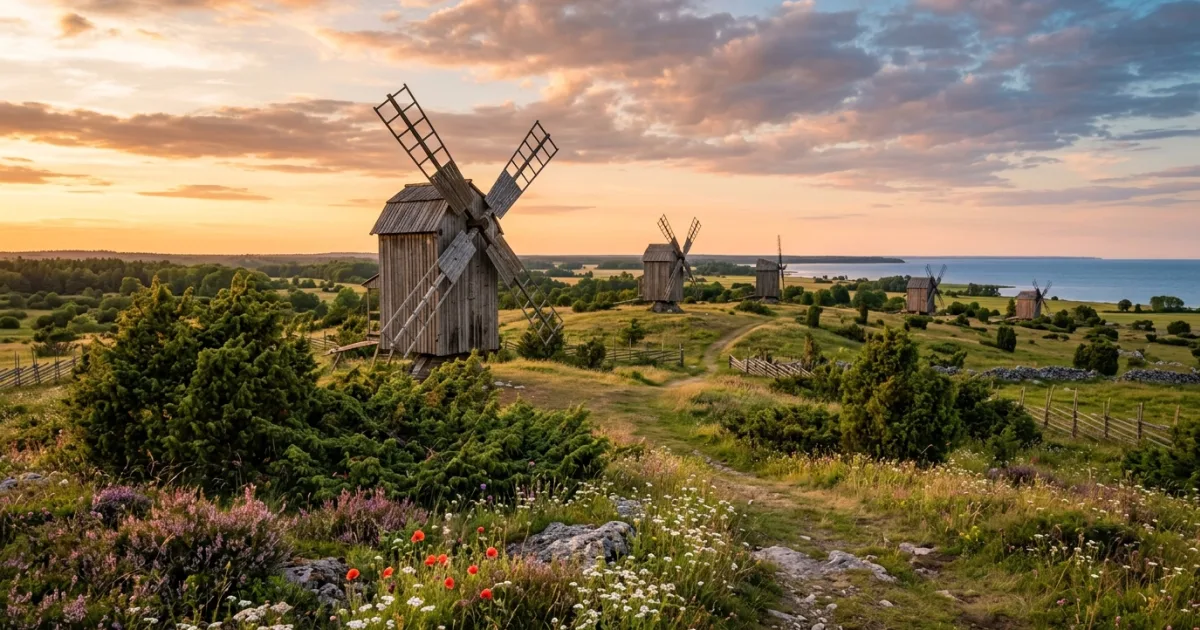
Saaremaa represents the heart of coastal Estonia, isolated for decades under Soviet border guard surveillance and preserved as a pristine ecological haven. Covering 2,673 square kilometers, it is a landscape where centuries-old timber windmills still stand above expanses of fragrant wild juniper and stone-fenced pastures. The island’s low population density fosters an unhurried, grounded rhythm of life where nature and Baltic heritage coexist seamlessly.
The island's urban focus is Kuressaare, a tranquil resort town organized around an intact 14th-century episcopal castle surrounded by water-filled moats. Beyond the capital, visitors encounter geological oddities like the Kaali crater—formed by a meteor impact around 1500 BC—and the dramatic 21-meter vertical drop of Panga Cliff plunging into the Baltic Sea. From cycling rural coastal byways to unwinding in contemporary spa sanctuaries, Saaremaa stands as Estonia’s consummate escape for restorative, slow-paced exploration.
Reasons to Visit
- Kuressaare Episcopal Castle: Walk the ramparts of the only fully intact medieval stone fortress remaining in the Baltic States.
- Kaali Meteorite Field: Inspect a rare, sacred impact crater that shaped Bronze Age folklore and myth across Northern Europe.
- Panga Cliff & Baltic Coastline: Gaze out over sheer limestone bluffs where ancient pagan sacrifices were offered to Baltic sea spirits.
- World-Class Spa Culture: Soak in therapeutic sea mud wraps and mineral thermal circuits in Kuressaare's celebrated wellness resorts.
- Angla Windmill Mount: Experience traditional island agriculture through four restored wooden post windmills and an eight-sided Dutch mill.
Things to Avoid
- Avoid arriving at the Virtsu ferry terminal on Friday afternoon without a pre-booked e-ticket, as domestic weekend traffic causes long standby queues.
- Do not wade off remote northern beaches without checking water currents and rocky underwater shelves.
- Avoid straying off marked trails at Panga Cliff; the brittle limestone ledges are prone to erosion and lack guardrails in sections.
- Do not expect shops or restaurants in rural villages to remain open late outside the June-August high season.
Local Transportation Tips
Driving provides the most convenient way to experience Saaremaa's dispersed landmarks. High-speed 4G coverage blankets the island, making GPS navigation seamless along well-maintained paved highways and smooth gravel backroads. Regional bus lines run frequently between Kuressaare and major villages, but remote nature sights require a private vehicle or touring bicycle. Biking is exceptionally popular due to the island’s flat topography and dedicated cycling corridors branching out from Kuressaare.
Travel Etiquette
- Estonians value quietness, personal space, and understated communication; avoid loud phone conversations in public transit or quiet nature reserves.
- Remove your footwear immediately upon entering private guesthouses or traditional island homes.
- Observe traditional sauna etiquette: shower thoroughly before entering the steam room, and sit on a clean linen towel provided by the host.
- Respect protected nature zones by not picking protected wild orchids or disturbing nesting seabird colonies along coastal islets.
Recommended Age Group
Saaremaa is an adaptable Baltic island that accommodates a broad spectrum of travelers seeking quiet nature, easy navigation, and historical intrigue.
- Babies (0-2 years): Neutral. Calm surroundings and clean sea air are beneficial, but gravel coastal paths and long drives can prove challenging with standard strollers.
- Kids (3-12 years): Recommended. Exploring the castle moats, climbing the Angla windmills, and walking the rim of the Kaali meteorite crater engage young imaginations.
- Teens (13-19 years): Recommended. Outdoor sea kayaking, coastal biking trails, and World War II bunker explorations at Sõrve Peninsula provide engaging adventure.
- Adults (20-64 years): Recommended. Superb thermal spas, farm-to-table Baltic cuisine, quiet road trips, and rich coastal hiking make it ideal for adult travelers.
- Seniors (65+ years): Recommended. Flat terrain, calm pacing, historic architecture, and gentle wellness treatments create an exceptionally relaxing destination for older travelers.
Accessibility Level: Medium
- Kuressaare Castle features accessible ground-floor courtyards and ramps, though upper defensive towers contain narrow, steep medieval stone stairs.
- The primary spa resorts in Kuressaare provide modern step-free entrances, elevator access, and roll-in shower suites.
- The Angla Windmill Heritage Centre features paved step-free access to its main exhibition hall, though historic windmill interiors require climbing timber stairs.
- Kaali Crater viewing platform provides a boardwalk section, but navigating the full perimeter involves uneven natural ground.
Did You Know?
Kuressaare has the highest density of spa beds per capita in the world, boasting approximately one spa bed for every ten residents in the town.
Cool Statistics
- Saaremaa covers 2,673 square kilometers, accounting for over five percent of Estonia's total national territory.
- The Kaali meteorite struck with an explosive force comparable to the Hiroshima atomic bomb around 3,500 years ago.
- More than 80 percent of all plant species native to Estonia can be found on Saaremaa and its surrounding islets.






Buy a compatible power adapter for your trip