Estonia’s western seaboard encompasses an archipelago of tranquil islands shaped by sea winds, ancient maritime culture, and unique alvar grasslands. Saaremaa stands as the largest island, anchored by the town of Kuressaare with its remarkably intact 14th-century Episcopal Castle and renowned health spas. Connected to Saaremaa by a short causeway, Muhu Island acts as a serene cultural gateway characterized by painted wooden doors, thatch-roofed farm museums, and wild orchid meadows.
To the north, Hiiumaa provides a sleepier, forested haven beloved by surfers and maritime enthusiasts for its collection of historic lighthouses, including the Kõpu Lighthouse—one of the oldest operational navigation beacons in the world. Further south lies Kihnu, where living folk traditions endure in daily life. Across all islands, an expansive network of hiking boardwalks, birdwatching towers, and deserted pebble beaches offers an unhurried escape deep inside a UNESCO-recognized biosphere reserve.
Reasons to Visit
- Marvel at Kuressaare Episcopal Castle, one of the best-preserved medieval stone fortresses in the Baltic states.
- Climb historic navigational monuments including the 16th-century Kõpu Lighthouse and the photogenic cast-iron Tahkuna Lighthouse on Hiiumaa.
- Witness the ancient Kaali Meteorite Crater Field on Saaremaa, a rare and mystical Holocene impact site.
- Experience restorative wellness rituals combining therapeutic seaside sea mud with authentic cedar and wood-fired saunas.
- Immerse yourself in UNESCO-recognized matriarchal folk traditions, loom weaving, and accordion heritage on Kihnu.
Things to Avoid
- Avoid arriving at ferry terminals on summer Friday afternoons without pre-booked online tickets, as queues can stretch for hours.
- Do not trample fragile alvar limestone habitats or pick protected wild orchids in coastal national parks.
- Avoid driving at dawn and twilight without strict speed control, as wild ungulates frequently cross rural island highways.
- Do not expect bustling late-night urban nightlife outside of central Kuressaare during peak summer weekends.
Local Transportation Tips
Vehicle ferries operated by TS Laevad (Praamid.ee) connect the mainland to Muhu/Saaremaa and Hiiumaa with frequent departures, complimentary onboard Wi-Fi, and cafeterias. Driving an automobile or campervan is the most practical way to navigate the islands' dispersed landmarks. Cycling is extraordinarily popular due to minimal vehicle traffic and predominantly flat topography. Intercity coaches connect Tallinn to Kuressaare directly, while regional buses link smaller island villages at low frequency.
Travel Etiquette
- Respect the silence of nature reserves and public spaces; Estonians deeply value quiet tranquility outdoors.
- Remove your footwear immediately upon entering private residences or traditional island guesthouses.
- Shower thoroughly before entering communal or guesthouse saunas, and bring your own towel to sit on.
- Ask for permission before photographing local residents wearing traditional striped folk costumes on Kihnu.
Recommended Age Group
The Estonian Islands provide accessible, restorative, and enriching experiences across multiple generations, favoring relaxed outdoor discovery over fast-paced urban entertainment.
- Babies (0-2 years): Recommended. Fresh unpolluted sea air, exceptionally safe surroundings, and smooth paved coastal promenades in Kuressaare accommodate strollers with ease.
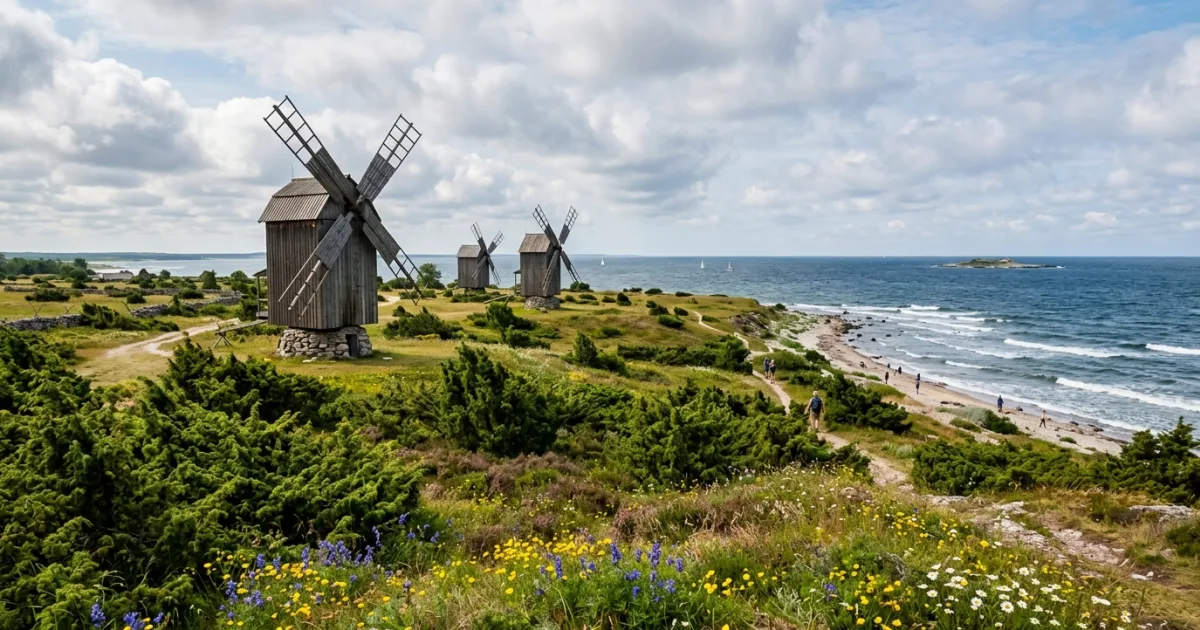
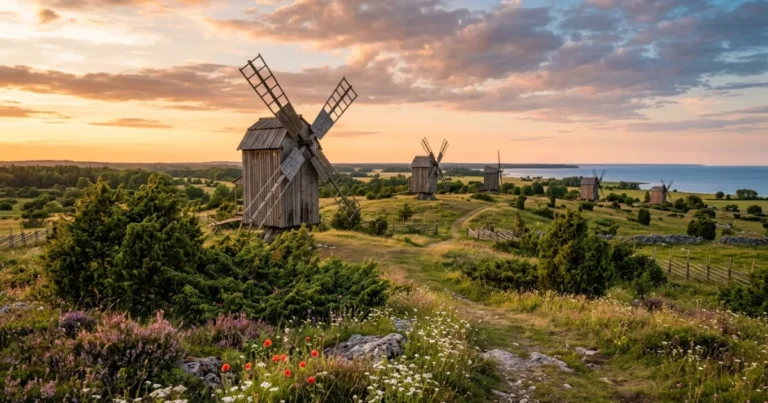
- Kids (3-12 years): Recommended. Children love exploring the towering moat-enclosed Kuressaare Castle, scampering up wooden windmills, examining Kaali meteorite craters, and swimming along shallow, sandy shoreline beaches.
- Teens (13-19 years): Neutral. Ideal for active teens who enjoy windsurfing, sea kayaking, paddleboarding, and cycling, but those seeking energetic urban commercial nightlife may find the pace too quiet.
- Adults (20-64 years): Recommended. Perfect for road trips, scenic cycling journeys, craft brewery tastings, authentic smoke saunas, and peaceful boutique spa retreats.
- Seniors (65+ years): Recommended. Flat terrain, uncrowded walking paths, renowned mud spa sanatoriums, and gentle cultural tours make this a supreme destination for mature travelers.
Accessibility Level: Medium
- Mainland-to-island roll-on/roll-off ferries feature modern elevators connecting car decks to passenger lounges, accessible restrooms, and dedicated companion seating.
- Kuressaare Castle courtyard and ground levels have barrier-free access, though historic upper battlements and narrow spiraling stairways present mobility limitations.
- Select RMK boardwalk trails in Vilsandi and Matsalu-adjacent reserves feature widened timber planks and low-gradient viewing platforms for wheelchairs.
- Modern town hotels and major wellness resorts across Kuressaare and Kärdla provide step-free entries and designated accessible suites.
Did You Know?
The Kaali meteorite crater field on Saaremaa was created roughly 3,500 years ago by a cataclysmic impact equivalent to a tactical nuclear explosion, an event so dramatic that echoes of the falling blazing star survived in ancient Baltic and Finnish folk mythology.
Cool Statistics
- Over 2,222 maritime islands, islets, and shoals belong to Estonia's territory.
- Kõpu Lighthouse on Hiiumaa has stood continuously warning mariners since completing construction in 1531.
- Saaremaa alone contains more than 1,200 species of vascular plants, representing around 80% of Estonia’s total plant biodiversity.







Buy a compatible power adapter for your trip