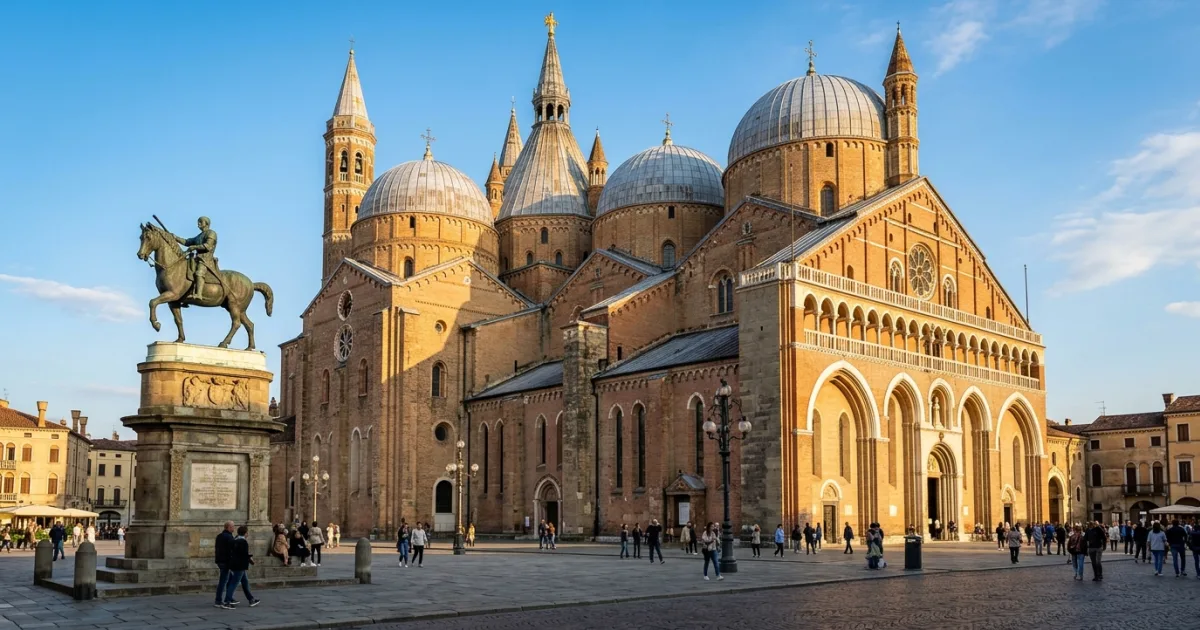
The Basilica of Saint Anthony is not just a church; it is a sprawling complex of faith, art, and history that has evolved over centuries. The construction began in 1232 to house the remains of Saint Anthony of Padua, a Franciscan friar renowned for his powerful preaching and miracles. The architecture is a fascinating hybrid: the facade is Romanesque, the soaring arches are Gothic, and the eight domes are distinctly Byzantine, reflecting the diverse cultural influences that flowed through the Venetian Republic.
Beyond the main altar, which features magnificent bronze statues by the Renaissance master Donatello, the basilica complex includes several stunning cloisters. The Magnolia Cloister, named for the giant tree at its center, offers a quiet space for reflection away from the bustling crowds. The Chapel of the Relics, a stunning example of Baroque design, houses the saint's incorrupt tongue and vocal cords, drawing pilgrims seeking miracles and spiritual solace. A visit here is a profound journey through centuries of devotion and artistic triumph.
Reasons to Visit
- Spiritual Significance: It is one of the most important Catholic pilgrimage sites globally, housing the tomb and relics of Saint Anthony.
- Architectural Marvel: The unique blend of Romanesque, Gothic, and Byzantine styles makes it a visually stunning landmark.
- Renaissance Art: View masterpieces by Donatello, including the high altar bronzes and the nearby equestrian statue of Gattamelata.
- Peaceful Cloisters: Explore the beautifully preserved medieval cloisters that offer a tranquil escape from the city.
Things to Avoid
- Inappropriate Attire: Avoid wearing shorts, tank tops, or short skirts; you will be denied entry.
- Loud Talking: Avoid speaking loudly inside the church, especially near the tomb and chapels where people are praying.
- Flash Photography: Do not use flash photography, and respect the strict no-photo zones in the relic chapels.
- Peak Holiday Crowds: If you prefer a quiet visit, avoid June 13th (the Feast of Saint Anthony) and major Catholic holidays like Easter.
Local Transportation Tips
The Basilica of Saint Anthony is located just south of Padua's historic city center. It is easily accessible on foot from most central locations, taking about 15-20 minutes to walk from the main train station (Padova Centrale). Alternatively, you can take the modern tram system (SIR1 line) which stops at 'Santo', dropping you just a short walk from the basilica's entrance. Local buses also serve the area frequently.
Travel Etiquette
- Maintain a quiet and respectful demeanor at all times inside the basilica.
- Ensure your phone is on silent mode before entering.
- Do not interrupt or walk in front of individuals who are actively praying or attending mass.
- Follow the designated flow of foot traffic, especially when queuing to touch the tomb of Saint Anthony.
Recommended Age Group
The Basilica of Saint Anthony offers a profound experience, though its appeal varies across different age groups.
- Babies (0-2 years): Neutral. Strollers are permitted, but a quiet atmosphere is expected, which can be challenging with infants.
- Kids (3-12 years): Neutral. While the grand architecture is impressive, the deep historical and religious context may not fully engage younger children.
- Teens (13-19 years): Recommended. Older children and teens can appreciate the rich Renaissance art, history, and the impressive scale of the building.
- Adults (20-64 years): Recommended. Adults will find immense value in the architectural beauty, historical significance, and spiritual atmosphere.
- Seniors (65+ years): Recommended. The site is highly accessible with flat surfaces and ramps, making it a comfortable and enriching destination for older travelers.
Accessibility Level: Medium
- The main entrance is accessible via ramps for wheelchair users.
- The interior nave, the tomb of Saint Anthony, and the cloisters are mostly flat and easy to navigate.
- Elevators are available for accessing the upper levels of the adjacent museum.
- Accessible restrooms are located near the cloisters.
Did You Know?
Did you know that Saint Anthony was actually born in Lisbon, Portugal? He is known as Saint Anthony of Padua because he spent the last years of his life in the city and died there in 1231. His canonization occurred less than a year after his death, one of the fastest in the history of the Catholic Church.
Cool Statistics
- Year Construction Began: 1232
- Number of Domes: 8 Byzantine-style domes
- Annual Visitors: Over 5 million pilgrims and tourists
- Height of the Bell Towers: 68 meters (223 feet)







Buy a compatible power adapter for your trip