Padua (Padova in Italian) is a city that effortlessly blends its ancient past with a lively, modern energy. As one of the oldest cities in northern Italy, its streets are lined with centuries of architectural marvels, from medieval walls to grand Renaissance palazzos. The city's heart beats in its interconnected squares—Piazza delle Erbe, Piazza della Frutta, and Piazza dei Signori—where locals have gathered for centuries to trade, socialize, and enjoy the vibrant market atmosphere.
The University of Padua, founded in 1222, has profoundly shaped the city's identity. Walking through the historic Palazzo Bo, you can feel the intellectual weight of a place where figures like Copernicus and Galileo once studied and taught. This academic legacy is complemented by the city's artistic treasures, most notably Giotto's frescoes in the Scrovegni Chapel, which mark a pivotal moment in Western art. Whether you are sipping an espresso at the historic Caffè Pedrocchi or strolling through the Orto Botanico, the world's oldest academic botanical garden, Padua offers a deeply enriching and authentic Italian experience.
Reasons to Visit
- The Scrovegni Chapel: Witness Giotto's breathtaking 14th-century frescoes, a masterpiece that changed the course of art history.
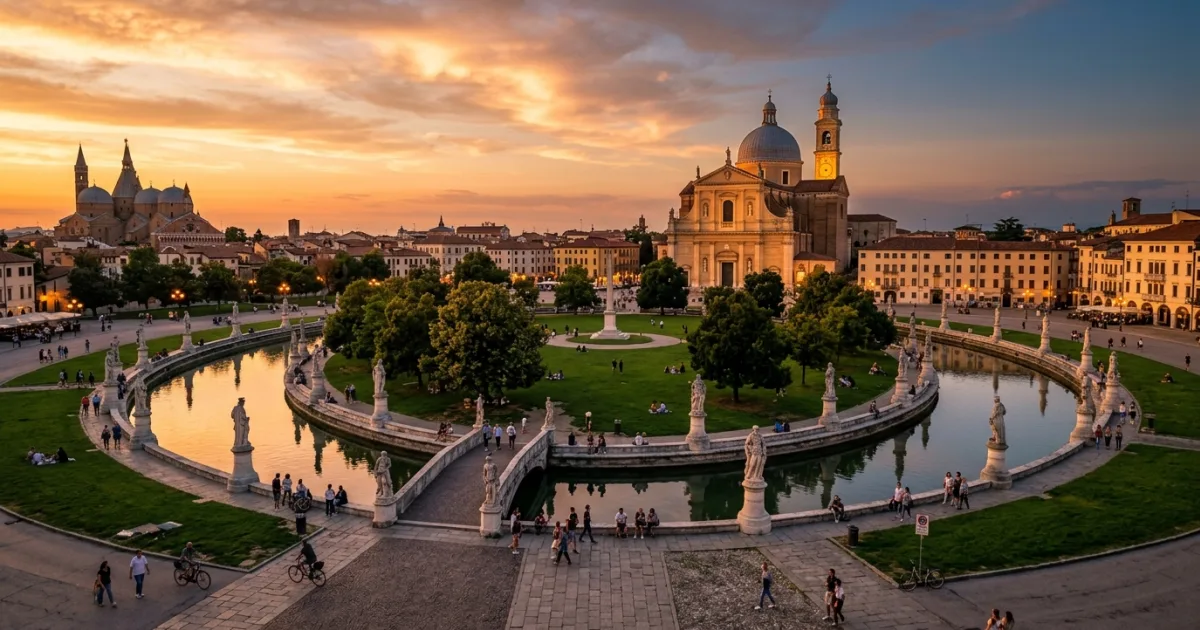
- Prato della Valle: Relax in Italy's largest square, a stunning elliptical space surrounded by a canal and 78 statues.
- Basilica of St. Anthony: Visit this massive, multi-domed pilgrimage site that houses the tomb and relics of the beloved saint.
- University of Padua & Palazzo Bo: Explore one of the world's oldest universities and see the historic anatomical theater.
- Authentic Market Culture: Experience the daily hustle and bustle of the markets in Piazza delle Erbe and Piazza della Frutta.
Things to Avoid
- Arriving at the Scrovegni Chapel without a reservation: You will be turned away; advance booking is strictly enforced.
- Driving in the city center: Padua has a strict ZTL (Limited Traffic Zone) with heavy fines for unauthorized vehicles. Rely on walking or public transport.
- Skipping the local cafes: Don't just stick to tourist spots; sit down at Caffè Pedrocchi and try their signature mint-infused coffee.
- Rushing your visit: While it can be a day trip, Padua's charm is best absorbed at a slow pace, especially during the evening aperitivo hour.
Local Transportation Tips
Padua is highly walkable, with a flat, compact historic center that is largely pedestrianized. For longer distances, the city boasts a modern, efficient, and easy-to-use tram system (the SIR 1 line) that runs from the main train station in the north, through the historic center, down to the southern suburbs. Tickets must be purchased before boarding at tobacconists (tabacchi) or newsstands and validated once on board. Additionally, Padua is very bicycle-friendly, with numerous dedicated bike lanes and bike-sharing programs available for tourists.
Travel Etiquette
- Dress appropriately for churches: When visiting the Basilica of St. Anthony or other religious sites, ensure your shoulders and knees are covered.
- Greet shopkeepers: It is polite to say 'Buongiorno' (Good morning) or 'Buonasera' (Good evening) when entering a small shop, and 'Arrivederci' when leaving.
- Respect the aperitivo hour: Aperitivo is a time to relax and socialize before dinner; don't rush the experience.
- Validate your tickets: Always validate your bus or tram ticket in the machine upon boarding to avoid hefty fines.
Recommended Age Group
Padua is a highly accessible and welcoming city for travelers of all ages, featuring flat terrain, expansive pedestrian zones, and diverse attractions.
- Babies (0-2 years): Recommended. The city's extensive porticoes (arcades) provide excellent shade and rain cover for strollers, and the large Prato della Valle is perfect for relaxed walks.
- Kids (3-12 years): Recommended. Children will enjoy the open spaces of the botanical garden, interactive exhibits at local museums, and the general safety of the pedestrianized historic center.
- Teens (13-19 years): Recommended. The vibrant university atmosphere, lively piazzas, and rich scientific history (like Galileo's legacy) offer engaging experiences for older kids.
- Adults (20-64 years): Recommended. Adults can fully appreciate the deep historical roots, Renaissance art, bustling market squares, and the sophisticated aperitivo culture.
- Seniors (65+ years): Recommended. The flat landscape, abundance of benches, well-preserved historic sites, and excellent public transport make it highly comfortable for mature travelers.
Accessibility Level: Medium
- Padua is generally very flat, making it easier to navigate for wheelchair users compared to many other historic Italian cities.
- The extensive network of porticoes provides smooth, covered pathways throughout much of the city center.
- Major attractions like the Scrovegni Chapel, the Basilica of St. Anthony, and the Botanical Garden are wheelchair accessible, though some older university buildings may have limited access.
- The modern tram system is fully accessible, with level boarding and designated spaces for wheelchairs.
- Cobblestones are present in some historic squares, which may cause slight discomfort, but alternative smooth paths are usually nearby.
Did You Know?
Padua is home to the Orto Botanico di Padova, founded in 1545. It is the world's oldest academic botanical garden that is still in its original location. Created to help university students identify medicinal plants, it is now a UNESCO World Heritage site and continues to play a vital role in botanical research and conservation.
Cool Statistics
- 1222: The year the University of Padua was founded, making it the second-oldest university in Italy.
- 78: The number of statues surrounding the canal in the magnificent Prato della Valle.
- 1305: The year Giotto completed the revolutionary frescoes in the Scrovegni Chapel.
- 90,000: The approximate square meterage of Prato della Valle, making it the largest square in Italy.






Buy a compatible power adapter for your trip