Castel San Pietro stands as a silent guardian over the romantic city of Verona. The hill it rests upon, Colle San Pietro, has been a strategic and spiritual site since ancient times, originally hosting a Roman temple and later a church dedicated to Saint Peter. The current fortress, characterized by its austere military architecture, was constructed between 1852 and 1858 during the Austrian occupation of the city. While the building itself is a fascinating piece of 19th-century military history, it is the esplanade in front of it that draws thousands of visitors year-round.
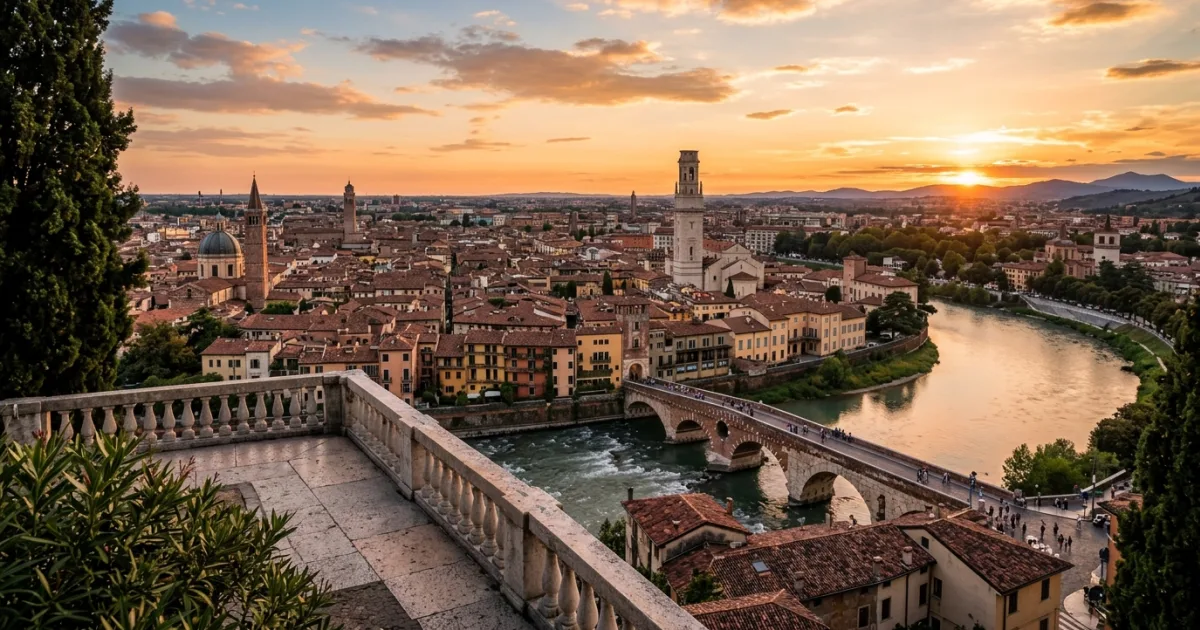
From this elevated vantage point, the entire city of Verona unfolds like a map. You can trace the elegant curves of the Adige River, spot the towering campanile of the Duomo, and look down upon the ancient Roman Theater nestled into the hillside below. The journey to the top is part of the charm; visitors can choose to wander up the romantic, cypress-lined staircases that begin near Ponte Pietra, or take the modern funicular for a quick and scenic ascent. Whether you visit in the crisp morning air or during the golden hour of sunset, Castel San Pietro offers an unforgettable perspective on one of Italy's most beloved cities.
Reasons to Visit
- Unrivaled Views: Offers the most comprehensive and picturesque panoramic view of Verona's historic center and the Adige River.
- Romantic Atmosphere: Widely considered one of the most romantic spots in the city, especially at sunset.
- Historical Significance: The site layers Roman, medieval, and Austrian history in one location.
- Photography: A dream location for photographers looking to capture the essence of Verona from above.
Things to Avoid
- Midday Summer Heat: Avoid climbing the stairs during the hottest part of the day in July and August, as there is little shade.
- Rushing the Experience: Don't just snap a photo and leave; take time to sit on the wall and soak in the atmosphere.
- Ignoring the Roman Theater: Don't skip the archaeological site located at the base of the hill before or after your visit to the castle.
Local Transportation Tips
The base of the hill is easily reached on foot from Verona's historic center by crossing the Ponte Pietra. From there, you can either walk up the stairs (about a 10-15 minute climb) or take the Funicolare di Castel San Pietro. The funicular runs frequently throughout the day and offers a cheap, accessible, and scenic alternative to walking.
Travel Etiquette
- Respect the Space: Keep the terrace clean and dispose of any trash in the provided bins.
- Mind the Edge: Do not climb on unsafe sections of the historic walls for photos.
- Noise Levels: While it's a popular public space, keeping noise to a respectful level allows everyone to enjoy the romantic ambiance.
Recommended Age Group
Castel San Pietro is a versatile destination that appeals to a wide range of visitors, though the method of ascent may dictate the experience for some.
- Babies (0-2 years): Neutral. While the funicular makes the ascent easy, the cobblestone paths and crowded terrace can be challenging to navigate with a stroller.
- Kids (3-12 years): Recommended. The funicular ride is an exciting mini-adventure, and the open terrace provides space to look out over the city.
- Teens (13-19 years): Recommended. The panoramic views offer incredible photo opportunities perfect for social media.
- Adults (20-64 years): Recommended. The romantic atmosphere and stunning sunset views make it an ideal spot for couples and solo travelers alike.
- Seniors (65+ years): Recommended. The funicular provides easy access to the top without the need to climb the steep stairs, allowing for a comfortable sightseeing experience.
Accessibility Level: Medium
- Funicular Access: The funicular station at the base and the cabin itself are fully wheelchair accessible.
- Terrace Navigation: The main viewing terrace is relatively flat and paved, making it accessible for wheelchairs and walkers.
- Seating: There are low walls and some benches where visitors can rest while enjoying the view.
Did You Know?
Before the Austrians built the current barracks in the 19th century, the hill was home to a medieval castle built by the Visconti family in the 14th century, which was later blown up by retreating French troops in 1801.
Cool Statistics
- Elevation: The hill rises approximately 150 meters above sea level.
- Funicular Track Length: The funicular covers a distance of 159 meters.
- Travel Time: The funicular ride takes exactly 90 seconds.
- Construction Date: The current Austrian barracks were completed in 1858.






Buy a compatible power adapter for your trip