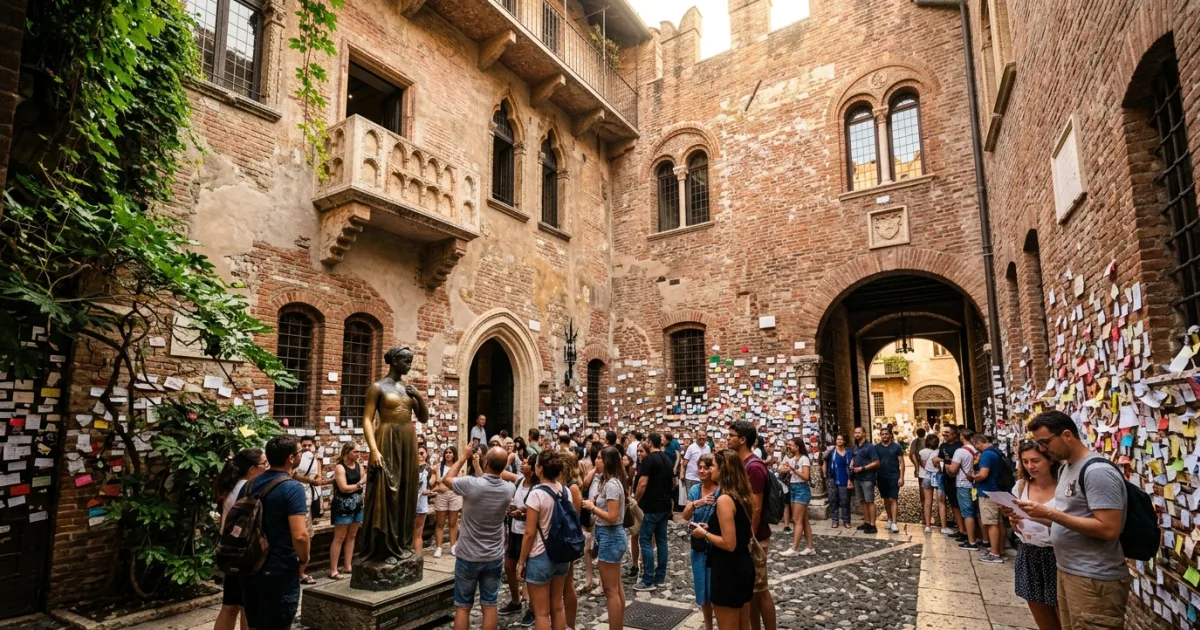
Juliet's House (Casa di Giulietta) stands as one of Italy's most fascinating examples of how literature can shape a city's identity. The 14th-century building, characterized by its beautiful Gothic facade and exposed brickwork, was restored in the 1930s by Antonio Avena, who added the famous balcony using a 17th-century sarcophagus. This architectural addition cemented the site's status as a pilgrimage destination for romantics worldwide.
Inside the museum, visitors can explore several floors of sparsely but elegantly furnished rooms that evoke the atmosphere of Renaissance Verona. Highlights include authentic period ceramics, frescoes, and the actual bed used in Franco Zeffirelli's 1968 film adaptation of Romeo and Juliet. The experience culminates in stepping out onto the balcony, offering a unique perspective of the bustling courtyard below.
Reasons to Visit
- Literary Connection: Step into the physical manifestation of the world's most famous love story.
- Historic Architecture: Admire the well-preserved 14th-century Gothic design and medieval courtyard.
- Romantic Traditions: Participate in the lore by touching the bronze statue of Juliet or leaving a love note.
- Photography: Capture iconic shots of the ivy-draped balcony and the vibrant, note-covered walls.
Things to Avoid
- Midday Crowds: Avoid visiting between 11:00 AM and 3:00 PM when tour groups flood the small courtyard.
- Vandalizing Walls: Do not write directly on the historic brick or use chewing gum to stick notes; use the provided panels instead.
- Skipping the Interior: While the courtyard is free, the interior museum offers a quieter experience and the chance to stand on the balcony.
Local Transportation Tips
Juliet's House is located in the pedestrian-only historic center of Verona. The best way to reach it is on foot. If arriving by train at Verona Porta Nuova, you can take a local ATV bus (lines 11, 12, 13, or 51) to Piazza Bra, and from there, it is a scenic 10-minute walk down Via Mazzini and Via Cappello.
Travel Etiquette
- Respect the Space: The courtyard is small and echoes; keep noise levels reasonable despite the crowds.
- Queue Patiently: There is often a line to take a photo with the Juliet statue; wait your turn and be quick to allow others a chance.
- Follow Rules: Adhere to the city's regulations regarding where you can and cannot leave love letters.
Recommended Age Group
Juliet's House appeals primarily to older children, adults, and literature enthusiasts, though the courtyard is accessible to all.
- Babies (0-2 years): Neutral. The courtyard is accessible, but the interior house has stairs and lacks stroller access.
- Kids (3-12 years): Neutral. Younger children may not grasp the literary significance, though they might enjoy the bustling atmosphere.
- Teens (13-19 years): Recommended. The romantic lore and pop culture connections make it highly engaging for teenagers.
- Adults (20-64 years): Recommended. Adults will appreciate the historical architecture, literary connections, and romantic ambiance.
- Seniors (65+ years): Recommended. The courtyard is flat and easy to navigate, though the interior museum requires climbing stairs.
Accessibility Level: Medium
- Courtyard Access: The courtyard is flat, paved, and fully accessible for wheelchair users.
- Museum Interior: The historic nature of the building means there are multiple flights of stairs and no elevator, making the upper floors and balcony inaccessible to those with severe mobility impairments.
- Restrooms: Accessible public restrooms are not available directly on-site but can be found in nearby cafes and public squares.
Did You Know?
The famous balcony wasn't originally part of the house. It was constructed in the 1930s from a 17th-century marble sarcophagus to give tourists exactly what they were looking for when they came searching for Juliet's home.
Cool Statistics
- Annual Visitors: Over 500,000 people visit the courtyard of Juliet's House every year.
- Letters to Juliet: Thousands of letters addressed simply to 'Juliet, Verona' arrive annually and are answered by a team of volunteers known as the Juliet Club.
- Building Age: The core structure of the house dates back to the 1300s.






Buy a compatible power adapter for your trip