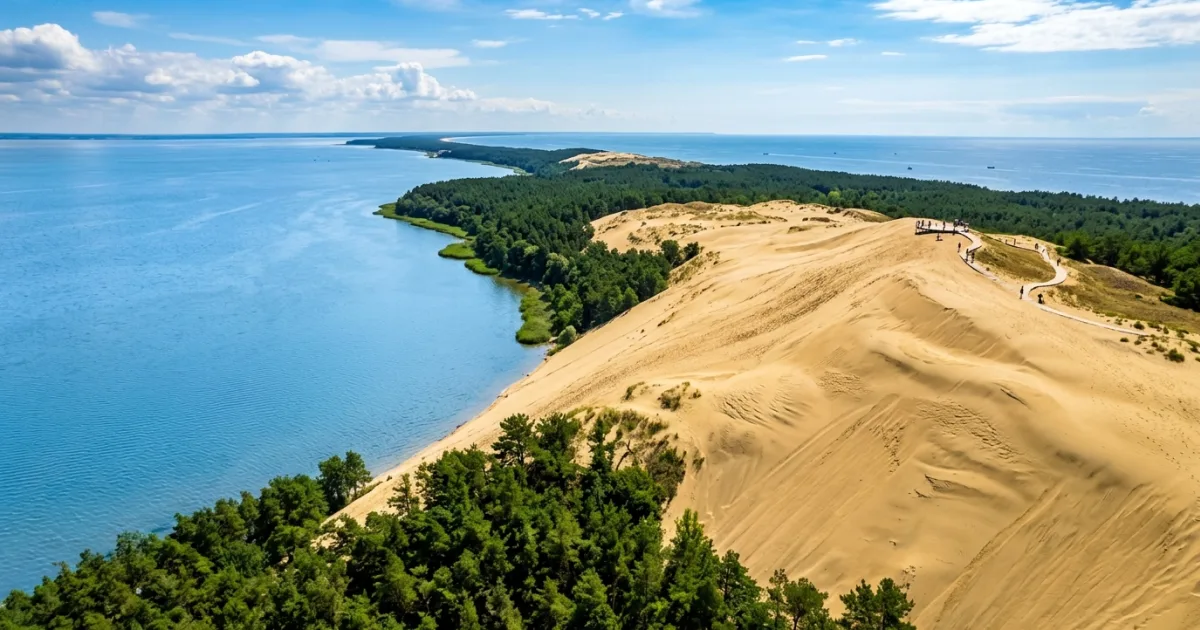
Neringa is a linear resort municipality stretching across nearly 50 kilometers of the Curonian Spit, recognized globally as a UNESCO World Heritage cultural landscape. Formed over thousands of years by sea waves, coastal winds, and deliberate human reforestation efforts, the spit balances shifting desert-like dunes with lush boreal pine forests. Its quiet townships preserve a maritime lifestyle characterized by colorfully painted wooden fishermen's houses with carved roof gables known as lėkiai, as well as harbor docks lined with historical sailing craft.
Today, Neringa stands as an emblem of sustainable slow travel. Cars are kept to moderate speeds and low numbers, making the continuous EuroVelo 10 cycling route the preferred mode of transit between the hamlets. Visitors come to marvel at the sundial atop the 52-meter-high Parnidis Dune, trace ancient pagan folklore along the Hill of Witches in Juodkrantė, and enjoy uncrowded Baltic beaches whose fine white sand and high environmental standards regularly earn Blue Flag certifications.
Reasons to Visit
- Ascend the vast Parnidis Dune to witness panoramic sunrises over the lagoon and sunsets over the Baltic Sea.
- Pedal along scenic, pine-fringed coastal bike trails linking Nida, Preila, Pervalka, and Juodkrantė.
- Explore open-air folk art at the Hill of Witches, featuring over 80 expressive wooden sculptures.
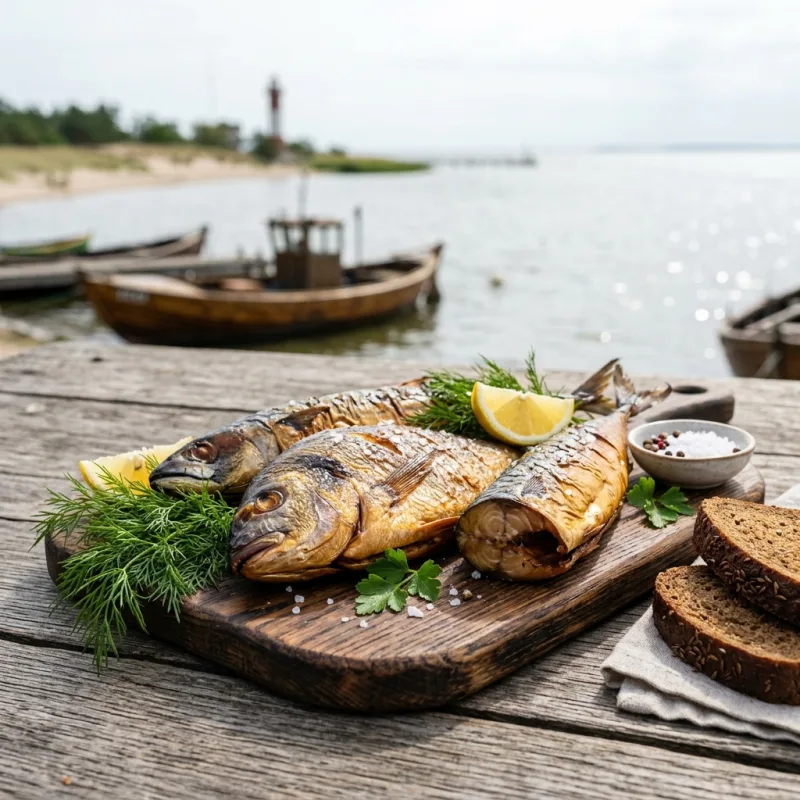
- Savor authentic alder-wood smoked fish prepared daily by multi-generational local fishing families.
- Relax on pristine, expansive sandy beaches certified for exceptional water purity and cleanliness.
Things to Avoid
- Do not step off marked wooden walkways in nature reserves or run down active dune faces, which causes severe environmental damage.
- Do not drive without preparing for the local municipality ecological preservation fee at the entry checkpoint.
- Avoid planning trips without booking accommodation far in advance for July and August, as inventory is strictly limited.
- Do not pick protected plants or disturb nesting coastal bird sanctuaries.
Local Transportation Tips
Bicycles are the primary and most enjoyable mode of transportation throughout Neringa, supported by a smooth, dedicated cycle path connecting all settlements. A reliable regional bus service operates regularly between Smiltynė (ferry terminal) and Nida, stopping at Juodkrantė, Pervalka, and Preila. Taxis are available in limited numbers, and electric scooter rentals operate seasonally in Nida and Juodkrantė.
Travel Etiquette
- Respect the vulnerable coastal ecosystem by leaving no trash and avoiding dune trampling.
- Keep noise levels low in residential fishing quarters and protected forest areas to preserve the peaceful ambiance.
- Dismount bicycles when navigating crowded pedestrian piers or historic cemetery grounds.
Recommended Age Group
Neringa offers wide open natural landscapes and calm environments suitable for various travel demographics.
- Babies (0-2 years): Recommended. Safe pedestrian boardwalks, clean coastal air, and peaceful parks make it highly accessible with strollers.
- Kids (3-12 years): Recommended. Children enjoy folklore sculpture trails, sandy beaches, wide bicycle lanes, and open spaces.
- Teens (13-19 years): Neutral. Ideal for active teens who enjoy cycling, paddleboarding, and photography, but lacks large nightlife complexes or amusement parks.
- Adults (20-64 years): Recommended. Exceptional destination for outdoor cycling, photography, culinary heritage, romantic coastal retreats, and wellness.
- Seniors (65+ years): Recommended. Level walking tracks, flat waterfront promenades, peaceful surroundings, and quality local healthcare access.
Accessibility Level: Medium
- Boardwalks allow wheelchair access to prime viewing platforms at Parnidis Dune and several beach entry points.
- Central promenades in Nida and Juodkrantė feature flat, well-paved surfaces free of significant gradients.
- Local public buses operating along the spit are modern low-floor vehicles equipped with ramp access.
Did You Know?
In the 18th and 19th centuries, moving sand dunes engulfed more than a dozen fishing villages on the Curonian Spit before massive dune-stabilization and pine reforestation campaigns halted the sands.
Cool Statistics
- Curonian Spit total length: 98 km (Lithuania controls the northern 52 km)
- Parnidis Dune height: Approximately 52 meters above sea level
- Dedicated bicycle trail network: Over 50 contiguous kilometers






Buy a compatible power adapter for your trip