Rotterdam's urban landscape is defined by its post-war reconstruction, which replaced traditional Dutch canal houses with experimental and contemporary structures. The city center features the Lijnbaan, Europe's first purpose-built pedestrian shopping street, opened in 1953. The Port of Rotterdam stretches over 40 kilometers from the city center to the North Sea, handling approximately 440 million tonnes of cargo annually. Visitors can explore this maritime infrastructure via the Spido boat tours or by visiting the Maritime Museum Rotterdam, which houses a collection of over 850,000 objects.
Sustainability initiatives are prominent in Rotterdam's current urban development plans, aiming for a fully circular economy by 2050. The Dakpark, a 1,200-meter-long roof park, exemplifies this green integration, providing recreational space while managing water runoff. The city's culinary scene reflects its multicultural population, offering everything from traditional Dutch herring stands to Michelin-starred restaurants like FG Restaurant. Transportation infrastructure includes the Rotterdam Centraal station, a major hub processing 110,000 passengers daily, connecting the city to international destinations via high-speed rail networks.
Reasons to Visit
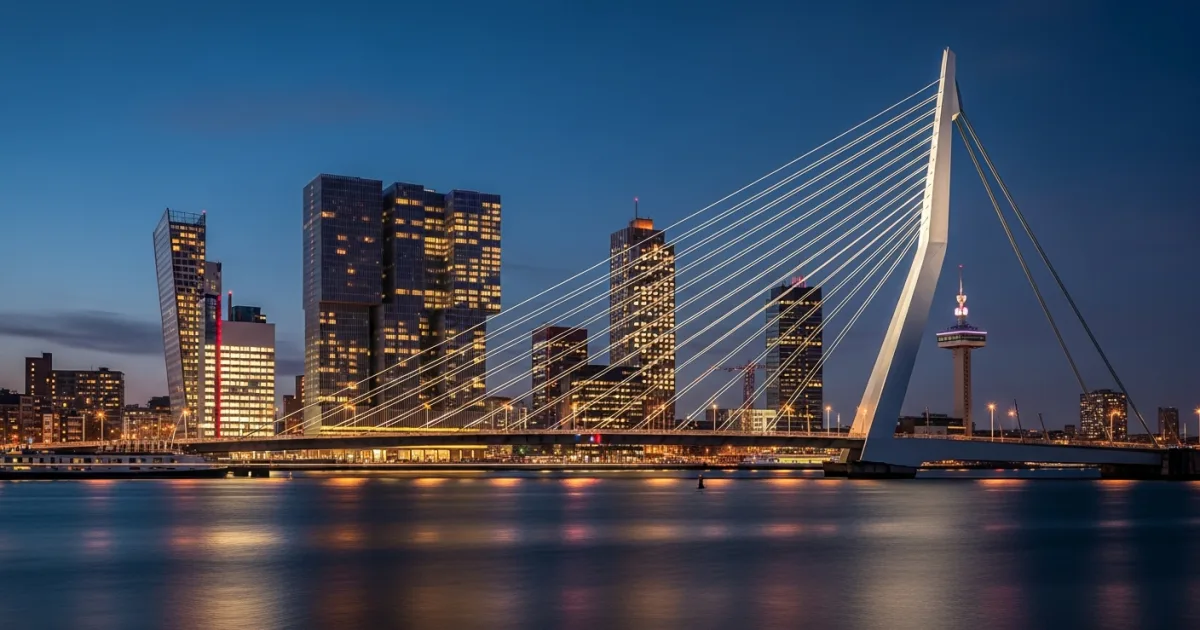
- Architectural Innovation: Rotterdam showcases groundbreaking structures like the Markthal, De Rotterdam by Rem Koolhaas, and the Euromast observation tower.
- Maritime Heritage: The Port of Rotterdam offers extensive industrial tours, while the historic Delfshaven district provides a glimpse into the city's pre-war maritime past.
- Cultural Institutions: The Museumpark area concentrates major art and natural history museums, including the Depot Boijmans Van Beuningen, the world's first fully accessible art storage facility.
- Culinary Diversity: The Fenix Food Factory and Markthal provide concentrated hubs for tasting local and international gastronomy, reflecting the city's 170+ nationalities.
Things to Avoid
- Unprepared Cycling: Navigating the extensive 600-kilometer bicycle path network requires strict adherence to local traffic rules and awareness of tram tracks.
- Rush Hour Transit: Public transportation and major roadways experience significant congestion between 07:30-09:00 and 16:30-18:00 on weekdays.
- Overlooking Neighborhoods: Confining visits solely to the city center misses culturally rich districts like Kralingen, Katendrecht, and Rotterdam Noord.
- Assuming Cash Acceptance: Many local businesses, including supermarkets and public transit, operate exclusively on a card-only basis (PIN or contactless).
Local Transportation Tips
The RET (Rotterdamse Elektrische Tram) manages the primary public transportation network, comprising five metro lines, nine tram lines, and numerous bus routes. The OV-chipkaart serves as the universal payment method for all public transit, though contactless debit and credit cards are now widely accepted for single journeys. Water taxis provide an alternative and rapid transit option across the Maas River, operating from 50 different docks with fares starting at €4.50 per zone. Bicycle rentals are ubiquitous, with companies like Donkey Republic and OV-fiets offering daily rates averaging €4 to €10, supported by dedicated cycling infrastructure throughout the municipality.
Travel Etiquette
- Punctuality: Dutch culture highly values time management; arriving exactly on time for appointments or reservations is expected.
- Direct Communication: Conversations tend to be straightforward and factual, which should not be misinterpreted as rudeness.
- Cycling Rules: Pedestrians must avoid walking in designated red bicycle lanes, and cyclists must use hand signals before turning.
- Tipping Practices: Service charges are included in restaurant bills by law, but rounding up or leaving a 5-10% tip for exceptional service is customary.
Recommended Age Group
Rotterdam offers a diverse range of attractions suitable for various age demographics, with a strong emphasis on accessible infrastructure and interactive experiences.
- Babies (0-2 years): Neutral. While the city is highly stroller-friendly with excellent public transit, specific attractions for this age group are limited.
- Kids (3-12 years): Recommended. Attractions like the Rotterdam Zoo (Diergaarde Blijdorp), the Maritime Museum's Professor Splash exhibit, and Miniworld Rotterdam provide extensive interactive engagement.
- Teens (13-19 years): Recommended. The city's modern architecture, street art tours, vintage shopping in the Pannekoekstraat, and dynamic food markets appeal strongly to adolescent interests.
- Adults (20-64 years): Recommended. Adults benefit from the comprehensive culinary scene, nightlife, architectural tours, and extensive museum offerings.
- Seniors (65+ years): Recommended. The flat topography, efficient public transportation, and abundance of accessible cultural institutions make navigation and exploration highly manageable.
Accessibility Level: Medium
- Public Transit: All metro stations and the majority of tram and bus stops are equipped with elevators or ramps, making them fully wheelchair accessible.
- Museums: Major institutions like the Kunsthal and Boijmans Van Beuningen Depot offer step-free access, accessible restrooms, and complimentary wheelchair rentals.
- Urban Terrain: The city's post-war grid features wide, flat pavements with dropped curbs, facilitating easy movement for mobility aids.
- Visual/Auditory Aids: Many tourist attractions provide audio guides with induction loops and tactile exhibits for visually impaired visitors.
Did You Know?
Rotterdam's Euromast, constructed in 1960, was originally 101 meters tall but was extended to 185 meters in 1970 with the addition of the Space Tower, making it the highest building in the Netherlands accessible to the public. The city is also home to the Witte Huis (White House), built in 1898, which is considered Europe's first skyscraper, standing at 43 meters with 10 floors.
Cool Statistics
- Port Size: The Port of Rotterdam covers 105 square kilometers and handles over 8 million TEU containers annually.
- Bicycle Infrastructure: The city maintains over 600 kilometers of dedicated bicycle paths.
- Demographics: Approximately 52% of Rotterdam's population has a non-Dutch background.
- Reconstruction: The 1940 bombardment destroyed 24,000 homes, leading to the modern architectural landscape seen today.







Buy a compatible power adapter for your trip