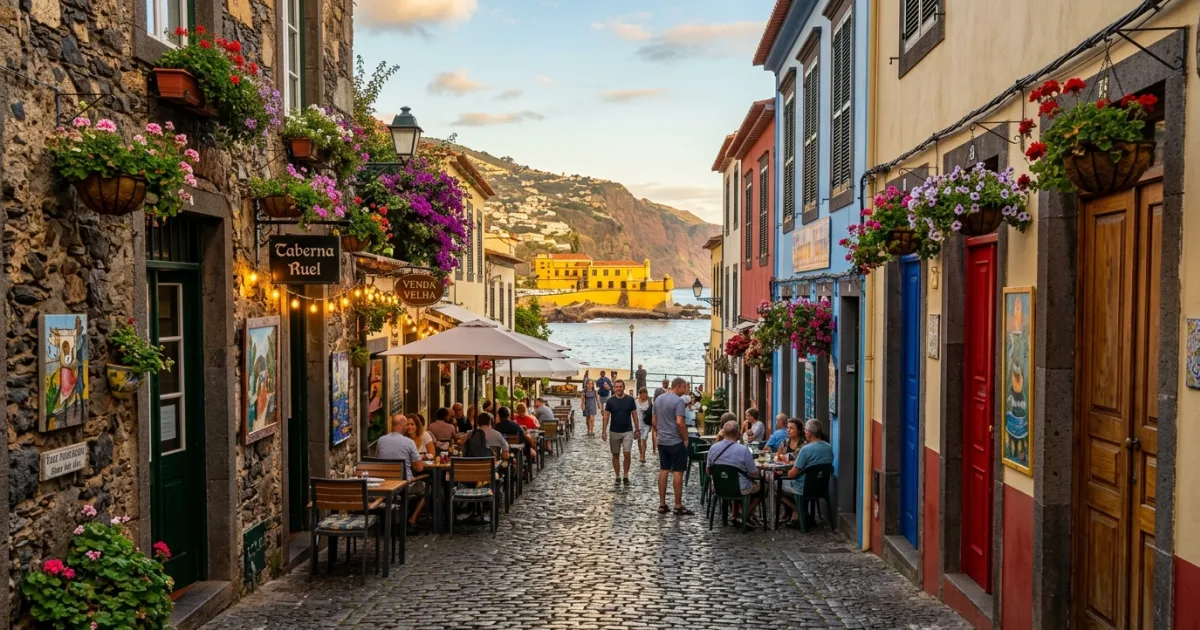
Zona Velha stands as the historic cradle of Funchal, established when João Gonçalves Zarco landed on the southern shores of Madeira in the 15th century. This enclave preserves the dense medieval street grid that once housed fishermen, shipbuilders, and merchant families. Its architectural footprint features whitewashed stone masonry, terracotta roofs, and decorative Manueline elements, all framed by the dramatic rise of Madeira's central mountains behind and the Atlantic surf in front.
In the early 2000s, the district underwent significant restoration, culminating in the renowned Arte de Portas Abertas (Open Doors Art Project). Hundreds of weathered building entrances were transformed by international and local painters into canvas murals. Today, Zona Velha bridges historical preservation with modern culinary vitality, making it one of the most culturally active neighborhoods in the Macaronesian islands.
Reasons to Visit
- Marvel at the open-air art gallery of over 200 uniquely painted doorways along Rua de Santa Maria.
- Tour the 17th-century canary-yellow Forte de São Tiago overlooking ocean breakers.
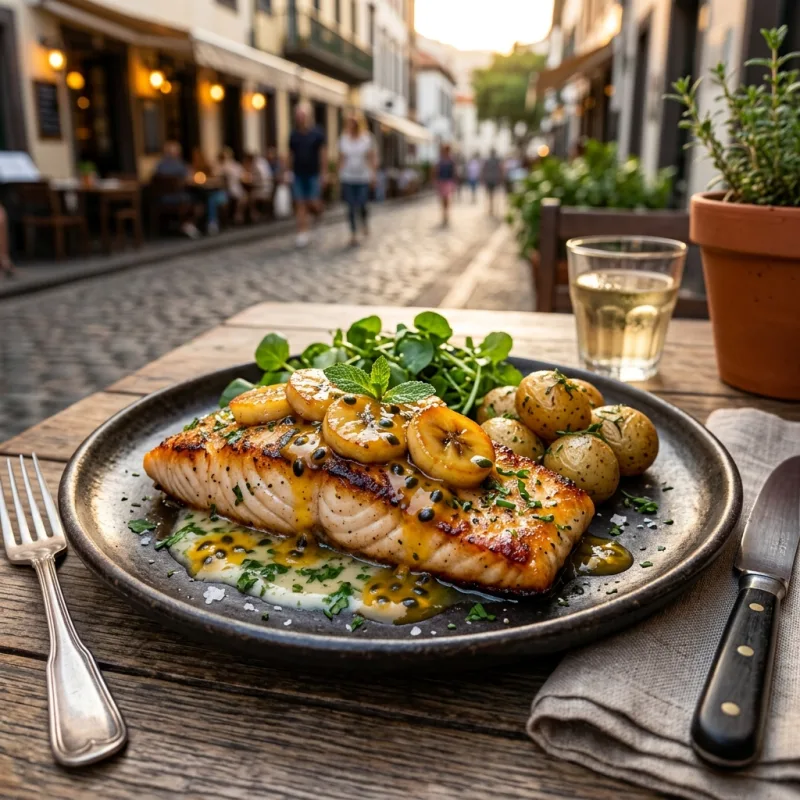
- Savor authentic Madeiran cuisine, from limpets to espetada skewers, on bustling cobblestone patios.
- Experience freshly mixed citrus and passion fruit ponchas at heritage taverns.
- Access the Barreirinha sea bathing complex for an Atlantic dip right beside historic fortifications.
Things to Avoid
- Avoid wearing high heels or smooth-soled shoes; the traditional Portuguese calçada pavers are slick and uneven.
- Do not accept aggressive hawking from overly persistent restaurant hosts on central tourist stretches without checking menus and prices first.
- Avoid buying overpriced fruit inside the central tourist atrium of Mercado dos Lavradores without clarifying price per kilogram.
- Do not drive a rental car down Rua de Santa Maria; streets are narrow, pedestrian-heavy, and strictly regulated.
Local Transportation Tips
Zona Velha is best explored entirely on foot due to its compact pedestrian layout. Public 'Horários do Funchal' city buses terminate nearby at the waterfront terminal on Avenida do Mar. The Funchal-Monte Cable Car station sits at the western entrance of the neighborhood, providing convenient aerial transit directly up to the Monte Palace Tropical Garden.
Travel Etiquette
- Acknowledge shopkeepers and waitstaff with a polite 'Bom dia' or 'Boa tarde' upon entering establishments.
- Tipping is discretionary in Portugal; leaving 5% to 10% in sit-down restaurants for good service is customary and appreciated.
- Respect residents living above commercial premises by keeping noise levels reasonable when walking through residential alleys late at night.
Recommended Age Group
Zona Velha offers cultural highlights for various traveler ages, though uneven walkways require consideration.
- Babies (0-2 years): Neutral. Traditional cobblestones can make strollers bumpy; baby carriers are strongly advised.
- Kids (3-12 years): Neutral. Children enjoy the colorful painted doors and nearby cable car, though streets can get crowded during dinner hours.
- Teens (13-19 years): Recommended. Highly engaging photography spots, beach access at Barreirinha, and vibrant open-air street art.
- Adults (20-64 years): Recommended. Unbeatable neighborhood for romantic dining, art appreciation, wine tasting, and social nightlife.
- Seniors (65+ years): Neutral. Highly enjoyable historical atmosphere and flat elevation near the sea, but polished basalt stones present a slip risk after rain.
Accessibility Level: Medium
- The main thoroughfare of Rua de Santa Maria is generally flat, but paved with traditional irregular Portuguese cobblestones.
- Several street-level restaurants feature outdoor tables on the pavement with ramped or step-free entries.
- The waterfront promenade adjacent to Avenida do Mar offers wide, flat, barrier-free tarmac and smooth paving for wheelchair users.
- Wheelchair-accessible public restrooms are located near the Funchal Cable Car base station and the Mercado dos Lavradores.
Did You Know?
The yellow Forte de São Tiago was originally constructed in the early 1600s to protect Funchal from recurring raids by French privateers and North African corsairs who regularly targeted Madeira's lucrative sugar warehouses.
Cool Statistics
- Over 200 doors along Rua de Santa Maria and adjacent alleys feature custom artist murals.
- The neighborhood dates back more than 600 years to the original 1425 Portuguese colonization.
- Forte de São Tiago retains original 17th-century coastal battery ramparts perched right above the Atlantic tide.






Buy a compatible power adapter for your trip