Disclosure: This site contains affiliate links. We may earn a commission if you make a purchase, at no extra cost to you.

>
>
>
>
>
Madeira Natural Park

Madeira Natural Park

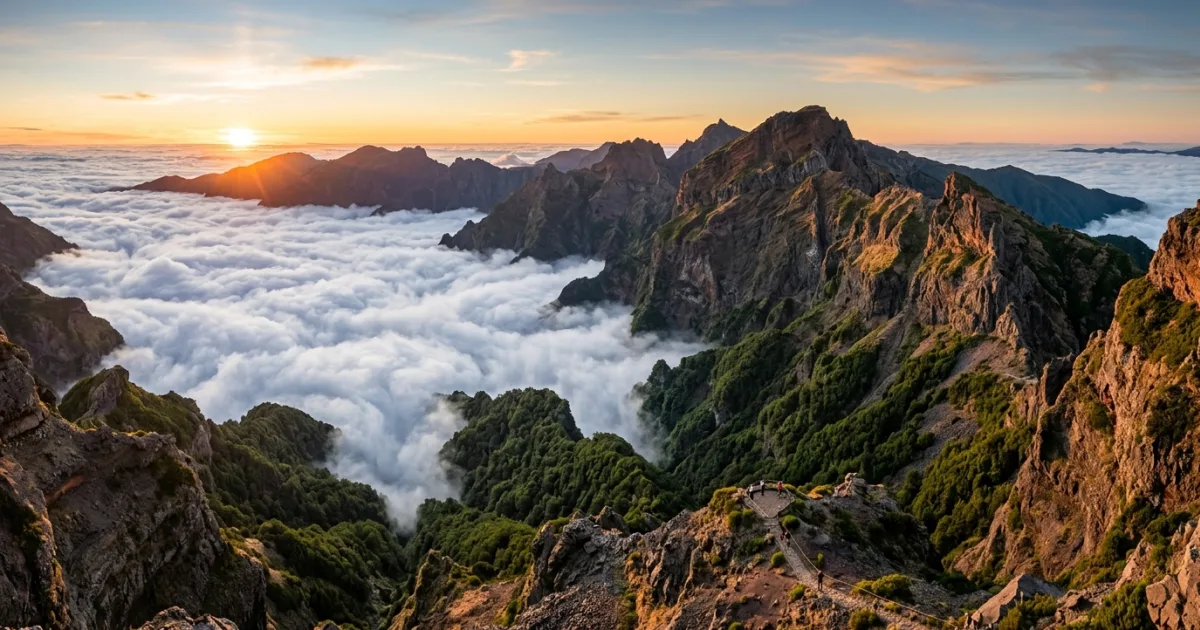
Panoramic view of rugged volcanic peaks above cloud level in Madeira Natural Park at sunrise

Madeira Natural Park Overview & Key Highlights

Madeira Natural Park protects over 60 percent of Madeira Island, containing dramatic terrain that stretches from high volcanic ridges down to sea cliffs. The centerpiece of this vast reserve is the UNESCO-listed Laurissilva forest, a prehistoric subtropical rainforest characterized by ancient twisted stinkwood trees, cascading waterfalls, and verdant mosses. Navigating the park centers on walking the iconic levadas, an intricate 15th-century irrigation canal system adapted into internationally renowned walking trails. Visitors experience stark microclimates across brief driving distances, transitioning from misty subtropical cloud forests at Fanal to the jagged, sun-drenched sea stacks of Ponta de São Lourenço. Peak-to-peak traverses, such as the trail linking Pico do Arieiro to Pico Ruivo, reward hikers with panoramic views above the Atlantic cloud layer. Because services within the core wilderness zones are intentionally restricted, thorough route planning and proper alpine gear are essential for safely exploring the interior.

Madeira Natural Park Travel Guide: Logistics & In-Depth Tips

Covering over 60 percent of Madeira’s total land area, Madeira Natural Park is an expansive network of protected nature reserves established to safeguard the island’s fragile biodiversity. The park spans vertical ecological zones ranging from arid, windswept maritime peninsulas to temperate rainforests and jagged volcanic summits piercing the clouds at nearly 2,000 meters.

Central to its ecological heritage is the ancient Laurissilva forest, a primary relict rainforest that once dominated southern Europe before the last glacial epoch. The park’s centuries-old levadas—narrow stonework watercourses carved into vertical cliffs—double as an extraordinary trail system, allowing travelers to walk deep into pristine subtropical ravines adorned with giant ferns, mossy grottos, and thundering cascades.

Reasons to Visit

  • Wander through the UNESCO World Heritage Laurissilva forest, featuring century-old Til and Laurel trees veiled in ethereal mist.
  • Trek the dramatic high-altitude trail between Pico do Arieiro and Pico Ruivo above rolling sea-of-clouds formations.
  • Explore engineering marvels on historic levada routes like Levada das 25 Fontes, Levada do Rei, and Caldeirão Verde.
  • Observe rare flora and bird species found nowhere else on earth, including the Madeiran laurel pigeon and Zino’s petrel.
  • Witness the volcanic coastal geology and dramatic red-basalt sea stacks at the Ponta de São Lourenço reserve.

Things to Avoid

  • Never embark on levada or mountain ridge trails without checking the official IFCN park status for weather warnings and landslide trail closures.
  • Avoid walking through long levada tunnels without a strong flashlight or headlamp; mobile phone flashes are insufficient for footing and puddle detection.
  • Do not touch, pick, or trample endemic plants or take stones from historic drystone retaining walls.
  • Never leave litter or organic waste behind; remote wilderness sections have zero collection services and delicate wildlife scavengers.
  • Avoid parking along narrow rural hairpin curves where agricultural vehicles, local buses, or emergency services require clearance.

Local Transportation Tips

Getting around Madeira Natural Park is most efficiently done by renting a car with adequate engine torque to handle the island's notorious 20-30% mountain gradients. While public bus companies (such as SAM, Horários do Funchal, and Rodoeste) reach peripheral towns and a few trailheads like Ribeiro Frio, interior hubs like Fanal and Pico do Arieiro lack routine schedule coverage. Dedicated outdoor shuttle services, organized hiking transfers, and private taxis offer reliable alternatives for one-way point-to-point routes.

Travel Etiquette

  • Yield right-of-way to ascending hikers on narrow levada paths and step inward toward the rock wall rather than toward the exposed cliff edge.
  • Keep noise levels to a minimum to respect the tranquil natural atmosphere and avoid disturbing nesting bird colonies.
  • Stay on designated boardwalks and marked footpaths to prevent topsoil erosion and protect vulnerable root systems in the ancient forest.
  • Support local micro-economies by patronizing family-run tascas and snack bars in rural trail-gateway villages.

Recommended Age Group

Madeira Natural Park welcomes outdoor enthusiasts of varying capabilities, but the rugged vertical landscape dictates trail suitability by age group.

  • Babies (0-2 years): Not Recommended. Rugged, narrow levada channels, rocky trails, drop-offs, and tunnels make standard strollers impossible, and steep drop-offs pose challenges for baby carriers on exposed segments.
  • Kids (3-12 years): Neutral. Selected flat, well-fenced trails (like the Balcões walk at Ribeiro Frio) are engaging and easy, but long levadas with high drop-offs and dark tunnels require constant parental vigilance.
  • Teens (13-19 years): Recommended. Ideal for energetic adolescents interested in adventure trekking, canyoning, coastal scrambling, and photography.
  • Adults (20-64 years): Recommended. Excellent match for hikers, trail runners, and nature lovers eager to explore multi-hour alpine traverses and scenic rainforest paths.
  • Seniors (65+ years): Recommended. Active older travelers can enjoy accessible short walks, viewpoints (miradouros), botanical gardens, and gentle forest tracks, though proper trekking poles are strongly advised.

Accessibility Level: Medium

  • Highland volcanic trails and historic levadas are predominantly inaccessible to wheelchair users due to narrow stone ledges, uneven volcanic boulders, steep staircases, and wet tunnels.
  • Selected viewpoints, such as Miradouro dos Balcões and several lookouts around Encumeada and Pico das Pedras, feature stabilized gravel or paved paths suitable for all-terrain mobility devices.
  • The Pico do Arieiro summit parking area provides direct, step-free access to an observation deck with panoramic mountain views above the clouds.
  • Modern visitor centers and forestry interpretive stations (such as Quinta do Santo da Serra and select park facilities) offer accessible restrooms and flat walkways.

Did You Know?

The Laurissilva forest within Madeira Natural Park is approximately 15 to 40 million years old, representing the largest and best-preserved surviving remnant of an archaic laurel rainforest type that blanketed the Mediterranean basin before the Ice Ages wiped it out on continental Europe.

Cool Statistics

  • Covers roughly 444 square kilometers (171 square miles), accounting for nearly two-thirds of Madeira Island.
  • Features over 2,000 kilometers of historic levada waterways threading through peaks and valleys.
  • Reaches its highest point at Pico Ruivo, ascending to 1,862 meters (6,109 feet) above sea level.
  • Protects more than 15,000 hectares of primary subtropical laurel forest recognized by UNESCO.

Address:

Parque Natural da Madeira, Madeira, Portugal

Find Nearby Accommodations

Basic Info

address icon

COUNTRY & Region

Portugal,
Europe

ACCESSIBILITY LEVEL​

Medium
Currency icon

LOCAL CURRENCY​

Euro (EUR)
Price level icon
Medium
Safety Level icon

SAFETY LEVEL

Duration icon

Recommended Duration

• 1-7 days
• Full day

Electricity

electricity icon

Electricity

220-240V, 
50Hz
Plug Socket icon

Plug Type

• Type C (Round pin)
• Type F (Two round pins with earth clips)
Plug types
Click To View Plug Types
Madeira Natural Park is part of our
Coolcation collection

Activities To Do In Madeira Natural Park

Best Time To Visit Madeira Natural Park

Madeira Natural Park is accessible year-round, but conditions vary dramatically depending on elevation and maritime air currents.

  • Spring (April to June): Optimal wildflowers, lush vegetation, and mild temperatures averaging 18°C to 22°C (64°F to 72°F) ideal for long trail treks.
  • Summer (July to September): Drier conditions along high mountain ridges (Pico do Arieiro to Pico Ruivo) and warmer coastal walks, though popular trails see peak foot traffic.
  • Autumn (October to November): Pleasing temperatures and vibrant misty atmospheres in the Fanal cloud forest, though early rainfall increases water flow at interior cascades.
  • Winter (December to March): Heavy rainfall and sudden storms can trigger landslides, levada path closures, and near-freezing temperatures on high peaks; always verify official IFCN trail statuses.

Average Temperatures Per Month

Remember to check the weather forecast a few days before the trip and before heading to the airport.

Safety Level icon

Safety Level

Steep drop-offs line many levadas; stay on marked paths and never step past safety cables or climb wet concrete retaining walls. Carry a reliable light source for walking through low, narrow irrigation tunnels that can exceed several hundred meters in length. Sudden cloud cover (the local 'capacete') can drop temperatures rapidly and cause extreme disorientation on high volcanic ridges; download offline trail maps before heading into mountain valleys. Check the official IFCN (Institute of Forests and Nature Conservation) website daily for trail closures caused by rockfalls, heavy rainfall, or forest fires.

The rating is based on multi-year peace, crime, and security indices. Before you go, always verify current conditions through official government travel advisories.

Emergency Numbers

Police: 112
Ambulance: 112

No internet needed • Includes local translations • Free for TravelingWiz readers

Spoken Languages

Portuguese (official); English is widely spoken in tourist offices, rental centers, mountain refuges, and surrounding towns.

Learn The Language

  • Olá: Hello
  • Por favor: Please
  • Obrigado / Obrigada: Thank you (male/female speaker)
  • Bom dia: Good morning
  • Onde fica o trilho?: Where is the trail?
  • Água: Water
  • Socorro!: Help!
  • Adeus: Goodbye
Travel Booking Partner - TravelingWiz

Trip Cost & Budgeting for Madeira Natural Park, 2026

Everything you need to know about money while traveling
Is Madeira Natural Park expensive for tourists in 2026? No, it offers moderate European value. Because Madeira Natural Park sits in Madeira Island, local costs match the island's prices. Based on Human Verified prices, you can expect to pay around €1.50 for a coffee, €2.50 for a local draft beer, and €20 for a main meal at a mid-range restaurant. Accommodation remains reasonable. Use the data table below to calculate your specific daily budget based on your travel style.
Currency icon

LOCAL CURRENCY​:

Euro (EUR)
Price level icon
Medium
Credit cards are widely accepted across Madeira, but carrying small cash is helpful for buses, parking, and village cafes.

Per person, per day – pocket cash for small purchases.

Local: 12
Euro (EUR)
≈ 14 USD

Full daily spend estimation (accommodation, food, transportation, attractions).

Travel Style
Euro (EUR)
≈ USD ($)
Budget
65
74
Mid-range
115
131
Comfort
250
285

The Prices, Daily costs, and calculator results are estimates for planning purposes only. Actual costs may vary based on season, booking timing, personal spending habits, and currency fluctuations. TravelingWiz cannot be held responsible for discrepancies between these estimates and your final trip expenses.

  • • Look for local restaurants offering a Prato do Dia (Dish of the Day), which includes a main course, drink, and coffee for around €10 to €12.
  • • Use the yellow Horários do Funchal buses or SAM buses to travel around the island instead of relying on expensive taxi rides.
  • • Take advantage of Madeira's extensive network of free levada hiking trails rather than paying for commercial guided outdoor tours.
  • • Buy fresh tropical fruits, local cheese, and snacks at municipal markets or Pingo Doce supermarkets to prepare picnic lunches for hike days.

Pre-Order Tickets

Avoid disappointment when tickets sell out — and skip the long lines by booking online in advance. You’ll often save up to 20% too.
Save up to 20%

Travel Discounts & Coupons

Save on hotels, attractions, transport, and gear — find verified discounts for smarter travel spending.
Verified Coupons

What To Pack

  • Durable, waterproof hiking boots with deep vibram lugs for slippery basalt rocks and muddy levada paths
  • Lightweight waterproof and windproof jacket (Gore-Tex or similar) to handle sudden highland cloud bursts
  • Headlamp or high-lumen flashlight for navigating unlit, wet irrigation tunnels along popular levada routes
  • Layered moisture-wicking fleece or thermal base layer for summit areas where temperatures drop sharply
  • Compact daypack with integrated waterproof rain cover and dry sacks for electronics
  • Offline navigation app (AllTrails, Maps.me) and a portable battery pack, as mobile signals drop in deep ravines
  • Refillable hydration bladder or bottle (minimum 1.5 liters) and nutrient-dense trail provisions
We couldn't find tips for Madeira Natural Park.
If you got any, please share

Recommended Itineraries for Traveling to Madeira Natural Park

We couldn't find itineraries for Madeira Natural Park.
you can contact us for custom trip plan

Food & Drink Highlights

Local Food Overview

Gastronomy around Madeira Natural Park centers on rugged, nourishing mountain fare tailored to agriculturalists and hikers. Upland villages like Ribeiro Frio, Curral das Freiras, and Santo da Serra specialize in fresh ingredients sourced directly from mountain streams and volcanic soils. Traditional meals prioritize local meats skewered over aromatic woods, stone-ground cornmeal porridge, and warming legume soups, balanced by tropical fruit cultivations on lower slopes.
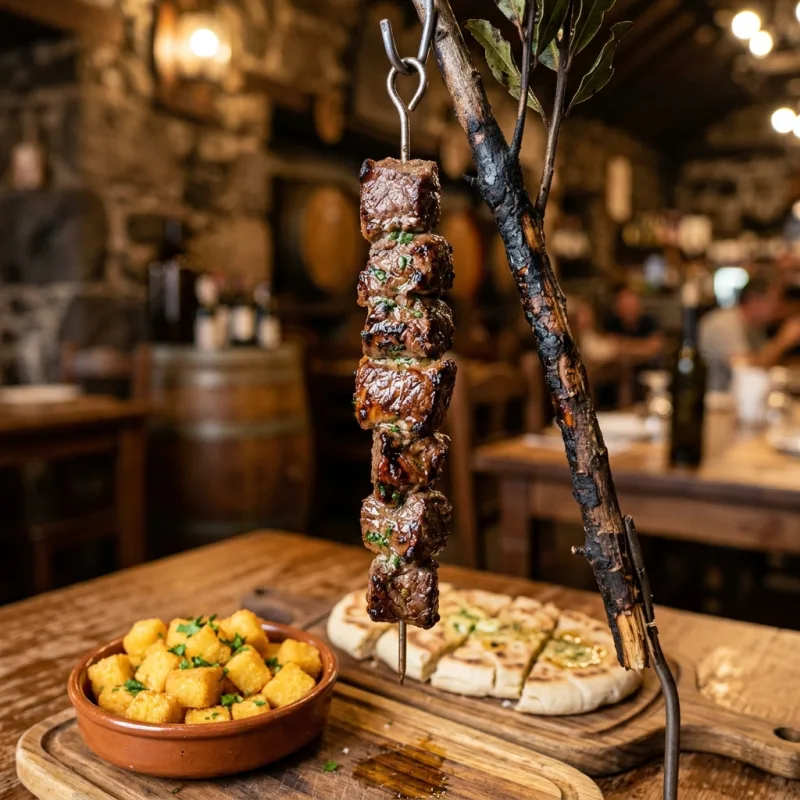
Espetada Madeirense beef skewer on a laurel wood branch served with fried polenta

Must Try Dish

Espetada Madeirense - Tender cubes of beef rubbed with coarse sea salt, crushed garlic, and fresh bay leaves, skewered on green laurel branches and flame-grilled over open wood embers. Traditionally served hanging vertically from a table stand alongside golden cubes of fried milho frito (savory polenta).
Food Experiences Title Icon

Food
Experiences

Discover cooking classes, tastings and local food tours

No food experience found
Maya, the human travel expert at TravelingWiz, offering curated, non-AI expertise

Maya’s Final Checklist for Madeira Natural Park

Logistics shouldn’t be the focus of your trip—the experience should. I’ve hand-vetted these essential partners to ensure your arrival, stay, and exploration are as smooth as an Athenian breeze.

Where to Stay

From boutique hotels to local apartments—compare thousands of options and find the perfect stay in the best neighborhood.

Air Travel

Getting there should be seamless. Compare the best routes and prices across top airlines to start your journey on the right note.

Local Guides

Connect with experts who know the destination best. Get personalized advice and insider tips to help you plan your perfect trip.

Travel Protection

The “Engineer’s” rule: always have a backup. Secure your trip with a plan that covers every “what if” and unexpected change.

Car Rentals

Explore at your own pace with total freedom. Compare reliable rental options and find the right vehicle for your adventure.

Visa Services

Don’t let paperwork slow you down. Get expert assistance with your application to ensure all your entry documents are in order.

FAQs

General entry to the natural park is free, but non-resident hikers must pay a nominal €3 conservation fee per person for select highly trafficked classified trails (PR paths like PR1 Pico do Arieiro, PR6 25 Fontes, and PR9 Levada do Caldeirão Verde) via the regional Simplifica portal.
Most classified PR levada trails are well-maintained with steel safety cables along exposed edges. However, paths can be slippery, narrow, and dark inside tunnels, requiring sturdy boots, a headlamp, and caution. Solo hikers should stay on popular classified routes and avoid unmarked paths.
Some trailheads (like Ribeiro Frio or Machico) can be accessed via island public buses (SAM or Rodoeste). However, remote highland areas like Fanal, Pico do Arieiro, and Achada do Teixeira have limited or non-existent bus routes, making a rental car or specialized hiking shuttle the best transport option.
Wild camping is strictly prohibited across Madeira Natural Park to protect delicate ecosystems. Camping is only allowed in designated recreational forest areas (Áreas de Pernoita) and requires an advance permit issued through the IFCN government portal.

Your Insights Matter

TravelingWiz grows through the stories of our community. If you’ve recently explored ,Madeira Natural Park share your tips and stories to help us perfect our guides for the next traveler.

Related Articles

Check out our related articles and blog posts to learn even more about the destination.

No related articles found

Don’t Travel Alone

Share with your friends and family

Where should we send your offline card?

We hate spam just as much as you do

newsletter_consent *