Braga carries the proud Portuguese moniker 'A Cidade dos Arcebispos' (The City of the Archbishops). Originating as the Roman settlement Bracara Augusta in 16 BC, it evolved into an imperial regional capital before transforming into the premier ecclesiastical seat of medieval Iberia. Today, the Sé de Braga—the oldest standing cathedral in Portugal, founded decades before the nation's independence—epitomizes this layered heritage with its mix of Romanesque, Gothic, Manueline, and Baroque artistry.
Alongside this sacred legacy, Braga thrives as an energetic university hub hosting more than 20,000 students at the Universidade do Minho. This intellectual community enlivens historic squares like Praça da República with independent bookstores, modern specialty roasters, and lively outdoor craft markets. The surrounding landscape, dotted with lush vineyards producing fresh Vinho Verde, provides an ideal backdrop for cultural discovery and scenic exploration across northern Portugal.
Reasons to Visit
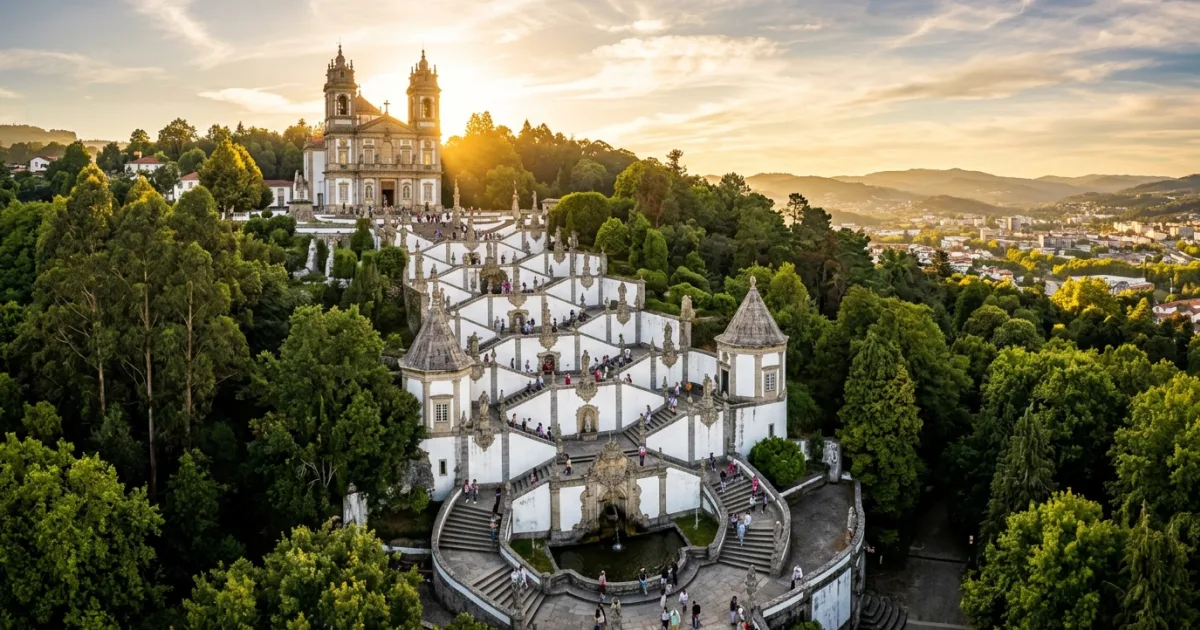
- Bom Jesus do Monte: A UNESCO World Heritage pilgrimage sanctuary featuring an extraordinary 577-step Baroque stairway lined with symbolic fountains and allegorical chapels.
- Sé de Braga: Portugal's oldest cathedral, housing centuries of royal tombs, rare carved gilded woodwork, and exceptional ecclesiastical artifacts.
- Baroque Architecture: Majestic civic palaces such as the Palácio do Raio with its elaborate rococo azulejo-tiled façade.
- Rich Minho Gastronomy: Authentic taverns serving hearty roast kid, Bacalhau à Braga, and crisp estate-grown Vinho Verde wines.
- Strategic Northern Hub: An effortless jumping-off point to explore Guimarães, Peneda-Gerês National Park, and the Lima River valley.
Things to Avoid
- Do not attempt to walk up the Monte Espinho highway to Bom Jesus; utilize the shaded pilgrim path staircase or take the water-balanced funicular.
- Avoid dressing in beachwear or exposed tank tops when visiting active sanctuaries, monasteries, and cathedral chapels.
- Do not rely entirely on ride-hailing services for rural day trips outside the city; regional buses or car rentals provide far more dependable returns.
- Avoid scheduling major museum visits on Mondays when municipal cultural sites, including the Biscainhos Museum, are typically closed.
Local Transportation Tips
Braga features a compact, pedestrian-first historic core that is best discovered on foot. For destinations beyond the center, Transportes Urbanos de Braga (TUB) operates an extensive and affordable municipal bus network. Tickets can be purchased directly from the driver with small change or via rechargeable cards at central kiosks. Taxis and app-based rides (Uber and Bolt) are abundant, reliable, and reasonably priced. Frequent suburban commuter trains connect Braga railway station to Porto Campanhã and São Bento stations in approximately 60 minutes.
Travel Etiquette
- Greet shopkeepers and waitstaff with a polite 'Bom dia' (good morning) or 'Boa tarde' (good afternoon) upon entering an establishment.
- Maintain respectful quiet and turn off mobile phone ringers inside cathedrals and active pilgrimage sanctuaries.
- Tipping is discretionary in Portugal; leaving 5% to 10% in cash for attentive sit-down restaurant service is appreciated but never mandatory.
Recommended Age Group
Braga provides an enriching, safe travel environment with facilities and attractions suited for all generations.
- Babies (0-2 years): Neutral. The smooth, car-free center is stroller friendly, but the uneven cobblestones and steep monumental staircases require a sturdy carrier.
- Kids (3-12 years): Recommended. Children enjoy the novelty of the water-powered funicular, leafy municipal parks like Jardim de Santa Bárbara, and family-friendly sweet shops.
- Teens (13-19 years): Recommended. Vibrant café culture, university atmosphere, photography backdrops, and nearby outdoor day trips keep teenagers engaged.
- Adults (20-64 years): Recommended. Unmatched concentration of architecture, wine bars, art museums, and culinary heritage tailored for comprehensive exploration.
- Seniors (65+ years): Recommended. Flat historic avenues, accessible public transit, rich religious history, and manageable walking routes ensure an easy, relaxed pace.
Accessibility Level: Medium
- The historic center of Braga is predominantly level and pedestrianized, with curb cutouts and smooth central pavement corridors.
- Bom Jesus do Monte features elevator access via the historic funicular and direct vehicle drop-off zones at the summit plaza for visitors who cannot climb stairs.
- The Sé de Braga offers accessible ground-floor entry to the main nave and cloister areas, though some elevated chapels feature stone steps.
- Local TUB city buses are largely modern low-floor vehicles equipped with folding ramps and dedicated wheelchair bays.
Did You Know?
The funicular at Bom Jesus do Monte, inaugurated in 1882, is the oldest operating water-counterbalanced funicular railway in the world. It operates purely on gravity and water weight without electric motor propulsion.
Cool Statistics
- 16 BC: The year Roman Emperor Augustus founded Bracara Augusta.
- 1089: Year construction began on the current Sé de Braga, older than Portugal as a sovereign nation.
- 577: Number of granite steps ascending the pilgrimage stairway of Bom Jesus do Monte.
- 1882: Year the world-renowned hydraulic funicular of Bom Jesus opened to the public.






Buy a compatible power adapter for your trip