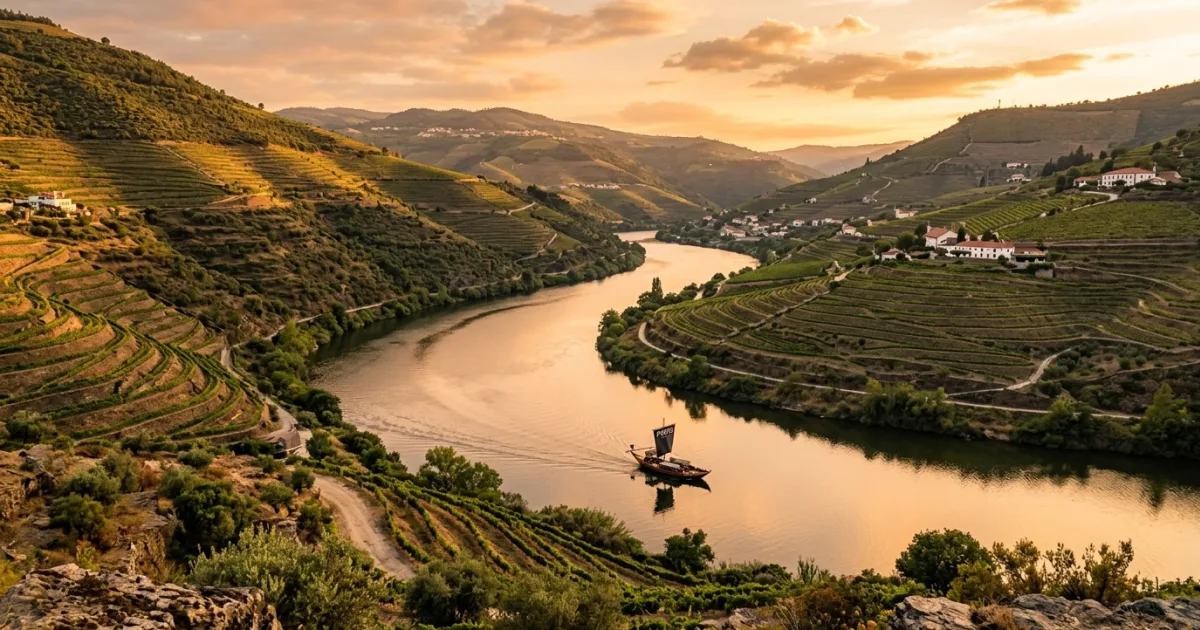
The Douro Valley stretches from near the Spanish border across north-central Portugal to the city of Porto, where the Douro River empties into the Atlantic Ocean. Designated as the Alto Douro Wine Region UNESCO World Heritage site, it holds over 2,000 years of viticultural tradition. Its defining visual signature consists of steeply terraced schist hillsides painstakingly chiseled by hand, supporting rows of indigenous grape varieties including Touriga Nacional, Touriga Franca, and Tinta Roriz.
Travelers to the valley experience a relaxed rural rhythm distinct from Lisbon or Porto. Historic estates—many run by families for multiple generations—welcome guests for private cellar tours, tastings, and estate stays ranging from rustic agritourism farms to luxury wellness resorts. Beyond the wine glass, the region offers dramatic high-altitude viewpoints like Casal de Loivos and São Salvador do Mundo, serene river cruising, and remarkable historic towns such as Lamego with its monumental baroque sanctuary.
Reasons to Visit
- Tour the world's oldest demarcated wine region and taste world-class Port and dry DOC Douro wines on site.
- Admire the UNESCO World Heritage terraced landscape, an extraordinary engineering and agricultural marvel.
- Ride the scenic Linha do Douro railway along the edge of the river canyon.
- Cruise along quiet river bends aboard historic wooden rabelo boats.
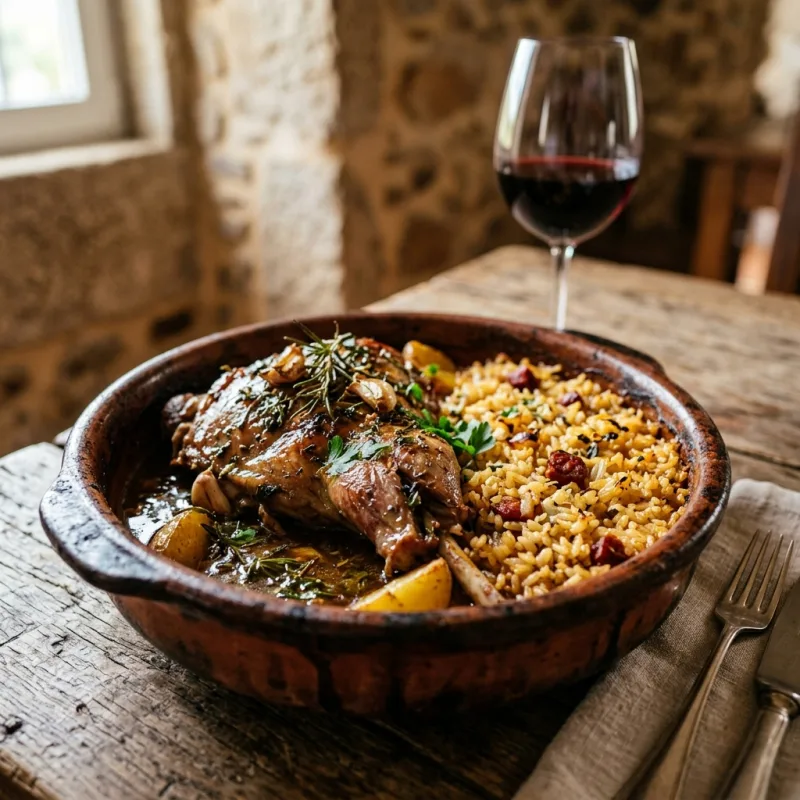
- Enjoy authentic northern Portuguese hospitality, farm-fresh olive oils, and slow-roasted mountain cuisine.
Things to Avoid
- Avoid driving the serpentine mountain roads after dark if you are unfamiliar with narrow roads lacking modern barriers.
- Do not show up at private wine estates without booking ahead; most quintas require advance appointments for tours and tastings.
- Avoid scheduling tightly packed itineraries; driving between neighboring quintas often takes double the expected time due to steep switchbacks.
- Do not plan heavy hiking during midday in July and August when temperatures regularly reach 40°C (104°F).
Local Transportation Tips
Navigating the Douro Valley requires thoughtful planning due to the mountainous topography. The Linha do Douro train is a reliable, highly scenic railway running along the water's edge from Porto's São Bento station to Pocinho, stopping at Régua and Pinhão. For visiting hilltop viewpoints and remote quintas, renting a car provides maximum freedom; however, drivers should be comfortable with tight switchbacks. Taxis and ride-shares are scarce outside of Peso da Régua, so organizing transfers through your accommodation or hiring a local driver for wine tours is strongly advised.
Travel Etiquette
- Address estate hosts and winery staff warmly with standard greetings ('Bom dia' or 'Boa tarde') before asking questions.
- Tip around 5% to 10% in sit-down restaurants for attentive service, though it is not legally mandated.
- Dress smartly when visiting tasting rooms and historic estates; beachwear or athletic gear is frowned upon in upscale quintas.
- Respect private vineyard property by not picking grapes from the vines without direct permission from estate guides.
Recommended Age Group
The Douro Valley appeals primarily to independent adult travelers, wine enthusiasts, and mature couples, though older children can enjoy select outdoor activities.
- Babies (0-2 years): Not Recommended. Steep gravel pathways, rugged stone terraces, and historic estates are difficult to navigate with strollers, and winding roads can cause motion sickness.
- Kids (3-12 years): Neutral. Children can enjoy riverboat cruises and pool amenities at estate resorts, but viticulture-focused activities offer limited engagement for younger visitors.
- Teens (13-19 years): Neutral. Kayaking on the Douro, train journeys, and historical sites offer some interest, though nightlife and modern youth attractions are virtually nonexistent.
- Adults (20-64 years): Recommended. An ideal destination for wine connoisseurs, culinary enthusiasts, road-trippers, and romantic getaways.
- Seniors (65+ years): Recommended. Perfect for scenic river cruises, guided tastings, leisurely train trips, and serene landscape photography, provided moderate mobility allows for light walking.
Accessibility Level: Medium
- Accessibility can be challenging throughout the region due to steep natural terrain, historic cobbled paving, and multi-level cellars lacking elevators.
- Modernized luxury quintas and select river cruise vessels provide step-free access, ramps, and adapted suites.
- Main rail hubs like Peso da Régua provide step-free platform access, but smaller stations like Pinhão require assistance to navigate across tracks.
- Wheelchair users should coordinate transportation in advance with specialized tour operators who utilize adapted vans.
Did You Know?
Port wine gained global fame due to 17th-century trade wars between Britain and France; British merchants fortified Douro red wines with grape brandy (aguardente) to prevent the barrels from spoiling during the long sea voyage back to England.
Cool Statistics
- Established in 1756 by the Marquis of Pombal, making it the oldest protected wine appellation in the world.
- Encompasses roughly 250,000 hectares of land, of which approximately 45,000 hectares are dedicated vineyard terraces.
- Features elevations that rise sharply from near sea level to over 1,400 meters along surrounding mountain peaks.
- More than 80 native Portuguese grape varieties are legally permitted in Douro wine production.






Buy a compatible power adapter for your trip