Guimarães occupies an elevated position in the Ave river valley, surrounded by the granite peaks characteristic of the Minho province. The city’s core holds monumental significance in Portuguese statehood, immortalized by the medieval inscription on the ancient defensive wall: 'Aqui nasceu Portugal' (Here Portugal was born). Established around a monastery in the 10th century by Countess Mumadona Dias, the settlement expanded rapidly into a strategic military citadel defending against Moorish and Norse incursions.
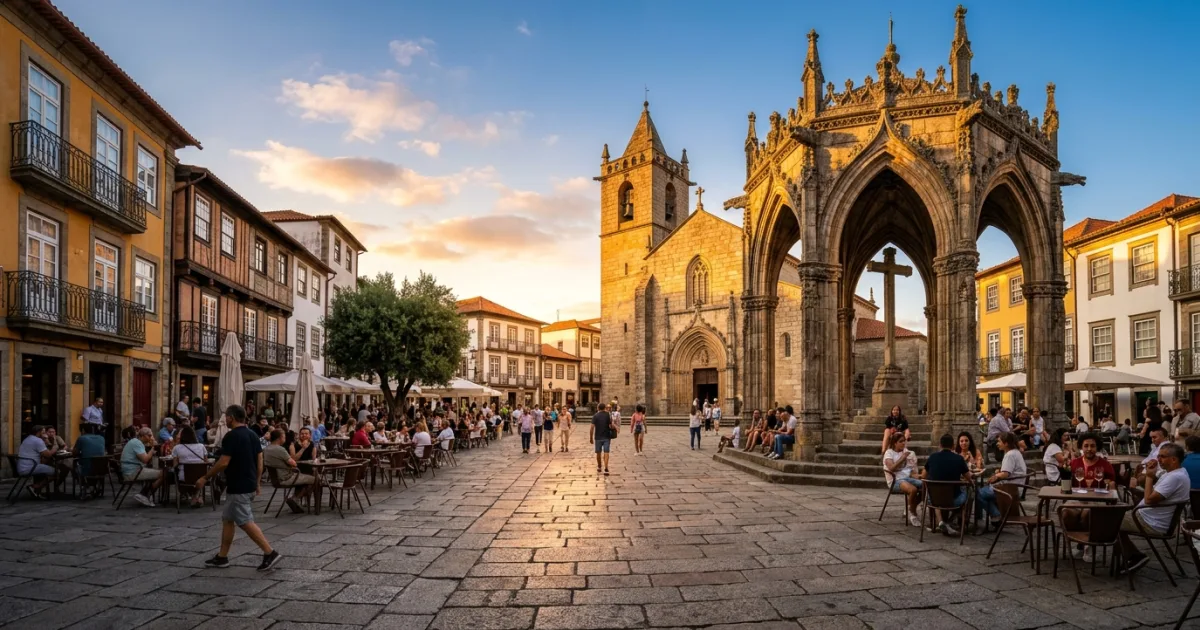
Today, Guimarães effortlessly bridges its military heritage with cosmopolitan university energy. The preserved urban fabric showcases authentic northern Portuguese vernacular architecture, characterized by granite ground floors, projecting upper timber galleries, and wrought-iron balconies lined with blooming geraniums. Compact plazas flow into one another through arched granite passages, housing outdoor cafés, artisan shops, and vibrant municipal markets.
Reasons to Visit
- Tour the 10th-century Castelo de Guimarães, the legendary birthplace of Portugal's first monarch.
- Walk the grand vaulted chambers, tapestries, and armories of the 15th-century Paço dos Duques de Bragança.
- Relax in the interconnected historic squares of Largo da Oliveira and Praça de São Tiago.
- Ascend via the Penha Cable Car to explore the granite boulder labyrinths and panoramic lookout points atop Monte da Penha.
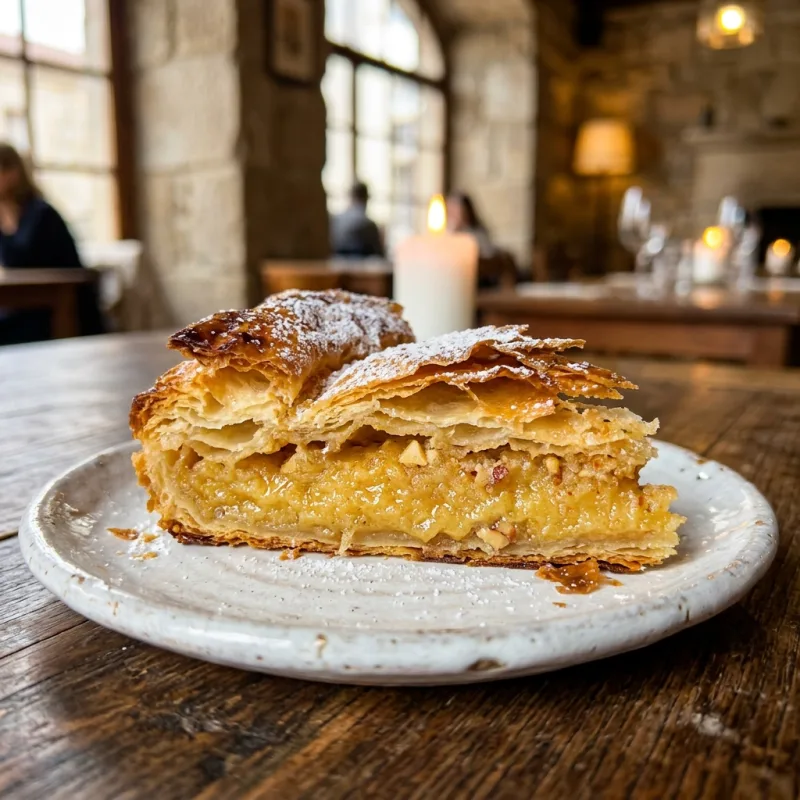
- Taste historic conventual sweets like Toucinho do Céu and Torta de Guimarães at centuries-old local pastelarias.
Things to Avoid
- Avoid wearing thin-soled shoes or high heels, as the polished medieval granite flagstones can be slippery.
- Do not rely solely on tour buses; the best architectural details are hidden in narrow pedestrian alleys inaccessible to vehicles.
- Avoid planning your castle and palace visits for Monday mornings without checking seasonal operating schedules in advance.
- Avoid rushing through on a rushed two-hour visit; evening dining in the illuminated squares is a core highlight.
Local Transportation Tips
Guimarães is an exceptionally walkable city where almost all major historic landmarks, museums, and dining venues are located within a 15-minute stroll of the central plazas. For travel to Monte da Penha, the Teleférico de Guimarães (cable car) departs just south of the historic center, ascending 400 vertical meters in under ten minutes. Local TUG municipal buses connect the train station to suburban neighborhoods, though walking remains the most efficient way to navigate the historic zone.
Travel Etiquette
- Greet shopkeepers and restaurant staff with a polite 'Bom dia' or 'Boa tarde' upon entering.
- Wait staff may bring bread, butter, and olives to your table before a meal; note that you are only charged for what you consume.
- Keep voices down inside historic ecclesiastical buildings, particularly the Church of Nossa Senhora da Oliveira.
- Tipping around 5% to 10% for good restaurant table service is appreciated but not mandatory in casual establishments.
Recommended Age Group
Guimarães offers engaging experiences across generations, though its historic infrastructure favors self-reliant walkers.
- Babies (0-2 years): Neutral. The dense, irregular cobblestone streets make pushing strollers challenging; a baby carrier is strongly recommended.
- Kids (3-12 years): Recommended. Exploring castle ramparts, discovering armor at the Ducal Palace, and riding the Penha cable car captivate younger imaginations.
- Teens (13-19 years): Recommended. Rich medieval history, scenic viewpoints, outdoor hiking across granite boulders, and atmospheric café culture appeal to older kids.
- Adults (20-64 years): Recommended. Exceptional historical depth, outstanding regional culinary offerings, wine tasting, and walkable romantic streetscapes.
- Seniors (65+ years): Neutral. While the main squares are relatively flat, navigating uphill approaches to the castle and stepping over uneven stones require steady footing.
Accessibility Level: Medium
- The historic core features smooth granite pavers alongside uneven traditional cobblestones, which can present challenges for manual wheelchair users.
- The Palace of the Dukes of Braganza provides ramp access and elevator installations for access across primary exhibition floors.
- Guimarães Castle has limited wheelchair accessibility beyond the exterior courtyards due to narrow medieval stone stairways and battlements.
- The Penha cable car accommodates collapsible wheelchairs and mobility aids with level platform boarding.
Did You Know?
The phrase 'Aqui nasceu Portugal' (Here Portugal was born) is emblazoned on the ancient crenelated stone towers along the city's surviving ramparts, commemorating the 1128 Battle of São Mamede fought just outside the castle walls.
Cool Statistics
- Guimarães was designated a UNESCO World Heritage Site in 2001 for its exceptionally preserved medieval urban planning.
- The city served as the official European Capital of Culture in 2012, driving major cultural and artistic infrastructure investments.
- The Teleférico da Penha was the first passenger cableway installed in Portugal, operating since 1995.






Buy a compatible power adapter for your trip