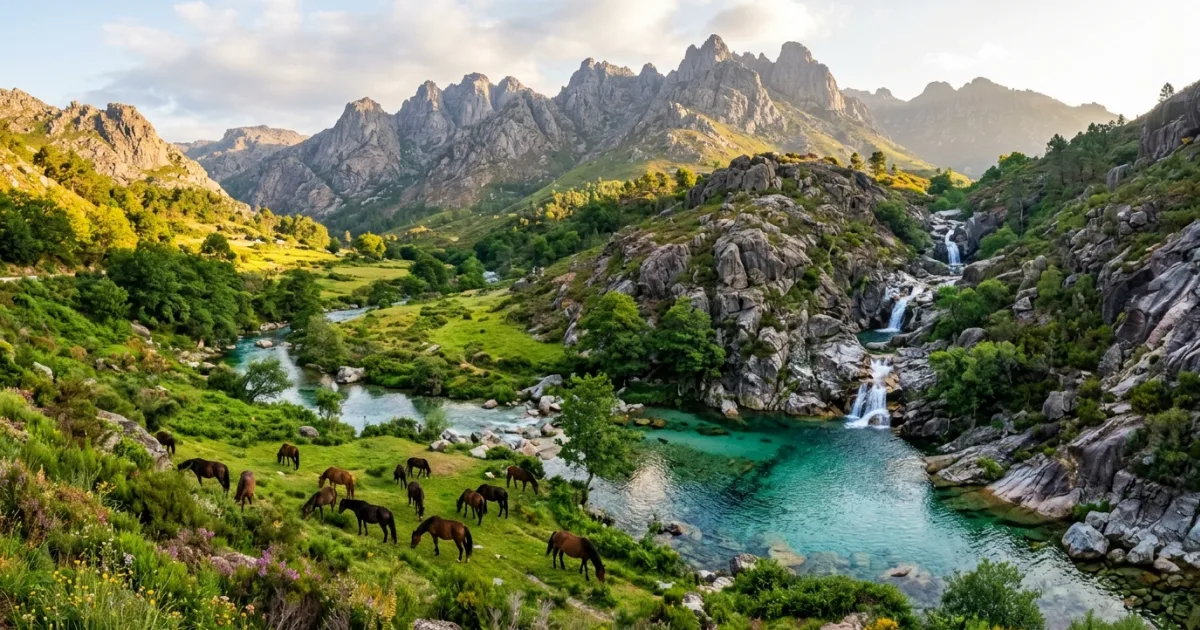
Peneda-Gerês National Park, encompassing five municipalities in northern Portugal, is an ecological treasure house featuring dramatic granite pinnacles, high plateau bogs, and Atlantic oak forest systems. It forms part of the UNESCO Gerês-Xurés Transboundary Biosphere Reserve along with Spain's Baixa Limia-Serra do Xurés Natural Park. The terrain spans altitudes from 50 meters in deep river ravines to over 1,540 meters at Nevosa, creating localized microclimates that shelter rare botanical species like the Gerês iris and the Iberian desman.
For culture and heritage travelers, the landscape offers living history. Shepherds still practice transhumance, moving herds between seasonal highland villages (brandas) and lowland winter settlements (inverneiras). Preserved stone sanctuaries like Nossa Senhora da Peneda rise starkly out of vertical cliffs, while centuries-old stone granaries perched on stilts keep community corn safe from rodents in Soajo and Lindoso.
Reasons to Visit
- Experience Portugal's sole national park with untamed alpine wilderness, cascading waterfalls, and emerald pools.
- Hike ancient Roman pathways along the Via Nova XVIII (Geira), flanked by well-preserved inscribed Roman milestones.
- Witness traditional Portuguese communal heritage in the stone 'espigueiro' granary clusters of Soajo and Lindoso.
- Encounter semi-wild Garrano ponies and rare horned Barrosã cattle grazing freely in high alpine meadows.
- Relax in natural thermal waters and crisp mountain streams far away from coastal tourist crowds.
Things to Avoid
- Do not wear flip-flops or smooth-soled sneakers when trekking to waterfalls; wet granite slopes are dangerously slick.
- Avoid driving large campervans through narrow stone village alleys in places like Lindoso or Castro Laboreiro.
- Do not light campfires or discard cigarette butts; wildfire danger is severe during dry summer months.
- Never venture into unmarked slot canyons or dive headfirst into unknown river pools.
- Do not feed or corner wild Garrano horses, especially when young foals are present.
Local Transportation Tips
A private or rental vehicle is necessary to explore the expansive geography of Peneda-Gerês effectively. Roads are generally well-paved, but involve steep gradients, hairpin turns, and single-lane village passes where yielding is customary. Limited regional buses run from Braga to Vila do Gerês and Terras de Bouro, but do not reach trailheads or remote viewpoints like Miradouro da Pedra Bela. E-bike rentals and guided 4x4 excursions are widely available in Vila do Gerês and Campo do Gerês for off-road sectors.
Travel Etiquette
- Practice strict Leave No Trace principles; pack out all garbage including food peels and toilet tissue.
- Respect livestock and agricultural walls; close any rustic wooden pasture gates you pass through on trails.
- Ask permission before photographing local elderly residents working in village fields or communal bread ovens.
- Refrain from loud music or drone flights in protected wildlife protection zones.
Recommended Age Group
Peneda-Gerês National Park caters primarily to active travelers capable of handling steep terrains, rough trails, and outdoor wilderness conditions.
- Babies (0-2 years): Not Recommended. Mountain trails are unsuitable for strollers, and sudden temperature fluctuations present logistical challenges for infants.
- Kids (3-12 years): Neutral. Children who enjoy nature will love seeing wild horses and gentle river splashing, but long trails and steep cliffs require constant parental supervision.
- Teens (13-19 years): Recommended. Excellent destination for adventurous teenagers keen on mountain biking, river canyoning, swimming in waterfalls, and camping.
- Adults (20-64 years): Recommended. The ultimate playground for hikers, photographers, nature lovers, and road-trippers seeking scenic mountain grandeur.
- Seniors (65+ years): Neutral. Ideal for scenic drives, viewpoint lookouts, and spa visits, but challenging for trail walking due to loose gravel and uneven granite stones.
Accessibility Level: Medium
- Visitor centers in Vila do Gerês and Campo do Gerês feature step-free entrances and accessible restrooms.
- A scenic wooden boardwalk at Mata de Albergaria provides short, wheelchair-friendly access to ancient oak woodlands.
- Most wilderness hiking trails, waterfalls, and natural lagoons are completely inaccessible to wheelchair users due to boulders and rugged topography.
- Main village viewpoints like Miradouro da Pedra Bela have adjacent paved parking, though final viewing platforms have gravel and steps.
Did You Know?
Submerged beneath the waters of the Albufeira de Vilarinho das Furnas reservoir lies an ancient communal village flooded in 1972. During periods of drought in late summer and autumn, the reservoir water level drops, dramatically exposing the stone houses, arched doorways, and streets of the lost drowned village.
Cool Statistics
- Total protected area: 695.9 square kilometers across 5 municipalities
- Highest peak: Pico da Nevosa at 1,546 meters (5,072 feet)
- Age of oldest Roman road milestones along the Geira: Over 1,900 years (built under Emperor Vespasian)
- Number of communal granite espigueiros in Lindoso: 50+ structures dating to the 18th and 19th centuries






Buy a compatible power adapter for your trip