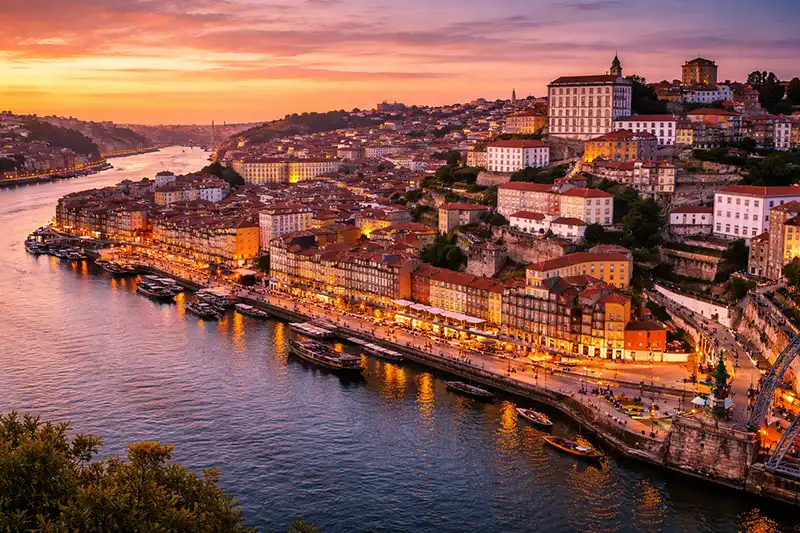
The Porto District, a jewel in Northern Portugal, is a region that seamlessly blends historical grandeur with contemporary vibrancy. Its heart, the city of Porto, is a UNESCO World Heritage site, famous for its stunning riverside architecture, intricate azulejo tiles, and the iconic Dom Luís I Bridge. The district is synonymous with Port wine, and a visit to Vila Nova de Gaia's cellars for a tasting is an essential experience. Beyond the urban charm, the wider district offers diverse landscapes, from the rolling hills of the Douro Valley, home to exquisite vineyards, to the serene beaches of its Atlantic coastline. Cultural richness is evident in its numerous museums, art galleries, and lively Fado houses. Porto District is a destination that truly appeals to all senses, offering a profound journey through Portuguese culture, history, and gastronomy.
Reasons to Visit:
- Iconic Port Wine: Explore historic cellars, learn about its production, and enjoy tastings in Vila Nova de Gaia.
- UNESCO World Heritage Site: Wander through the historic Ribeira district with its colorful houses, narrow streets, and stunning river views.
- Architectural Marvels: Admire a mix of medieval, baroque, and modern architecture, including the Clérigos Tower and the futuristic Casa da Música.
- Gastronomic Delights: Indulge in hearty local cuisine, from the famous Francesinha sandwich to fresh seafood and traditional pastries.
- Vibrant Culture: Experience lively Fado music, visit world-class museums, and soak in the bustling atmosphere of local markets.
- Scenic Douro River: Enjoy boat cruises along the majestic Douro River, offering breathtaking views of vineyards and landscapes.
Things to Avoid:
- Driving in the City Center: Porto's historic center has narrow, winding streets and limited parking; public transport or walking is highly recommended.
- Eating at Tourist Traps: While convenient, restaurants directly on the busiest tourist streets might offer overpriced, less authentic food. Seek out local taverns and smaller eateries.
- Skipping Port Wine Tasting: It's the region's signature product; missing a cellar tour and tasting would be a significant oversight.
- Underestimating the Hills: Porto is built on hills; wear comfortable walking shoes and be prepared for inclines.
- Ignoring Local Etiquette: Always greet shopkeepers and waitstaff, and avoid overly loud conversations in quieter establishments.
Local Transportation Tips:
- Metro & Bus: Porto has an efficient metro system covering the city and surrounding areas, complemented by an extensive bus network. Purchase an "Andante" card for easy use.
- Trams: Historic trams (especially Line 1 along the river) offer a charming way to see the city, though they can be slow and often crowded.
- Funicular dos Guindais: A convenient way to travel between the Ribeira district and the upper Batalha area, offering great views.
- Walking: Many of Porto's main attractions are walkable, but be prepared for steep hills and cobblestone streets.
- Taxis & Ride-sharing: Readily available and reasonably priced, especially for late-night travel or longer distances.
- Train: For exploring beyond Porto city, trains from São Bento or Campanhã stations connect to other towns in the district and beyond.
Travel Etiquette:
- Greetings: A simple "Olá" (hello) or "Bom dia/Boa tarde/Boa noite" (good morning/afternoon/evening) is appreciated when entering shops or restaurants.
- Meal Times: Lunch is typically from 1 PM to 3 PM, and dinner from 8 PM onwards. Many kitchens close between lunch and dinner.
- Tipping: Tipping is not mandatory but appreciated for good service, usually rounding up the bill or leaving 5-10%.
- Dress Code: Casual smart is generally fine, but when visiting churches or religious sites, dress respectfully (shoulders and knees covered).
- Patience: Service can sometimes be slower than in other countries; embrace the relaxed pace.
Did You Know?
Porto gave Portugal its name and was once the capital of the country. The city's official name, "Porto," is derived from the Latin word "Portus," meaning port.
Cool Stats:
- The historic center of Porto was designated a UNESCO World Heritage site in 1996.
- The Clérigos Tower, one of Porto's most iconic landmarks, stands 75 meters (246 feet) tall and offers panoramic views after climbing 225 steps.
- Port wine has been produced in the Douro Valley, part of the Porto District, for over 2,000 years, making it one of the world's oldest demarcated wine regions.
- The Livraria Lello, a stunning bookstore in Porto, is said to have inspired J.K. Rowling's descriptions of Hogwarts in the Harry Potter series.
Accessibility Level: Medium
Porto District, particularly the city of Porto, presents a mixed bag for accessibility. The historic center with its steep hills, cobblestone streets, and narrow sidewalks can be challenging for those with mobility issues. However, significant efforts have been made to improve accessibility in newer areas and some major attractions, and public transport like the metro is generally accessible.
Tips:
- Utilize the metro system, which is generally wheelchair-friendly with elevators and ramps at most stations.
- Plan routes carefully, focusing on flatter areas like the waterfront promenade in Ribeira or newer districts.
- Consider accessible taxi services or ride-sharing apps, specifying accessibility needs when booking.
- Many modern museums and public buildings offer good accessibility, but always check specific venues beforehand.









Buy a compatible power adapter for your trip