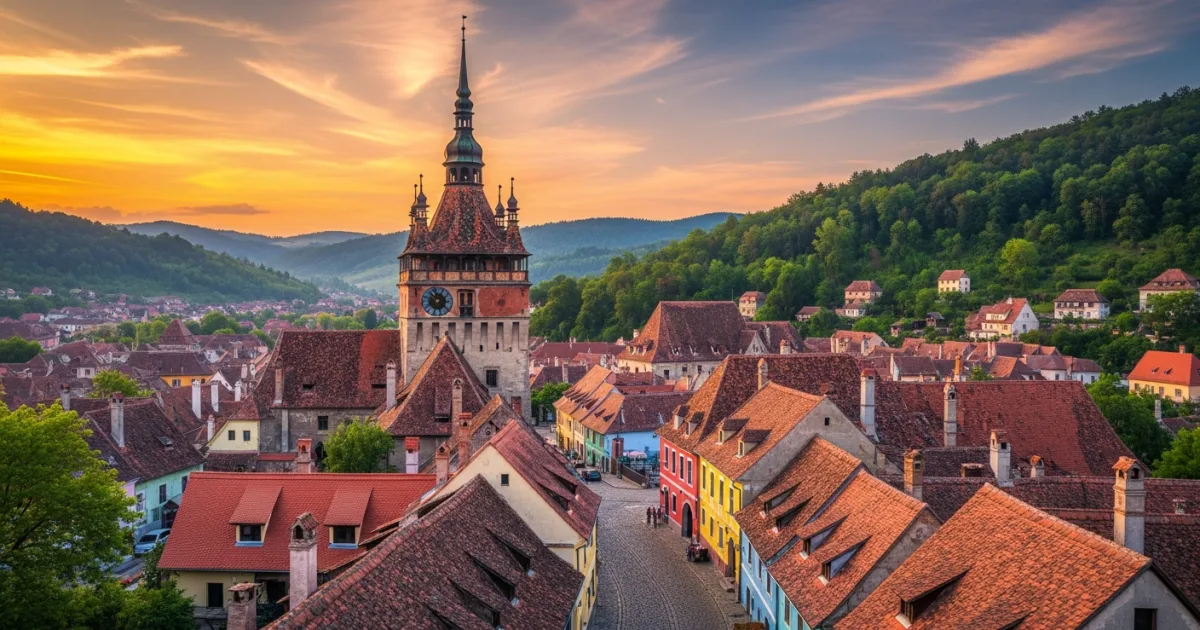
Sighisoara stands as a living museum, preserving the architectural and cultural heritage of the Transylvanian Saxons who settled the region in the 12th century. The town's historic center, enclosed by ancient defensive walls and guarded by nine surviving guild towers, transports visitors back to the Middle Ages. The most prominent of these is the Clock Tower, a 64-meter-high structure that not only served as the main gate to the citadel but also housed the town council. Today, it features a fascinating history museum and an observation deck offering sweeping views of the terracotta rooftops and the surrounding Tarnava Mare River valley.
Beyond its architectural splendor, Sighisoara is steeped in captivating folklore. The yellow-painted Casa Vlad Dracul, located near the Clock Tower, is recognized as the birthplace of Vlad the Impaler, the notorious Wallachian prince. Visitors can dine in the ground-floor restaurant or explore the small museum upstairs. Another must-see is the Covered Staircase, a wooden gallery built in 1642 to protect schoolchildren climbing to the hilltop school during winter. At the top lies the Church on the Hill, an impressive Gothic structure featuring restored frescoes and a serene, historic cemetery. The town's vibrant atmosphere is further enhanced by its artisan shops, traditional Romanian eateries, and the annual Medieval Festival held every July, which brings the streets to life with jousting, music, and costumed performers.
Reasons to Visit
- Explore one of the few remaining inhabited medieval citadels in Europe, recognized as a UNESCO World Heritage site.
- Visit the actual birthplace of Vlad the Impaler, the historical inspiration for Dracula.
- Climb the iconic 14th-century Clock Tower for panoramic views of the Transylvanian countryside.
- Experience the vibrant Sighisoara Medieval Festival, featuring historical reenactments, crafts, and music.
- Wander through highly photogenic cobblestone streets lined with colorful, centuries-old merchant houses.
Things to Avoid
- Avoid wearing high heels or uncomfortable shoes; the steep, uneven cobblestone streets require sturdy walking footwear.
- Don't expect a fast-paced nightlife; Sighisoara is a quiet, slow-travel destination that shuts down relatively early.
- Avoid visiting during the peak of the Medieval Festival in July if you dislike large crowds and higher accommodation prices.
- Don't rely solely on credit cards; while many places accept them, smaller artisan shops and cafes may require cash (Romanian Leu).
Local Transportation Tips
Sighisoara's historic citadel is entirely pedestrian-friendly and best explored on foot, as the area is compact and many streets are closed to general traffic. For reaching destinations outside the old town, local buses and affordable taxis are readily available. The Sighisoara train station is located about a 15-minute walk from the citadel, providing convenient connections to other major Romanian cities like Brasov, Sibiu, and Bucharest. Renting a car is recommended only if you plan to explore the surrounding Transylvanian countryside and fortified churches.
Travel Etiquette
- Greet shopkeepers and locals with a polite "Bună ziua" (Good day) when entering establishments.
- Tipping is customary in Romania; leaving 10-12% of the bill at restaurants and cafes is appreciated for good service.
- Respect the quiet nature of the residential citadel, especially during the evening hours.
- When visiting churches, dress modestly by covering shoulders and knees, and remove hats upon entering.
Recommended Age Group
Sighisoara offers a captivating historical experience, but its medieval infrastructure requires some consideration for different age groups.
- Babies (0-2 years): Neutral. The steep hills and uneven cobblestone streets make navigating with a stroller quite difficult; a baby carrier is highly recommended.
- Kids (3-12 years): Recommended. Children will love the fairy-tale atmosphere, the colorful houses, and the spooky legends surrounding Vlad the Impaler and the old towers.
- Teens (13-19 years): Recommended. The town provides excellent photography opportunities, intriguing dark history, and a relaxed environment for independent exploration.
- Adults (20-64 years): Recommended. Ideal for history buffs, architecture enthusiasts, and those seeking a romantic, slow-paced European getaway.
- Seniors (65+ years): Neutral. While the history is fascinating, the steep inclines, numerous stairs (like the Covered Staircase), and uneven walking surfaces can be physically demanding for those with mobility issues.
Accessibility Level: Low
- The historic citadel presents significant challenges for wheelchair users due to steep inclines, lack of curb cuts, and rough cobblestone streets.
- Many historic buildings, including the Clock Tower and the Church on the Hill, lack elevators and require climbing narrow, steep stairs.
- Some modern hotels and restaurants in the lower town offer better accessibility features, but options within the medieval walls are limited.
- Travelers with mobility impairments should plan carefully and may prefer to explore the lower town or hire a specialized local guide for accessible routes.
Did You Know?
Sighisoara's Covered Staircase originally had 300 steps when it was built in 1642. It was designed to protect schoolchildren from the harsh Transylvanian winters as they climbed to the school next to the Church on the Hill. Following renovations in 1849, the number of steps was reduced to the 175 that remain today.
Cool Statistics
- Year Founded: 12th century by Transylvanian Saxons.
- UNESCO Inscription: The Historic Centre of Sighisoara was designated a World Heritage site in 1999.
- Clock Tower Height: 64 meters (210 feet).
- Surviving Towers: 9 of the original 14 guild towers still stand today.
- Covered Staircase Steps: 175 wooden steps leading to the Church on the Hill.






Buy a compatible power adapter for your trip