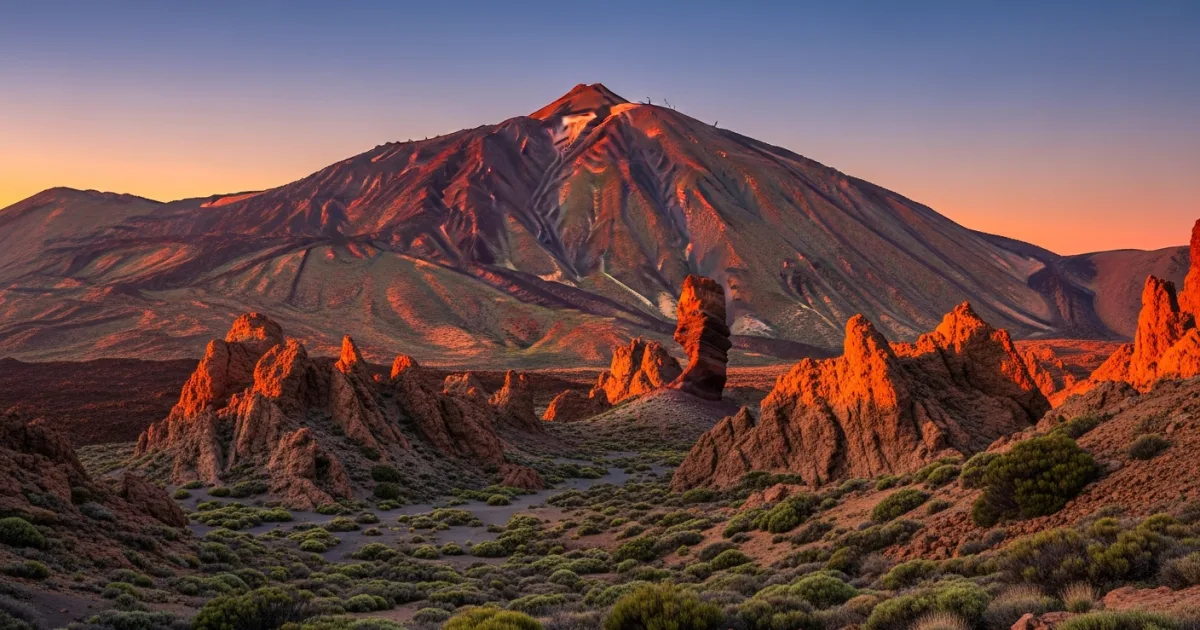
Mount Teide National Park, a geological masterpiece, covers a vast area of 18,990 hectares, encompassing the Teide-Pico Viejo stratovolcano. Its designation as a UNESCO World Heritage Site in 2007 recognized its exceptional universal value as a natural site. The park's landscape is a testament to millions of years of volcanic activity, featuring a caldera (Las Cañadas) that is one of the largest in the world, measuring approximately 16 km across. Within this caldera rise the peaks of Teide (3,718 m) and Pico Viejo (3,135 m), creating a dramatic and awe-inspiring panorama. Visitors can explore a network of well-maintained trails, ranging from easy strolls through lava fields to challenging ascents. The Teide cable car provides a quick and scenic route to near the summit, offering unparalleled views of the surrounding islands on clear days. The park is also a scientific treasure, providing a natural laboratory for studying volcanic processes and high-altitude ecosystems, making it a truly enriching experience for all.
Reasons to Visit
- Witness the breathtaking, otherworldly volcanic landscapes.
- Ascend Spain's highest peak for unparalleled panoramic views.
- Experience world-class stargazing under pristine dark skies.
- Explore diverse hiking trails suitable for various fitness levels.
- Discover unique endemic flora and fauna adapted to the volcanic environment.
- Visit a UNESCO World Heritage Site of immense geological significance.
- Enjoy a unique cable car ride with spectacular vistas.
Things to Avoid
- Do not hike off marked trails to protect the fragile ecosystem and for your own safety.
- Avoid visiting without adequate warm clothing, even in summer, as temperatures drop significantly at altitude.
- Do not underestimate the effects of altitude sickness; ascend gradually and stay hydrated.
- Avoid booking summit permits last minute; they often sell out months in advance.
- Do not feed the wildlife or disturb the natural environment.
- Avoid relying solely on public transport if you have a tight schedule, as bus services can be infrequent.
Local Transportation Tips
Getting to Mount Teide National Park is primarily done by car or bus. A rental car offers the most flexibility, allowing you to explore at your own pace and stop at various viewpoints. Several scenic roads lead into the park from different parts of Tenerife. Public bus services (TITSA) also operate routes to the park from major towns like Puerto de la Cruz (Route 348) and Playa de las Américas/Los Cristianos (Route 342), though these are less frequent. Once inside the park, most attractions are accessible by car, with parking available at key points. The Teide cable car provides transport from the base station (2,356m) to the upper station (3,555m), significantly reducing the hiking time to the summit area.
Travel Etiquette
- Respect the natural environment: do not litter, stay on marked paths, and do not take rocks or plants.
- Be mindful of noise levels, especially in quiet natural areas.
- When hiking, yield to uphill hikers and greet fellow trekkers with a 'Hola'.
- Dress respectfully when visiting any religious sites outside the park, though this is less relevant within the park itself.
- Always ask for permission before taking photos of people.
- Be patient and polite, especially when dealing with queues for the cable car or at visitor centers.
Recommended Age Group
Mount Teide National Park offers experiences for nearly all age groups, though certain activities and the high altitude require careful consideration for the very young and elderly.
- Babies (0-2 years): Not Recommended. The high altitude (especially the cable car to 3,555m) can be dangerous for babies due to rapid pressure changes and thin air. It's best to avoid taking infants to such heights.
- Kids (3-12 years): Recommended with Caution. Younger children should avoid the cable car to the very top due to altitude. However, many lower-altitude trails and visitor centers are engaging. Ensure they are well-hydrated and dressed warmly.
- Teens (13-19 years): Recommended. Teens will likely enjoy the hiking opportunities, the cable car ride, and the dramatic landscapes. Stargazing tours can be particularly captivating for this age group.
- Adults (20-64 years): Recommended. This is an ideal destination for adults, offering a wide range of activities from strenuous hikes to scenic drives and photography. Permits for the summit hike should be booked in advance.
- Seniors (65+ years): Recommended with Caution. While many seniors can enjoy the park, those with heart or respiratory conditions should consult a doctor before visiting high altitudes or using the cable car. Lower-altitude viewpoints and accessible trails are excellent options.
Accessibility Level: Medium
- The main visitor centers (El Portillo and Cañada Blanca) are generally accessible, with ramps and accessible restrooms.
- Many viewpoints along the main roads through the park offer accessible parking and paved areas for enjoying the scenery.
- The Teide cable car base station has accessible facilities, but the cable car itself and the paths at the upper station are not fully wheelchair accessible due to uneven terrain and steps.
- Some shorter, paved walking paths near the visitor centers are suitable for wheelchairs or strollers, but most hiking trails are rugged and challenging.
- It is advisable to contact the park administration or cable car company in advance for specific accessibility needs.
Did You Know?
Mount Teide is not only the highest peak in Spain but also the third tallest volcano in the world when measured from its base on the ocean floor. Its shadow, cast by the rising or setting sun, is the largest shadow cast by a mountain on the sea in the world, stretching for many kilometers. The park's unique geological features have been used by NASA to test instruments for Mars missions, earning it the nickname 'Mars on Earth'.
Cool Statistics
- Elevation of Mount Teide: 3,718 meters (12,198 feet) above sea level.
- Park Area: 18,990 hectares (46,925 acres).
- UNESCO World Heritage Site: Designated in 2007.
- Annual Visitors: Over 4 million, making it one of Spain's most visited national parks.
- Cable Car Capacity: Up to 44 people per cabin, reaching the upper station in about 8 minutes.
- Temperature Range: Can vary by over 20°C (36°F) between the coast and the summit on the same day.











Buy a compatible power adapter for your trip