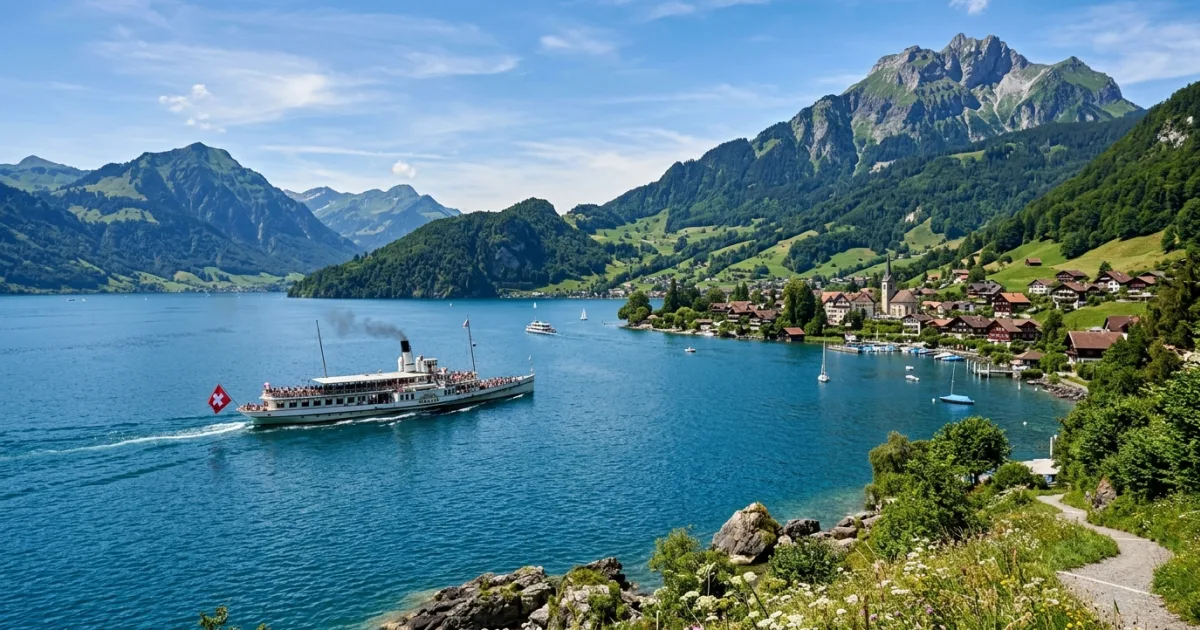
The Lake Lucerne Region, often referred to as Central Switzerland, is the historical and geographical core of the country. It is here, on the Rütli meadow overlooking the lake, that the Swiss Confederation was founded in 1291. The landscape is defined by the complex, multi-armed Lake Lucerne (Vierwaldstättersee), which is framed by dramatic pre-alpine and alpine peaks. This unique topography creates a microclimate that supports lush vegetation alongside rugged rock faces, offering a visual feast for nature lovers and photographers alike.
Transportation in the region is an attraction in itself. Visitors can ride the world's steepest cogwheel railway up Mount Pilatus, take Europe's first mountain railway up Mount Rigi, or experience the world's first revolving cable car on Mount Titlis. The fleet of historic paddle steamers navigating the lake provides a nostalgic and leisurely way to travel between destinations. Whether you are indulging in luxury wellness treatments at high-altitude resorts, exploring the medieval streets of Lucerne, or embarking on multi-day hikes through pristine alpine reserves, the Lake Lucerne Region encapsulates the quintessential Swiss experience.
Reasons to Visit
- Spectacular Alpine Scenery: Unmatched views of mountains like Pilatus, Rigi, and Titlis rising directly from the lake's edge.
- World-Class Transport: Experience record-breaking cogwheel trains, revolving cable cars, and vintage paddle steamers.
- Historical Significance: Visit the birthplace of Switzerland and explore well-preserved medieval architecture in Lucerne.
- Outdoor Activities: Endless opportunities for hiking, cycling, skiing, and water sports in pristine natural environments.
- Wellness and Luxury: Home to exclusive retreats and thermal spas offering deep relaxation with panoramic mountain views.
Things to Avoid
- Ignoring Weather Warnings: Alpine weather can change drastically; never embark on a hike without checking the local forecast.
- Buying Bottled Water: Tap and fountain water is pure and free; buying bottled water is an unnecessary expense and environmentally unfriendly.
- Traveling Without a Pass: Buying individual tickets for trains and cable cars is very expensive; always calculate if a travel pass will save you money.
- Underestimating Altitudes: If visiting peaks like Mount Titlis (over 3,000m), be mindful of altitude sickness and dress warmly, even in summer.
Local Transportation Tips
The Lake Lucerne Region boasts one of the most efficient and integrated public transport networks in the world. The hub is Lucerne's main train station, which connects seamlessly to local buses, regional trains, and the adjacent boat docks. The Lake Lucerne Navigation Company (SGV) operates a fleet of modern motor vessels and historic paddle steamers that serve towns around the lake. For mountain excursions, a vast network of funiculars, cable cars, and cogwheel railways provides access to the highest peaks. Purchasing a regional Tell-Pass or a Swiss Travel Pass is highly recommended, as it offers unlimited travel on most of these transport modes and significant discounts on premium mountain railways.
Travel Etiquette
- Punctuality: Swiss transport runs exactly on time; arrive at platforms and stops a few minutes early.
- Greetings: It is customary to greet shopkeepers, hikers on the trail, and fellow passengers with a polite 'Grüezi'.
- Tipping: Service is included in restaurant bills, but rounding up or leaving a 5-10% tip for good service is common.
- Quiet Hours: Respect the local custom of keeping noise levels down on Sundays and late in the evening.
- Nature Conservation: Stick to marked trails, take all trash with you, and respect wildlife habitats.
Recommended Age Group
The Lake Lucerne Region is a highly versatile destination, offering excellent infrastructure and activities tailored to all stages of life.
- Babies (0-2 years): Neutral. While towns and boat cruises are very stroller-friendly, rapid altitude changes on mountain excursions can be uncomfortable for infants.
- Kids (3-12 years): Recommended. Children will love the Swiss Museum of Transport, themed mountain trails, boat rides, and numerous alpine playgrounds.
- Teens (13-19 years): Recommended. The region offers thrilling activities like summer toboggan runs, rope parks, mountain biking, and winter sports.
- Adults (20-64 years): Recommended. Perfect for challenging hikes, luxury wellness retreats, fine dining, and exploring historical sites.
- Seniors (65+ years): Recommended. The exceptional accessibility of public transport, cable cars, and smooth lakeside promenades makes it ideal for slow, comfortable travel.
Accessibility Level: Medium
- Public Transport: Swiss trains, buses, and boats are highly accessible, with low-floor boarding, ramps, and designated wheelchair spaces.
- Mountain Excursions: Many major peaks, including Mount Rigi and Mount Pilatus, offer wheelchair-accessible cable cars, cogwheel trains, and summit viewing platforms.
- Accommodation: Most modern and renovated hotels in the region provide barrier-free rooms and roll-in showers; it is advisable to confirm specific needs in advance.
- Attractions: Key sites like the Swiss Museum of Transport and the KKL Luzern (Culture and Convention Centre) are fully accessible.
- Pathways: Lakeside promenades in Lucerne, Weggis, and Brunnen are flat, paved, and ideal for wheelchair users and those with limited mobility.
Did You Know?
Did you know that Lake Lucerne is technically named 'Vierwaldstättersee' in German, which translates to 'Lake of the Four Forested Settlements'? This name refers to the four original cantons—Uri, Schwyz, Unterwalden, and Lucerne—that surround the lake and formed the foundation of the Old Swiss Confederacy. Additionally, the region is home to the Pilatusbahn, the steepest cogwheel railway in the world, which boasts a maximum gradient of 48% and has been operating since 1889.
Cool Statistics
- Lake Area: Lake Lucerne covers an area of 114 square kilometers (44 square miles).
- Maximum Depth: The lake reaches a maximum depth of 214 meters (702 feet).
- Steepest Railway: The Pilatus cogwheel railway climbs at a record-breaking 48% gradient.
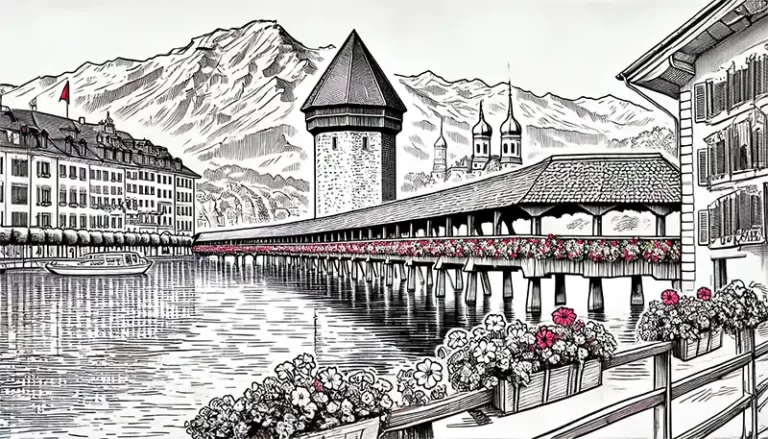
- Oldest Covered Bridge: Lucerne's Chapel Bridge (Kapellbrücke), originally built in 1333, is the oldest wooden covered bridge in Europe.
- Highest Peak: Mount Titlis is the highest peak in the region accessible to tourists, standing at 3,238 meters (10,623 feet).







Buy a compatible power adapter for your trip