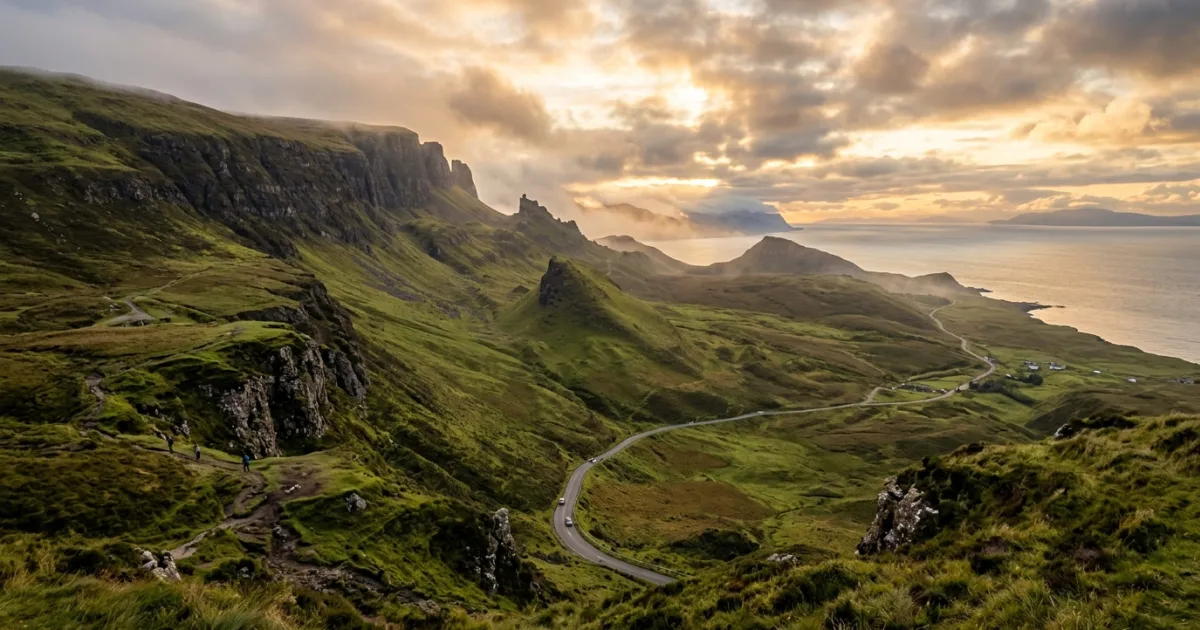
The Isle of Skye is celebrated globally for its otherworldly landscapes sculpted by ancient volcanism and glacial erosion. Stretching roughly 50 miles from north to south, the island features an intricate coastline indented by deep sea lochs and dramatic sea stacks. The Trotternish peninsula dominates the north with geological landmarks such as the Old Man of Storr, an iconic 160-foot basalt pinnacle, and the Quiraing, a massive labyrinth of shifting cliffs, plateaus, and towers.
In the south and west, the dramatic Black Cuillin mountains provide some of the most demanding mountaineering terrain in the British Isles, while gentle turquoise streams feed the Fairy Pools near Glenbrittle. Beyond natural wonders, Skye preserves deep Highland heritage through Dunvegan Castle, the historic seat of Clan MacLeod, and vibrant cultural traditions fostered in crofting townships where Gaelic continues to be spoken and celebrated.
Reasons to Visit
- Otherworldly Geology: Hike among dramatic basalt spires, knife-edge ridges, and tumbling waterfalls along the Trotternish Ridge.
- Fabled Highland History: Tour ancient strongholds like Dunvegan Castle, iron-age brochs, and historic crofting ruins.
- Single Malt Distilleries: Sample maritime, peated Scotch whiskies directly at historic shoreside distilleries like Talisker and Torabhaig.
- World-Class Coastal Scenery: Watch Atlantic sunsets from the sheer sea cliffs of Neist Point Lighthouse.
- Wildlife Encounters: Spot white-tailed sea eagles, red deer, seals, and coastal otters in their native habitats.
Things to Avoid
- Do not park in passing places: These small cutouts on single-track roads are strictly for allowing oncoming vehicles to pass or letting faster traffic overtake.
- Do not arrive without reserved lodging: Accommodations on Skye often sell out completely months in advance; wild camping is regulated and sleeping in rental cars on verges is discouraged.
- Do not hike in improper footwear: Even well-trodden paths to the Fairy Pools and Old Man of Storr turn into slick mud and loose shale after rain.
- Do not disturb livestock: Keep dogs on short leads around free-roaming sheep and Highland cattle across all open moorland.
Local Transportation Tips
Driving a private car or rental vehicle is the most practical way to experience Skye. Roads range from modern two-lane carriageways near the Skye Bridge to winding single-track roads across the peninsulas. When driving on single-track roads, always give way to vehicles traveling uphill and pull into passing places on your left. Public buses operated by Stagecoach connect major villages, but schedules are sparse, making them less suitable for tight sightseeing schedules. Organized mini-coach tours operating out of Portree or Inverness provide a convenient driving-free alternative.
Travel Etiquette
- Single-Track Courtesy: Always thank drivers who yield to you on single-track roads with a friendly wave.
- Leave No Trace: Pack out all rubbish, stay on designated footpaths to prevent bog erosion, and close all pasture gates firmly behind you.
- Respect Local Residents: Do not park across driveways, livestock access gates, or private croft tracks when stopping for scenic photographs.
- Bar Etiquette: Order drinks directly at the counter in traditional pubs rather than waiting for table service unless seated in a formal dining area.
Recommended Age Group
The Isle of Skye is an outdoor-focused destination best experienced by independent travelers capable of navigating varied terrain.
- Babies (0-2 years): Not Recommended. Rugged walking trails are not stroller-friendly, strong Atlantic winds are common, and medical facilities on the island are limited.
- Kids (3-12 years): Neutral. Children who enjoy nature will love seeing Highland cows and exploring rock pools, but many iconic hikes have sheer drops and challenging weather conditions.
- Teens (13-19 years): Recommended. Active teenagers will thrive on hiking the Quiraing, scrambling rocky paths, exploring castles, and learning coastal photography.
- Adults (20-64 years): Recommended. Ideal for road trippers, hikers, photographers, and lovers of seafood, history, and single malt Scotch whisky.
- Seniors (65+ years): Recommended. Excellent for scenic driving tours, wildlife boat excursions, and historic castle visits, provided mobility allows gentle strolls.
Accessibility Level: Medium
- Major heritage sites like Dunvegan Castle have partially accessible gardens and ground floors, though historic upper towers require climbing spiral stone stairs.
- The Skye Bridge and scenic viewpoints along the A87 offer breathtaking scenery directly from vehicle parking areas without requiring strenuous walks.
- Popular natural landmarks like the Old Man of Storr and the Fairy Pools feature uneven, rocky, and often muddy pathways that are not wheelchair accessible.
- Portree's main harbor area has paved footpaths, though steep inclines connect the water level to the town square.
Did You Know?
The name 'Skye' is believed to originate from the Old Norse word Skíð, meaning 'cloud island,' reflecting the persistent Atlantic mists that shroud its mountain peaks. In Gaelic, the island is romantically referred to as Eilean a' Cheò, translating directly to the 'Isle of Mist.'
Cool Statistics
- Length: Approximately 50 miles (80 km) long with over 400 miles (640 km) of dramatic coastline.
- Highest Peak: Sgùrr Alasdair in the Black Cuillins reaches 3,258 feet (993 m) above sea level.
- Basalt Age: The striking rocks of the Trotternish Ridge were formed over 60 million years ago by immense lava flows.
- Bird Life: Home to one of the highest concentrations of white-tailed sea eagles in Great Britain.






Buy a compatible power adapter for your trip