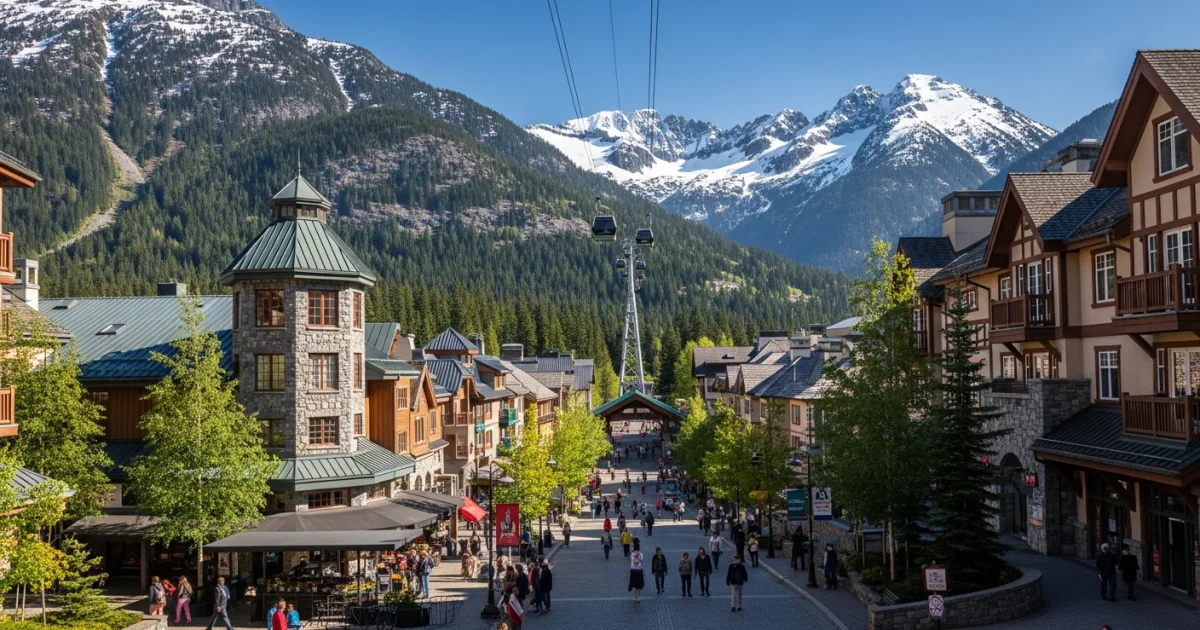
Whistler is a dynamic resort town that seamlessly blends rugged outdoor adventure with refined luxury. Originally developed as a ski destination in the 1960s with dreams of hosting the Olympics, it finally realized that goal in 2010, cementing its status on the global stage. The town is anchored by Whistler Village, a pedestrian-only enclave designed to mimic a European alpine village, complete with cobblestone pathways, stone fireplaces, and a vibrant atmosphere that pulses year-round.
The twin peaks of Whistler and Blackcomb mountains dominate the landscape, offering unparalleled access to alpine environments. In winter, the mountains receive an average of 11.7 meters (38 feet) of snow, creating a paradise for winter sports enthusiasts. When the snow melts, the terrain transforms into the Whistler Mountain Bike Park, widely considered the best lift-accessed downhill bike park in the world. Beyond the adrenaline-pumping activities, Whistler offers serene experiences like the Scandinave Spa, championship golf courses, and the Audain Art Museum, ensuring there is something for every type of traveler.
Reasons to Visit
- World-class skiing and snowboarding on the largest skiable terrain in North America.
- The Peak 2 Peak Gondola, offering breathtaking 360-degree views of the Coast Mountains.
- A vibrant, pedestrian-only village filled with diverse dining, shopping, and nightlife.
- Exceptional summer activities, including downhill mountain biking, zip-lining, and alpine hiking.
- Luxurious wellness retreats and spas nestled in pristine forest settings.
Things to Avoid
- Avoid interacting with or feeding wildlife, particularly black bears, to ensure both your safety and theirs.
- Don't underestimate the alpine weather; conditions can change rapidly, so avoid heading up the mountain without proper layers.
- Avoid driving to the village if possible; parking is expensive and limited, and the town is highly walkable.
- Don't ski or snowboard out of bounds unless you are equipped with avalanche gear and backcountry training.
Local Transportation Tips
Whistler is highly walkable, particularly within the pedestrian-only Whistler Village, Upper Village, and Village North. For traveling further afield, the BC Transit system operates an efficient and affordable bus network connecting the village to surrounding neighborhoods like Creekside and Function Junction. During peak seasons, free shuttles often run between the main village areas. The Valley Trail, a 40-kilometer paved, car-free network, is perfect for walking, jogging, or cycling between lakes and neighborhoods. Taxis and ride-hailing services like Whistle! are also available.
Travel Etiquette
- Respect the environment by adhering to 'Leave No Trace' principles on all trails and mountains.
- Observe proper lift line etiquette; wait your turn and do not cut lines.
- Tipping is customary in Canada; leave 15-20% at restaurants, bars, and for guided tours.
- Yield to uphill traffic when hiking or biking on shared trails.
- Keep noise levels down in residential neighborhoods, especially late at night after enjoying the village après-ski.
Recommended Age Group
Whistler is a highly versatile destination that caters to visitors of all ages, offering tailored activities for everyone from toddlers to seniors.
- Babies (0-2 years): Recommended. The pedestrian village is very stroller-friendly, and many hotels offer childcare services and family-friendly amenities.
- Kids (3-12 years): Recommended. Excellent ski schools, the Magic Castle on Blackcomb, tube parks, and summer family adventure zones make it a paradise for children.
- Teens (13-19 years): Recommended. Teens will love the world-class terrain parks, mountain biking, zip-lining, and the independence of exploring the safe, walkable village.
- Adults (20-64 years): Recommended. From extreme sports and backcountry adventures to fine dining, spas, and vibrant nightlife, adults have endless options.
- Seniors (65+ years): Recommended. Seniors can enjoy scenic gondola rides, flat walking paths on the Valley Trail, world-class golf, and accessible cultural sites like the Audain Art Museum.
Accessibility Level: High
- Whistler Village is designed to be highly accessible, featuring flat, paved, pedestrian-only walkways with curb cuts and ramps.
- The Peak 2 Peak Gondola and many of the main mountain lifts are wheelchair accessible, allowing everyone to experience the alpine views.
- The Valley Trail offers miles of paved, relatively flat paths suitable for wheelchairs and mobility scooters.
- Whistler Adaptive Sports Program provides specialized equipment and instruction for individuals with physical or cognitive disabilities to enjoy skiing, biking, and paddling.
- Most major hotels, restaurants, and public facilities in the village are fully equipped with accessible restrooms and elevators.
Did You Know?
Whistler was originally named Alta Lake. It was renamed Whistler in the 1960s after the hoary marmots that live in the alpine areas, which emit a distinct, high-pitched whistling sound to warn each other of predators.
Cool Statistics
- Whistler Blackcomb boasts 8,171 acres of skiable terrain, making it the largest ski resort in North America.
- The Peak 2 Peak Gondola holds the world record for the longest unsupported span between two cable car towers at 3.024 kilometers (1.88 miles).
- The resort receives an average annual snowfall of 1,170 centimeters (461 inches).
- Whistler is home to over 50 black bears, which can frequently be seen grazing on the ski slopes during the summer.
- The Valley Trail network features over 40 kilometers of paved, car-free trails connecting the town's lakes and parks.






Buy a compatible power adapter for your trip