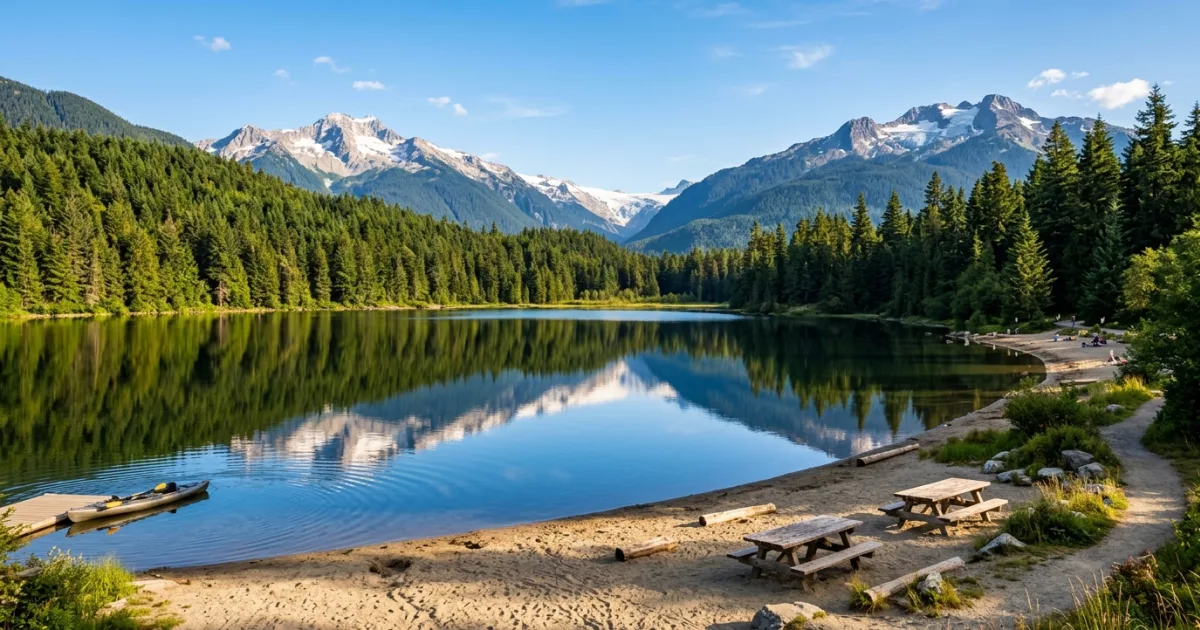
Lost Lake Park is a 213-hectare municipal park located just a short distance from Whistler Village. It is a cornerstone of Whistler's recreational offerings, providing a pristine natural environment that is easily accessible to both locals and tourists. The park features a network of trails that wind through dense forests of Douglas fir, western hemlock, and western red cedar. During the summer, the lake's sandy beach becomes a popular spot for families and sun-seekers, complete with swimming docks, BBQ pits, and a designated dog beach known as Canine Cove. The surrounding trails are a haven for mountain bikers, offering everything from wide, gravel paths to challenging single-track routes.
When the snow falls, Lost Lake undergoes a dramatic transformation. The municipality grooms over 25 kilometers of trails specifically for cross-country skiing (both classic and skate) and snowshoeing. The trails are meticulously maintained and offer various loops catering to different skill levels, with stunning views of the Coast Mountains. The PassivHaus, a legacy building from the 2010 Winter Olympics located at the park's entrance, serves as the day lodge where visitors can purchase passes, rent equipment, and enjoy a warm beverage. Whether you are gliding through a silent, snow-covered forest or diving into the refreshing waters on a hot July day, Lost Lake encapsulates the rugged beauty and active lifestyle of British Columbia.
Reasons to Visit
- Year-Round Recreation: Offers world-class cross-country skiing in winter and excellent swimming, biking, and hiking in summer.
- Proximity to Whistler Village: Located just a 15-minute walk or a short free shuttle ride from the main tourist hub.
- Family-Friendly Amenities: Features accessible washrooms, picnic tables, BBQ stands, and a concession stand during peak summer months.
- Stunning Scenery: Provides breathtaking views of Whistler and Blackcomb mountains reflected in the calm waters of the lake.
- Dog-Friendly Areas: Includes 'Canine Cove', a specific beach area where dogs can swim and play off-leash in the summer.
Things to Avoid
- Driving to the Park: There is no public parking at Lost Lake; attempting to drive will result in frustration. Use the shuttle or walk.
- Ignoring Wildlife Warnings: Bear sightings are common. Avoid hiking without bear spray or making noise, and never approach wildlife.
- Walking on Groomed Ski Trails: In winter, do not walk or snowshoe on the cross-country ski tracks, as it ruins the grooming for skiers.
- Visiting During Transition Seasons: April, May, October, and November can be muddy, and trails may be closed to protect the environment.
Local Transportation Tips
Getting to and around Lost Lake is highly convenient, emphasizing active and public transportation. The most popular way to reach the park from Whistler Village is by walking or cycling along the paved, multi-use Valley Trail, which takes about 15 to 20 minutes. During the summer months, the Resort Municipality of Whistler operates a free shuttle bus (Route 8) that runs frequently between the Village and the Lost Lake drop-off point. In the winter, the same shuttle service provides easy access for skiers and snowshoers carrying gear. Because there is no public parking at the lake itself, visitors arriving by car must park in the Day Lots adjacent to Whistler Village and proceed on foot or by shuttle.
Travel Etiquette
- Leave No Trace: Pack out all your trash, especially food wrappers, to protect the local wildlife.
- Trail Right-of-Way: On multi-use trails, yield to pedestrians. Mountain bikers should control their speed and use a bell when passing.
- Respect the Grooming: In winter, snowshoers must stay on designated snowshoe trails and off the cross-country ski tracks.
- Keep Dogs Under Control: Adhere strictly to leash laws outside of designated off-leash areas like Canine Cove.
- Wildlife Distance: Maintain a minimum distance of 100 meters from bears and other large wildlife.
Recommended Age Group
Lost Lake is a highly versatile destination that caters to visitors of all ages, making it a perfect spot for multi-generational travel.
- Babies (0-2 years): Recommended. The paved Valley Trail leading to the lake is stroller-friendly, and the grassy areas are great for crawling and relaxing.
- Kids (3-12 years): Recommended. Children will love the sandy beach, shallow swimming areas in summer, and the beginner-friendly snowshoe trails in winter.
- Teens (13-19 years): Recommended. The extensive mountain biking trails, paddleboarding opportunities, and night skiing offer plenty of excitement and independence.
- Adults (20-64 years): Recommended. Adults can enjoy the full spectrum of activities, from rigorous cross-country skiing to peaceful nature photography and picnicking.
- Seniors (65+ years): Recommended. The park offers accessible trails, plenty of benches for resting, and a tranquil environment for gentle walks or classic cross-country skiing.
Accessibility Level: High
- The Valley Trail leading from Whistler Village to Lost Lake is fully paved, wide, and relatively flat, making it accessible for wheelchairs and mobility scooters.
- Accessible washroom facilities are available at the park entrance and near the main beach area.
- During the summer months, a beach wheelchair is available for use free of charge, allowing visitors with mobility challenges to access the sand and water.
- The PassivHaus day lodge is fully wheelchair accessible.
- Some of the deeper dirt trails and winter snowshoe routes may not be suitable for individuals with limited mobility due to uneven terrain and snow accumulation.
Did You Know?
Did you know that the building at the entrance to Lost Lake Park, known as the PassivHaus, was originally constructed for the 2010 Winter Olympic and Paralympic Games? It was built to showcase ultra-low energy building standards and was the first building of its kind in Canada. Today, it serves as the park's winter day lodge and rental center, continuing its legacy of sustainability.
Cool Statistics
- Trail Network: Over 25 kilometers (15.5 miles) of groomed cross-country ski trails in the winter.
- Park Size: The park encompasses 213 hectares of protected coastal temperate rainforest.
- Olympic Legacy: Hosted training and support facilities during the 2010 Vancouver Winter Olympics.
- Night Skiing: Features 4 kilometers of lit trails for night skiing during the winter season.






Buy a compatible power adapter for your trip