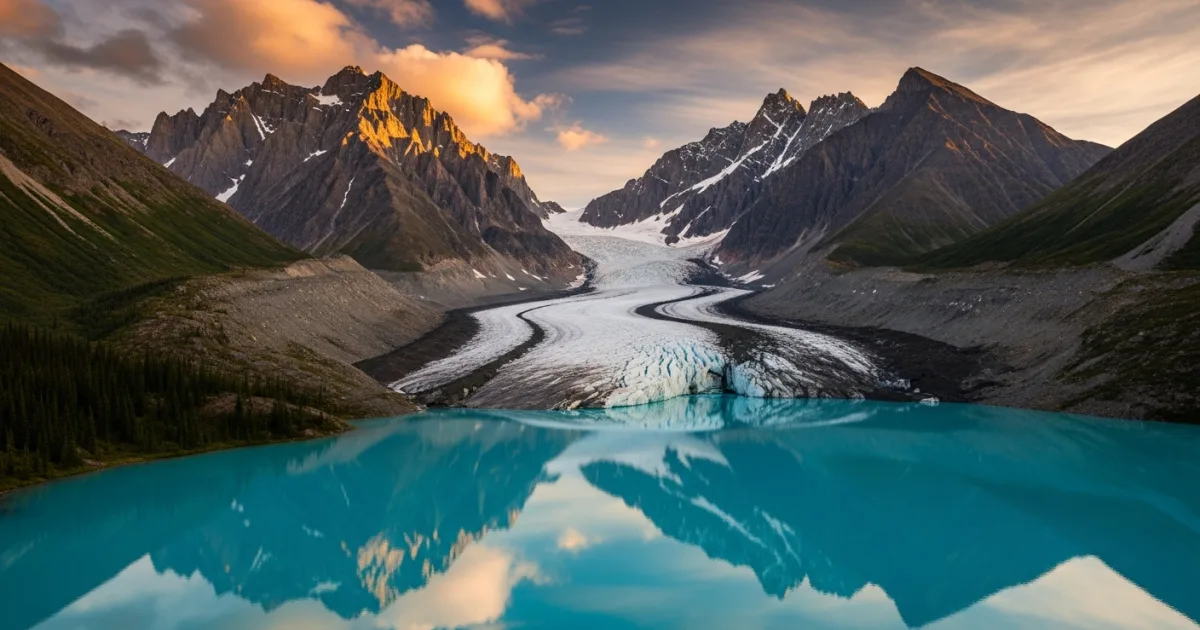
The Yukon Territory is a land of extremes and unparalleled natural beauty, offering a profound sense of isolation and adventure. Covering an area larger than California but with a population of just over 40,000, it is a place where nature reigns supreme. The landscape is dominated by the towering St. Elias Mountains, including Mount Logan, Canada's highest peak, and vast expanses of boreal forest and alpine tundra.
Historically, the Yukon is famous for the Klondike Gold Rush of 1896, which brought tens of thousands of prospectors to the region. Today, visitors can step back in time in Dawson City, where wooden boardwalks and historic saloons preserve the era's spirit. Beyond history, the territory is a haven for First Nations culture, with 14 distinct First Nations contributing to the region's rich heritage through art, storytelling, and community events.
Reasons to Visit
- Spectacular Northern Lights: Experience some of the world's best aurora viewing during the dark winter months.
- Untamed Wilderness: Explore Kluane National Park, a UNESCO World Heritage site featuring massive icefields and grizzly bears.
- Epic Road Trips: Drive the legendary Dempster Highway, crossing the Arctic Circle to the Arctic Ocean.
- Gold Rush History: Immerse yourself in the 1890s by visiting the preserved frontier town of Dawson City.
- Midnight Sun: Enjoy 24 hours of daylight in the summer, allowing for endless outdoor exploration.
Things to Avoid
- Underestimating Distances: The Yukon is massive; do not plan to cover too much ground in a single day.
- Ignoring Wildlife Safety: Never approach or feed wildlife, and always carry bear spray on trails.
- Relying on Cell Service: Connectivity is rare outside of Whitehorse and major towns; download offline maps.
- Driving at Dawn or Dusk: Wildlife is most active during these times, increasing the risk of vehicle collisions.
Local Transportation Tips
Public transportation is extremely limited outside of Whitehorse. Renting a car, SUV, or RV is the most practical way to explore the territory. For remote areas, small charter flights (bush planes) are often used to access backcountry lodges and national parks. During winter, snowmobiles and dog sleds become viable and thrilling modes of local transport.
Travel Etiquette
- Respect Indigenous Lands: Much of the Yukon is traditional First Nations territory; adhere to local guidelines and respect cultural sites.
- Leave No Trace: Pack out all trash and minimize your impact on the fragile tundra and forest ecosystems.
- Campground Courtesy: Keep noise levels down and ensure all food is stored in bear-proof containers or vehicles.
- Driving Etiquette: On dusty gravel roads, slow down when passing other vehicles to prevent windshield damage from flying rocks.
Recommended Age Group
The Yukon offers incredible experiences, but its remote nature requires consideration for different age groups.
- Babies (0-2 years): Neutral. Long driving distances, extreme weather, and limited medical facilities in remote areas can make travel challenging with infants.
- Kids (3-12 years): Recommended. Children will love the wildlife spotting, gold panning in Dawson City, and the novelty of the Midnight Sun.
- Teens (13-19 years): Recommended. Perfect for adventurous teens who enjoy hiking, canoeing, and learning about Gold Rush history.
- Adults (20-64 years): Recommended. Ideal for road trippers, backcountry hikers, and those seeking off-grid wilderness experiences.
- Seniors (65+ years): Recommended. Scenic drives, accessible viewpoints, and comfortable lodges make it highly enjoyable, though strenuous backcountry activities should be evaluated based on fitness.
Accessibility Level: Medium
- Whitehorse: The capital city offers paved sidewalks, accessible museums (like the MacBride Museum), and wheelchair-friendly accommodations.
- National Parks: While backcountry trails are rugged, places like Kluane National Park offer accessible visitor centers and some paved or boardwalk viewpoints.
- Transportation: Accessible rental vehicles are scarce; it is recommended to arrange specialized transport well in advance.
- Dawson City: The historic wooden boardwalks can be uneven and challenging for wheelchair users, though many main attractions have ramps.
Did You Know?
The Yukon is home to the smallest desert in the world. The Carcross Desert measures just one square mile and is actually a series of northern sand dunes left behind by ancient glacial lakes.
Cool Statistics
- Highest Peak: Mount Logan in the Yukon is Canada's highest mountain at 5,959 meters (19,551 feet).
- Population Density: The Yukon has a population density of about 0.1 people per square kilometer.
- Moose Population: There are roughly 70,000 moose in the Yukon, outnumbering the human population.
- Gold Rush: Over 100,000 people attempted the journey to the Klondike during the Gold Rush, but only about 30,000 made it.







Buy a compatible power adapter for your trip