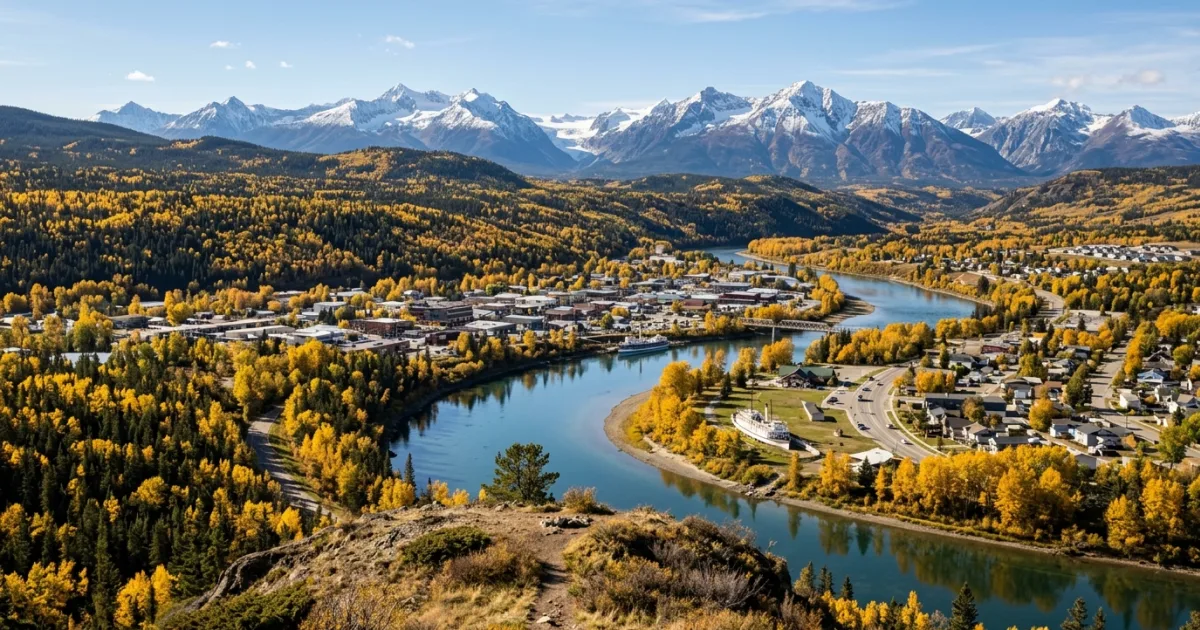
Whitehorse is a city that embraces its wild surroundings. Originally a vital camp during the Klondike Gold Rush, it has evolved into a thriving cultural hub that honors both its pioneer past and its deep Indigenous roots. The Kwanlin Dün Cultural Centre, situated beautifully on the banks of the Yukon River, offers profound insights into the heritage of the First Nations people who have stewarded this land for millennia.
Just a short distance from the downtown core, nature takes over. The emerald waters of Miles Canyon, carved through basalt rock, provide a stunning backdrop for hiking and photography. Whether you are soaking in the Takhini Hot Springs (now Eclipse Nordic Hot Springs) under a canopy of stars, or learning about ice age mammals at the Beringia Centre, Whitehorse delivers an unforgettable blend of education, relaxation, and raw adventure.
Reasons to Visit
- Aurora Borealis: World-class Northern Lights viewing during the dark winter months.
- Midnight Sun: Experience nearly 24 hours of daylight in the peak of summer, perfect for endless outdoor activities.
- Rich History: Dive into the Klondike Gold Rush era at the S.S. Klondike National Historic Site and MacBride Museum.
- Pristine Wilderness: Immediate access to hiking, paddling, and wildlife viewing in untouched natural landscapes.
- Indigenous Culture: Learn about the rich traditions and history of the Kwanlin Dün First Nation and Ta'an Kwäch'än Council.
Things to Avoid
- Underestimating the Cold: Winter temperatures are unforgiving. Never venture out without proper thermal layers and emergency supplies.
- Approaching Wildlife: Keep a safe distance from bears, moose, and other animals. Never feed them.
- Relying on Cell Service: Coverage drops off rapidly outside the city limits. Download offline maps and carry a satellite communication device for remote trips.
- Ignoring Bear Safety: When hiking in summer, always carry bear spray and know how to use it.
Local Transportation Tips
Downtown Whitehorse is compact and easily navigable on foot. However, to truly experience what the region has to offer, renting a car is the most practical option. It provides the freedom to visit attractions like the Yukon Wildlife Preserve, Miles Canyon, and nearby hot springs at your own pace.
Whitehorse Transit operates several bus routes within the city and surrounding neighborhoods, which is useful for local commuting but less ideal for tourist excursions. Taxis are available, and many tour operators provide shuttle services from major hotels for specific activities like Aurora viewing or dog sledding.
Travel Etiquette
- Respect Indigenous Lands: Acknowledge and respect that you are visiting the traditional territories of the Kwanlin Dün First Nation and the Ta'an Kwäch'än Council.
- Leave No Trace: Preserve the pristine wilderness by packing out all trash and staying on marked trails.
- Tipping: A tip of 15-20% is standard in restaurants, bars, and for tour guides.
- Wildlife Etiquette: Do not stop your car in the middle of the highway to photograph wildlife; pull over safely to the shoulder.
Recommended Age Group
Whitehorse offers diverse experiences that cater to various age groups, though the extreme nature of the environment requires some consideration.
- Babies (0-2 years): Neutral. While summer is pleasant, the extreme cold of winter makes outdoor activities challenging and potentially unsafe for infants without highly specialized gear.
- Kids (3-12 years): Recommended. Children will love the Yukon Wildlife Preserve, the Beringia Centre, and the thrill of dog sledding or easy summer hikes.
- Teens (13-19 years): Recommended. Perfect for adventurous teens who enjoy mountain biking, paddling, snowmobiling, and staying up late to hunt for the Northern Lights.
- Adults (20-64 years): Recommended. Adults can fully engage in the rugged backcountry adventures, local brewery scene, and cultural history.
- Seniors (65+ years): Recommended. Many attractions, including museums, hot springs, and scenic drives, are highly accessible and offer a relaxed pace for older travelers.
Accessibility Level: Medium
- Downtown Whitehorse features paved sidewalks and curb cuts, making it generally wheelchair friendly.
- Major attractions like the MacBride Museum, Kwanlin Dün Cultural Centre, and the Yukon Beringia Interpretive Centre are fully accessible.
- The Millennium Trail is a paved, flat, and accessible path that runs along the Yukon River, perfect for wheelchairs and strollers.
- Wilderness trails and backcountry areas are rugged and typically not accessible for those with mobility challenges.
Did You Know?
Whitehorse got its name from the White Horse Rapids on the Yukon River. Before the river was dammed for hydroelectric power in 1958, the churning rapids were said to resemble the flowing manes of white charging horses.
Cool Statistics
- Whitehorse holds the Guinness World Record for the city with the least air pollution in the world.
- It is the driest city in Canada, technically classified as a semi-arid climate.
- The Yukon River, which flows through the city, is the third longest river in North America.
- During the summer solstice, Whitehorse experiences over 19 hours of continuous daylight.






Buy a compatible power adapter for your trip