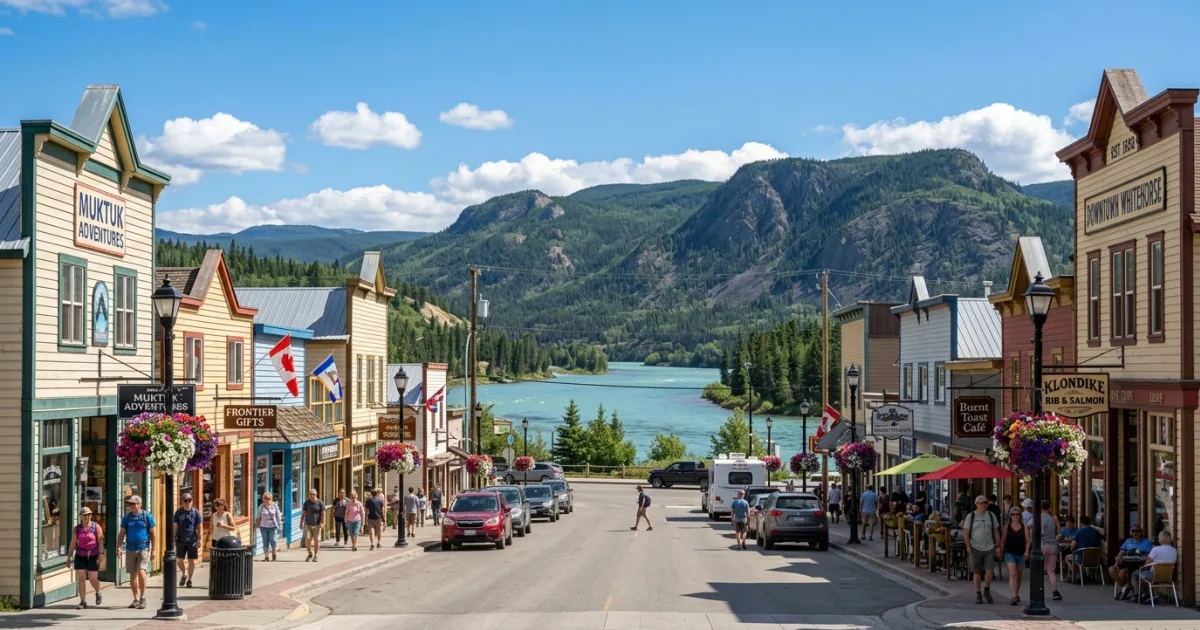
Downtown Whitehorse acts as the urban heartbeat of the Yukon Territory, established in 1900 following the feverish influx of prospectors during the Klondike Gold Rush. Today, it combines historic frontier character with progressive public services, independent galleries, and innovative hospitality. Set in an expansive river valley framed by dramatic clay cliffs to the west and the Yukon River to the east, downtown provides visitors with continuous reminders of the raw northern wilderness just beyond its paved avenues.
A stroll down Main Street reveals preserved timber-frame storefronts alongside contemporary cultural institutions such as the Kwanlin Dün Cultural Centre, celebrating the enduring heritage of the Kwanlin Dün First Nation and Ta'an Kwäch'än Council. From artisan bakeries to world-class outfitter shops preparing explorers for remote expeditions, Downtown Whitehorse delivers a hospitable, low-stress introduction to Canada's far north.
Reasons to Visit
- Klondike Riverboat History: Tour the SS Klondike, a beautifully restored historic sternwheeler dry-docked on the southern edge of the downtown riverbank.
- Thriving Indigenous Arts: Experience traditional and contemporary First Nations carving, beadwork, and storytelling at the Kwanlin Dün Cultural Centre.
- Unique Frontier Architecture: Photograph the quirky, three-story Log Skyscrapers built after World War II to accommodate rapid housing demands.
- Scenic Riverfront Trails: Walk or cycle the paved Millennium Trail, traversing the crystal-clear waters of the Yukon River.
- Northern Craft Breweries: Taste locally brewed ales made with pure subarctic glacier-fed water along 2nd and 4th Avenues.
Things to Avoid
- Avoid walking along the clay cliffs bordering the western edge of downtown, as they are prone to severe erosion and unstable rockfalls.
- Do not leave food or scented items unattended on river park picnic tables to avoid attracting wildlife.
- Avoid underestimating northern sun exposure in summer; high latitudes offer deceptively intense UV rays despite moderate temperatures.
- Do not visit without booking rental cars or specialized aurora tours well in advance during peak summer and winter festival periods.
Local Transportation Tips
Downtown Whitehorse is designed around a tidy, walkable street grid bordered by 1st Avenue (along the river) through 8th Avenue. Whitehorse Transit operates scheduled bus routes connecting the core with suburban neighborhoods, Canada Games Centre, and the airport for a flat fare of $2.50 CAD (exact cash or ticket sheets). Local taxi companies operate 24 hours a day with metered fares, while bike rentals are readily available along 1st Avenue during the spring and summer months.
Travel Etiquette
- Dress codes are universally informal and practical; outdoor performance gear and sturdy footwear are completely acceptable in fine restaurants and galleries.
- Always seek permission before photographing First Nations cultural ceremonies, traditional regalia, or artisan craftspeople at work.
- Hold doors and acknowledge passersby with a gentle nod; northern community culture is notably warm, polite, and unhurried.
- Tip 15% to 20% for table service in cafes, pubs, and sit-down restaurants, consistent with Canadian dining customs.
Recommended Age Group
Downtown Whitehorse offers safe, engaging, and accessible urban activities suitable for almost every traveler profile.
- Babies (0-2 years): Neutral. The flat terrain and smooth riverfront pathways accommodate strollers easily, though winter temperatures are too harsh for prolonged infant outings.
- Kids (3-12 years): Recommended. Children enjoy exploring the SS Klondike sternwheeler decks, visiting the riverfront fish ladder, and running through Shipyards Park splash pads in summer.
- Teens (13-19 years): Recommended. Excellent opportunities for mountain biking rentals, river paddling, shopping for northern streetwear, and learning Gold Rush history.
- Adults (20-64 years): Recommended. Abundant options for craft beer tasting, fine northern dining, art gallery hopping, and active wilderness excursions.
- Seniors (65+ years): Recommended. Highly walkable street grid, gentle riverside walking circuits, convenient transit, and high-quality local healthcare infrastructure.
Accessibility Level: Medium
- Most downtown intersections along Main Street, 2nd Avenue, and 4th Avenue feature curb cutouts with tactile paving for wheelchair and mobility scooter users.
- The paved Millennium Trail along the Yukon River is graded, flat, and fully barrier-free for multiple kilometers.
- Modern public buildings, including the Kwanlin Dün Cultural Centre and Whitehorse Public Library, feature automatic zero-threshold entry doors and accessible restrooms.
- Whitehorse Transit buses are low-floor vehicles equipped with fold-out ramps and priority seating areas for wheelchair users.
Did You Know?
During World War II, Whitehorse grew overnight from an isolated hamlet of several hundred residents into a bustling logistics hub of tens of thousands when the United States military constructed the Alaska Highway through the town in 1942.
Cool Statistics
- 1900: The year Whitehorse was formally established as a rail terminal for the White Pass & Yukon Route.
- 20+ Hours: Peak daily sunlight duration experienced in Downtown Whitehorse around the summer solstice.
- 3,185 km: The full length of the Yukon River, which flows directly alongside downtown's eastern boundary.






Buy a compatible power adapter for your trip