Disclosure: This site contains affiliate links. We may earn a commission if you make a purchase, at no extra cost to you.

Vintage green classic convertible parked on an Old Havana cobblestone street with colonial buildings and Capitolio in background

Havana Overview & Key Highlights

Havana is the vibrant, storied capital of Cuba, defined by its layered 500-year history, evocative neoclassical architecture, and enduring cultural spirit. The city stands along the Caribbean coastline, welcoming visitors with iconic vintage American cars, lively Afro-Cuban jazz drifting from historic squares, and dramatic sea spray washing over the famous Malecón seawall. Its historic heart, Old Havana (Habana Vieja), is a UNESCO World Heritage site featuring cobblestone plazas, Spanish colonial fortresses, and pastel-toned mansions that chronicle centuries of Caribbean trade and revolution. Navigating modern Havana offers a sensory journey unlike any other urban center in the Western Hemisphere. The absence of commercial billboards gives way to expressive political murals, independent art cooperatives like Fábrica de Arte Cubano, and intimate private paladares serving inventive Cuban cuisine. While traveling here requires adaptability due to a cash-focused economy and unique infrastructural dynamics, travelers are rewarded with unmatched warmth, architectural grandeur, and a living cultural authenticity that remains distinctly Caribbean.

Havana Travel Guide: Logistics & In-Depth Tips

Havana stands as one of the Caribbean's most compelling cultural epicenters, framed by dramatic ocean walls and architectural relics that span the Spanish Renaissance, Baroque, Art Deco, and mid-century Modernism. Founded in 1519 along the natural harbor of Cardenas Bay, the settlement served as Spain's principal staging port for treasures returned to Europe, resulting in heavily fortified bastions such as the Castillo de la Real Fuerza and El Morro. Today, these military structures overlook a lively urban tapestry where music is woven into daily life, resonating from shaded porticoes, bohemian street corners, and legendary watering holes.

Beyond the photogenic colonial plazas of Habana Vieja, the city branches into distinctive residential and cultural districts. Centro Habana presents a raw, energetic cross-section of working-class street life and classical facades, while Vedado showcases wide, tree-lined boulevards, grandiose 1950s mansions, and intellectual hubs centered around the historic Hotel Nacional. Miramar, situated further west, features diplomatic embassies and avant-garde nightlife hotspots. Havana operates on a rhythm entirely its own, encouraging travelers to slow down, connect meaningfully with local residents, and experience a historic city navigating constant evolution.

Reasons to Visit

  • Unrivaled Architectural Heritage: Marvel at four pristine Spanish colonial squares in UNESCO-listed Old Havana and towering Art Deco landmarks like the Edificio Bacardí.
  • World-Class Live Music: Immerse yourself in authentic son cubano, rumba, and contemporary jazz at venues ranging from La Zorra y el Cuervo to neighborhood street gatherings.
  • Fábrica de Arte Cubano (F.A.C.): Experience a multidisciplinary cultural venue housed in a converted cooking oil factory featuring rotating art exhibitions, film screenings, and live bands.
  • Classic Automotive Legacy: Ride through seaside boulevards in impeccably preserved 1950s American convertibles painted in vivid pastel hues.
  • The Iconic Malecón: Stroll along the five-mile seawall at sunset, watching locals gather to fish, socialize, and play music against the crashing Atlantic waves.

Things to Avoid

  • Avoid exchanging foreign currency with unverified touts on the street to prevent receiving counterfeit or demonetized notes.
  • Do not drink untreated municipal tap water; opt for boiled water or purified bottled water provided by your accommodation.
  • Avoid relying exclusively on credit cards or digital payments, as card acceptance is extremely restricted across the city.
  • Do not accept cheap cigars offered by unsolicited touts claiming to work at state factories; these are almost always counterfeit products.
  • Avoid photographing police, military personnel, or security checkpoints, which is strictly prohibited by Cuban law.

Local Transportation Tips

Getting around Havana involves a mix of foot travel, state taxis, and private vintage automobiles. Old Havana is entirely pedestrian-friendly, with motor vehicles restricted along major arteries like Calle Obispo. For travel between neighborhoods such as Old Havana, Vedado, and Miramar, travelers can hail yellow tourist taxis or private vintage cars. Always agree on the total price with the driver before starting your trip. Almendrones—fixed-route collective taxis running down major avenues like Calzada or Línea—offer an authentic, low-cost local option, though communicating the exact drop-off requires basic Spanish.

Travel Etiquette

  • Address locals politely using 'Buenos días' or 'Buenas tardes' before asking for directions or making transactions.
  • Tip generously in private paladares, guesthouses, and for tour guides; tips represent a critical source of hard currency for local workers.
  • Request permission before taking close-up portraits of street artists, musicians, or residential doorways.
  • Engage in discussions about Cuban politics and economics with respect and discretion, allowing locals to lead the depth of the conversation.

Recommended Age Group

Havana offers rewarding experiences across different age brackets, though physical infrastructure and travel logistics heavily favor independent, active travelers.

  • Babies (0-2 years): Not Recommended. Navigating broken sidewalks, high curb drops, and cobblestones with strollers is exceptionally difficult, while essential baby supplies like diapers and formula are scarce in local shops.
  • Kids (3-12 years): Neutral. Children will enjoy riding in colorful vintage convertibles and exploring historic coastal forts, but the lack of dedicated child-friendly entertainment and high midday heat require careful itinerary pacing.
  • Teens (13-19 years): Recommended. Teenagers will be captivated by the city's dynamic visual art, vibrant music scene, vintage car culture, and engaging historical narrative.
  • Adults (20-64 years): Recommended. Havana is ideally suited for adult travelers drawn to architectural preservation, rich nightlife, cocktail culture, and in-depth cultural exploration.
  • Seniors (65+ years): Neutral. Mature travelers who appreciate classical music and historic architecture will find deep value here, though walking across uneven pavements and limited elevator access in historic properties require steady mobility.

Accessibility Level: Medium

  • Cobblestone streets and cracked pavements in Habana Vieja and Centro Habana present significant obstacles for manual and powered wheelchairs.
  • Most historic boutique guesthouses and paladares are located inside multi-story colonial buildings lacking elevator access.
  • Public transportation options do not feature wheelchair ramps or kneeling mechanisms; travelers with limited mobility should arrange specialized private van transport in advance.
  • Plaza de Armas and Plaza de la Catedral feature flat paved areas that are relatively easy to navigate with assistance.

Did You Know?

Havana is home to one of the largest vintage automotive fleets in the world, estimated at roughly 60,000 classic American cars built before 1960. Following the 1959 revolution and subsequent commercial embargo, Cuban mechanics kept these vehicles running through ingenious self-taught engineering, often retrofitting Russian tractor motors, maritime diesel engines, and handmade spare parts beneath classic Chevrolet and Cadillac bodies.

Cool Statistics

  • 1519: The official year Havana was founded by Spanish conquistador Diego Velázquez de Cuéllar.
  • 8 Kilometers: The total length of the Malecón seawall stretching along the northern coastline.
  • 4: The number of grand colonial plazas anchoring Old Havana (Plaza Vieja, Plaza de Armas, Plaza de la Catedral, Plaza de San Francisco).


Address:

Havana, Cuba

Find Nearby Accommodations

Basic Info

address icon

COUNTRY & Region

Cuba,
Caribbean

ACCESSIBILITY LEVEL​

Medium
Currency icon

LOCAL CURRENCY​

Cuban Peso (CUP)
Price level icon
Medium
Safety Level icon

SAFETY LEVEL

Duration icon

Recommended Duration

• 1-7 days

Electricity

electricity icon

Electricity

110-120V, 
60Hz
Plug Socket icon

Plug Type

• Type A (Flat blade)
• Type B (Flat blade with grounding pin)
• Type C (Round pin)
Plug types
Click To View Plug Types
Havana is part of our
Culinary Heritage collection

Activities To Do In Havana

Best Time To Visit Havana

The optimal window to explore Havana spans from December through April, featuring dry weather and warm, comfortable temperatures averaging around 25°C (77°F).

  • Dry Season (December – April): Clear skies, minimal rainfall, and pleasant evening breezes along the coast, offering ideal conditions for architecture walks and open-top classic car tours.
  • Shoulder Season (May & November): Warmer temperatures with occasional showers, balanced by thinner crowds and better availability at boutique guesthouses.
  • Wet & Hurricane Season (June – October): High humidity, frequent tropical downpours, and elevated heat reaching 32°C (90°F), requiring flexible itineraries and afternoon indoor activities.

Average Temperatures Per Month

Remember to check the weather forecast a few days before the trip and before heading to the airport.

Safety Level icon

Safety Level

Havana exhibits notably low rates of violent crime, making it safer than many metropolitan centers in the Americas. However, petty theft and scams (locally known as 'jineterismo') occur frequently in crowded tourist areas such as Obispo Street and around the Capitolio. Avoid accepting unsolicited invitations to underground cigar sales, impromptu festivals, or specific bars from strangers on the street. Maintain situational awareness when walking along poorly lit side streets in Centro Habana late at night, and always use licensed or recommended taxis after dark.

The rating is based on multi-year peace, crime, and security indices. Before you go, always verify current conditions through official government travel advisories.

Emergency Numbers

Police: 106
Ambulance: 104

No internet needed • Includes local translations • Free for TravelingWiz readers

Spoken Languages

Spanish is the official language. English is spoken in boutique accommodations, major museums, and private restaurants catering to international visitors.

Learn The Language

  • ¡Hola! – Hello!
  • Buenos días – Good morning
  • Por favor – Please
  • Muchas gracias – Thank you very much
  • ¿Cuánto cuesta? – How much does it cost?
  • ¿Dónde está…? – Where is…?
  • La cuenta, por favor – The bill, please
  • ¿Habla inglés? – Do you speak English?
Travel Booking Partner - TravelingWiz

Trip Cost & Budgeting for Havana, 2026

Everything you need to know about money while traveling
Is Havana expensive for tourists in 2026? Havana offers budget friendly travel options if you understand the local currency system. You can expect to pay around 1,000 CUP for a cappuccino, 1,200 CUP for a domestic beer, and 5,000 CUP for a standard main meal at a mid-range restaurant. Based on our Human Verified prices, costs remain modest for independent visitors. Use the data table below to calculate your specific daily budget based on your travel style.
Currency icon

LOCAL CURRENCY​:

Cuban Peso (CUP)
Price level icon
Medium
Cash is essential in Havana as foreign credit cards are generally not accepted and ATMs are unreliable.

Per person, per day – pocket cash for small purchases.

Local: 2800
Cuban Peso (CUP)
≈ 30 USD

Full daily spend estimation (accommodation, food, transportation, attractions).

Travel Style
Cuban Peso (CUP)
≈ USD ($)
Budget
15400
35
Mid-range
28000
75
Comfort
61600
180

The Prices, Daily costs, and calculator results are estimates for planning purposes only. Actual costs may vary based on season, booking timing, personal spending habits, and currency fluctuations. TravelingWiz cannot be held responsible for discrepancies between these estimates and your final trip expenses.

  • • Stay in local casas particulares instead of state-run hotels for better rates and authentic hospitality.
  • • Bring crisp cash in euros or US dollars, as foreign credit cards are rarely accepted anywhere.
  • • Dine at private family-run restaurants called paladares or eat peso street food to save on dining.
  • • Use shared vintage car taxis called almendrones along fixed routes instead of private tourist cabs.

Pre-Order Tickets

Avoid disappointment when tickets sell out — and skip the long lines by booking online in advance. You’ll often save up to 20% too.
Save up to 20%

Travel Discounts & Coupons

Save on hotels, attractions, transport, and gear — find verified discounts for smarter travel spending.
Verified Coupons

What To Pack

  • High-denomination clean foreign cash (USD and EUR in crisp, unmarked banknotes)
  • Universal power adapter supporting Types A, B, and C
  • Portable power bank for smartphones during long walking days
  • Comfortable, closed-toe walking shoes for uneven cobblestones and pavements
  • Broad-spectrum sunscreen, polarized sunglasses, and a wide-brim hat
  • Comprehensive personal first-aid kit containing rehydration salts and basic over-the-counter medications
  • Insect repellent containing DEET for humid tropical evenings
  • Lightweight, breathable linen and cotton clothing suited for tropical humidity
We couldn't find tips for Havana.
If you got any, please share

Recommended Itineraries for Traveling to Havana

We couldn't find itineraries for Havana.
you can contact us for custom trip plan

Food & Drink Highlights

Local Food Overview

Cuban cuisine, often referred to as comida criolla, is a soulful blend of Spanish, African, and Taino traditions centered around hearty, comforting staples. Classic dishes rely on a fragrant sofrito base made from garlic, onions, and bell peppers, slow-cooked alongside black beans, rice, and slow-braised meats. Havana's culinary scene has experienced a renaissance fueled by private dining rooms (paladares), where contemporary chefs creatively reinterpret ancestral recipes while emphasizing seasonal produce and fresh Caribbean seafood.
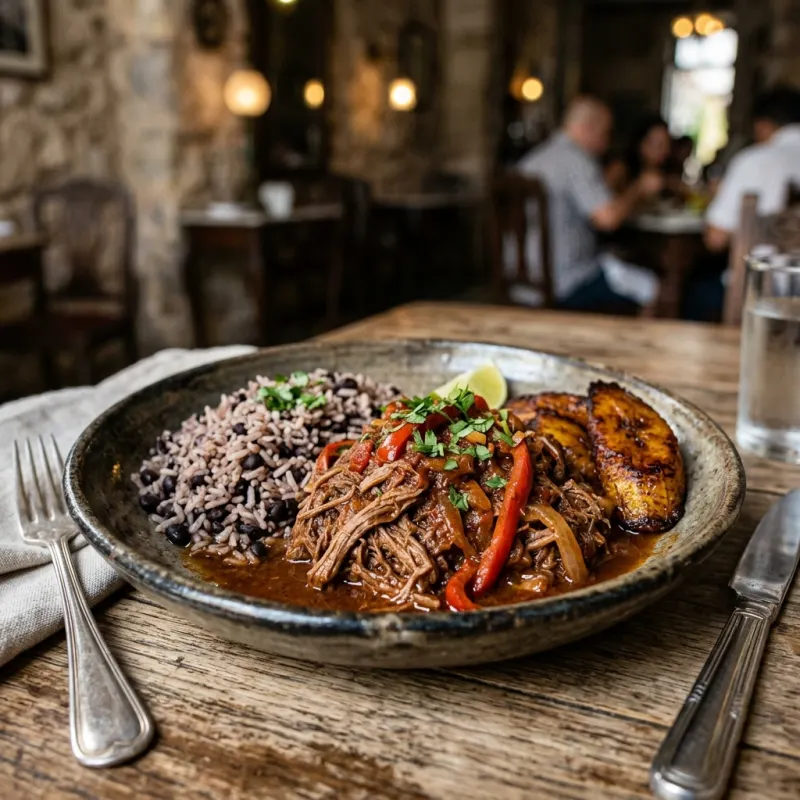
Authentic Cuban Ropa Vieja with shredded beef, black beans and rice, and fried sweet plantains

Must Try Dish

Ropa Vieja - Shredded flank steak slow-simmered in a savory tomato, bell pepper, and garlic sofrito, accompanied by fragrant moros y cristianos (black beans and rice) and sweet fried plantains. This signature Cuban culinary masterpiece represents the ultimate comfort food, celebrated for its rich, tender texture and centuries-old Spanish heritage.
Food Experiences Title Icon

Food
Experiences

Discover cooking classes, tastings and local food tours

No food experience found
Maya, the human travel expert at TravelingWiz, offering curated, non-AI expertise

Maya’s Final Checklist for Havana

Logistics shouldn’t be the focus of your trip—the experience should. I’ve hand-vetted these essential partners to ensure your arrival, stay, and exploration are as smooth as an Athenian breeze.

Where to Stay

From boutique hotels to local apartments—compare thousands of options and find the perfect stay in the best neighborhood.

Air Travel

Getting there should be seamless. Compare the best routes and prices across top airlines to start your journey on the right note.

Local Guides

Connect with experts who know the destination best. Get personalized advice and insider tips to help you plan your perfect trip.

Travel Protection

The “Engineer’s” rule: always have a backup. Secure your trip with a plan that covers every “what if” and unexpected change.

Car Rentals

Explore at your own pace with total freedom. Compare reliable rental options and find the right vehicle for your adventure.

Visa Services

Don’t let paperwork slow you down. Get expert assistance with your application to ensure all your entry documents are in order.

FAQs

Yes, US citizens can travel to Cuba under general authorized categories established by the US Department of the Treasury’s Office of Foreign Assets Control (OFAC), the most common being ‘Support for the Cuban People.’ Travelers must maintain a full-time schedule of authorized activities and retain travel records.
Internet access is widely available through prepaid ETECSA NAUTA cards or tourist eSIMs. Wi-Fi connections are standard in private homestays (casas particulares), public parks, and hotels, though speeds can vary compared to global broadband standards.
Walking is ideal for exploring Old Havana and Centro Habana. For longer distances to Vedado or Miramar, travelers commonly use yellow official taxis, vintage classic car taxis, or Almendrones (shared collective taxis) after agreeing on a set fare.

Your Insights Matter

TravelingWiz grows through the stories of our community. If you’ve recently explored ,Havana share your tips and stories to help us perfect our guides for the next traveler.

Related Articles

Check out our related articles and blog posts to learn even more about the destination.

No related articles found

Don’t Travel Alone

Share with your friends and family

Where should we send your offline card?

We hate spam just as much as you do

newsletter_consent *