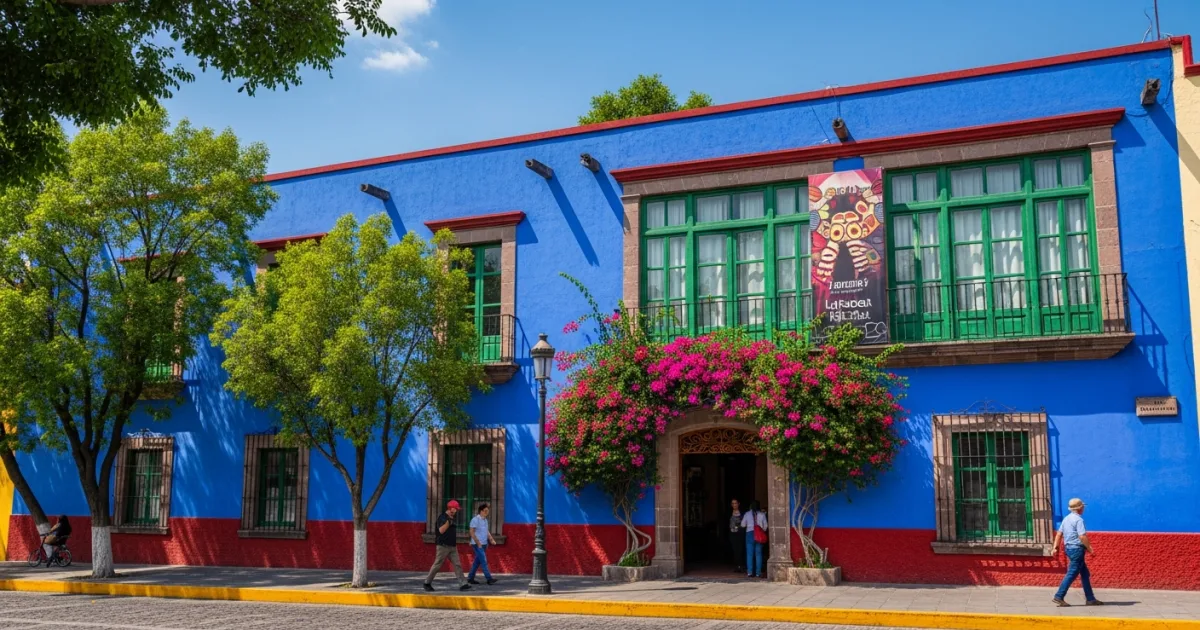
La Casa Azul is not merely a museum; it is a time capsule that preserves the intense, creative, and often painful life of Frida Kahlo. The house was built by her father in 1904 and later modified by Diego Rivera to include a studio and a courtyard that reflects their shared passion for pre-Hispanic culture. Walking through the rooms, visitors can see Kahlo's wheelchair pulled up to her easel, her vibrant traditional dresses, and the mirror above her bed that she used to paint her famous self-portraits while recovering from numerous surgeries.
The museum's collection includes several of Kahlo's important works, such as 'Viva la Vida' and 'Frida and the Cesarean Operation', alongside pieces by Rivera and their contemporaries. The meticulously maintained gardens feature a small pyramid designed by Rivera to display their collection of Mesoamerican idols. The atmosphere of the house provides profound context to her art, illustrating how her physical suffering and deep Mexican nationalism were inextricably linked to her creative output.
Reasons to Visit
- Step inside the actual living and working space of one of the 20th century's most important artists.
- View personal artifacts, including her iconic Tehuana dresses, orthopedic corsets, and custom-made footwear.
- Experience the beautiful, tranquil courtyard garden filled with native Mexican plants and pre-Columbian artifacts.
- Gain a deeper understanding of the cultural and political environment of post-revolutionary Mexico.
Things to Avoid
- Avoid arriving without a pre-booked ticket, as you will likely be turned away.
- Do not bring large backpacks or luggage, as they are not permitted inside the historic house.
- Avoid taking photos inside without purchasing the required permit sticker.
- Do not touch the artifacts or furniture, as they are delicate historical items.
Local Transportation Tips
The museum is easily accessible via ride-sharing apps like Uber, which are safe and affordable in Mexico City. Alternatively, you can take the Metro (Line 3) to the Coyoacán or Viveros stations, followed by a pleasant 15-20 minute walk or a short taxi ride to the museum. The Turibus (South Route) also has a stop conveniently located near the museum.
Travel Etiquette
- Maintain a respectful and quiet demeanor inside the house, as it is a place of historical and personal significance.
- Follow the designated one-way path through the rooms to help manage the flow of the crowds.
- Respect the photography rules and ensure your flash is turned off to protect the artwork and textiles.
Recommended Age Group
The Frida Kahlo Museum offers a profound cultural experience, though its appeal varies by age group.
- Babies (0-2 years): Neutral. Strollers are not allowed inside the historic house due to narrow spaces and delicate artifacts, requiring babies to be carried.
- Kids (3-12 years): Neutral. While the colorful garden is appealing, the historical context and themes of Kahlo's art may not fully engage younger children.
- Teens (13-19 years): Recommended. Older children often appreciate the artistic significance, the vibrant aesthetics, and the compelling, resilient life story of Frida Kahlo.
- Adults (20-64 years): Recommended. The museum offers profound insights into art history, Mexican culture, and Kahlo's personal struggles, making it a must-visit.
- Seniors (65+ years): Recommended. The museum is mostly on one level, though some uneven cobblestone surfaces exist in the courtyard; wheelchairs are available upon request.
Accessibility Level: Medium
- The museum provides wheelchairs free of charge for visitors with mobility issues, subject to availability.
- Most of the ground floor and the gardens are wheelchair accessible, though the original cobblestone paths can be slightly bumpy.
- Access to the second floor (which houses the studio and bedroom) requires climbing a staircase, and there is no elevator available due to the building's historic nature.
- Service animals are permitted inside the museum with proper documentation.
Did You Know?
Did you know that the urn containing Frida Kahlo's ashes is on display in her bedroom? It is housed in a pre-Columbian toad-shaped vessel resting on her bed.
Cool Statistics
- The house was built in 1904 by Frida's father, Guillermo Kahlo.
- Frida Kahlo lived in this house for 36 years of her life.
- The museum welcomes over 500,000 visitors annually, making it one of the most visited museums in Mexico City.
- The property was officially converted into a museum in 1958, four years after Kahlo's death.






Buy a compatible power adapter for your trip