West Virginia's diverse landscapes provide opportunities for hiking, whitewater rafting, and exploring dense forests. The state's history is deeply rooted in the coal industry and Civil War heritage, evident in its numerous museums and preserved sites.
Cultural experiences abound, from traditional Appalachian music festivals to local crafts markets. The cuisine reflects a mix of Southern and Appalachian influences, with dishes like pepperoni rolls and ramp-based recipes.
Reasons to Visit:
- Explore the New River Gorge National Park and Preserve
- Experience Appalachian culture and music
- Visit historic Civil War sites
- Enjoy outdoor activities like hiking and rafting
- Taste unique local cuisine
Things to Avoid:
- Underestimating weather conditions; always check forecasts
- Venturing into remote areas without proper preparation
- Disregarding local customs and etiquette
- Littering in natural areas
Local Transportation Tips
Public transportation is limited in rural areas; renting a car is advisable for exploring the state. In cities like Morgantown, the Mountain Line Transit Authority offers bus services. Always check schedules in advance, as services may be infrequent.
Travel Etiquette:
- Greet locals with a friendly demeanor; "ma'am" and "sir" are commonly used.
- Respect private property and posted signs.
- Dress modestly when visiting religious or historical sites.
- Tipping is customary in restaurants and for services.
Did You Know?
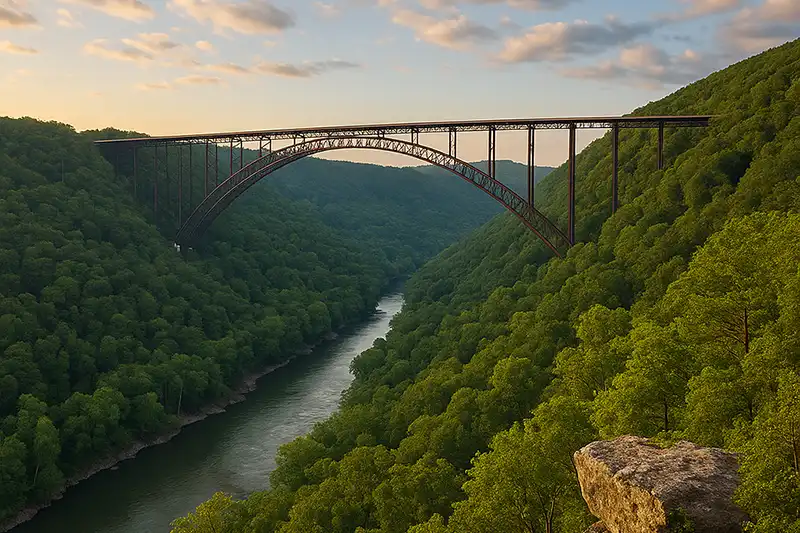
West Virginia is home to the New River Gorge Bridge, one of the longest steel arch bridges in the Western Hemisphere, and hosts an annual "Bridge Day" where visitors can walk across it and watch daredevils BASE jump into the gorge below.
Cool West Virginia Stats:
- Home to 37 state parks and 9 state forests, offering extensive outdoor recreation.
- The Greenbrier Resort has hosted 28 U.S. Presidents and features a once-secret underground bunker.
- West Virginia produces 15% of the nation's coal, reflecting its historical significance in the industry.
Accessibility Level: High
Accessible lodging options available in both rural and urban areas.
- Many hotels and resorts in West Virginia offer accessible rooms with features like roll-in showers and grab bars.
- Public transportation services, such as those in Charleston and Huntington, provide wheelchair-accessible buses equipped with ramps and lifts.
- Certain attractions and venues offer sensory-friendly experiences, including reduced lighting and sound levels, to accommodate visitors with sensory sensitivities.
- Certain attractions and venues offer sensory-friendly experiences, including reduced lighting and sound levels, to accommodate visitors with sensory sensitivities.
Recommended Age Group
West Virginia is most suitable for Adults and Teens due to its focus on adventure and recreational activities.
- Babies (0-2 years): Not recommended due to rugged terrain and limited baby-friendly facilities.
- Kids (3-12 years): Recommended with supervision; many parks and historical sites offer educational experiences.
- Teens (13-19 years): Highly recommended for outdoor adventures like hiking and rafting.
- Adults (20-64 years): Highly recommended for diverse activities ranging from cultural sites to nature exploration.
- Seniors (65+ years): Recommended; accessible trails and scenic drives are available, but some activities may be strenuous.










Buy a compatible power adapter for your trip