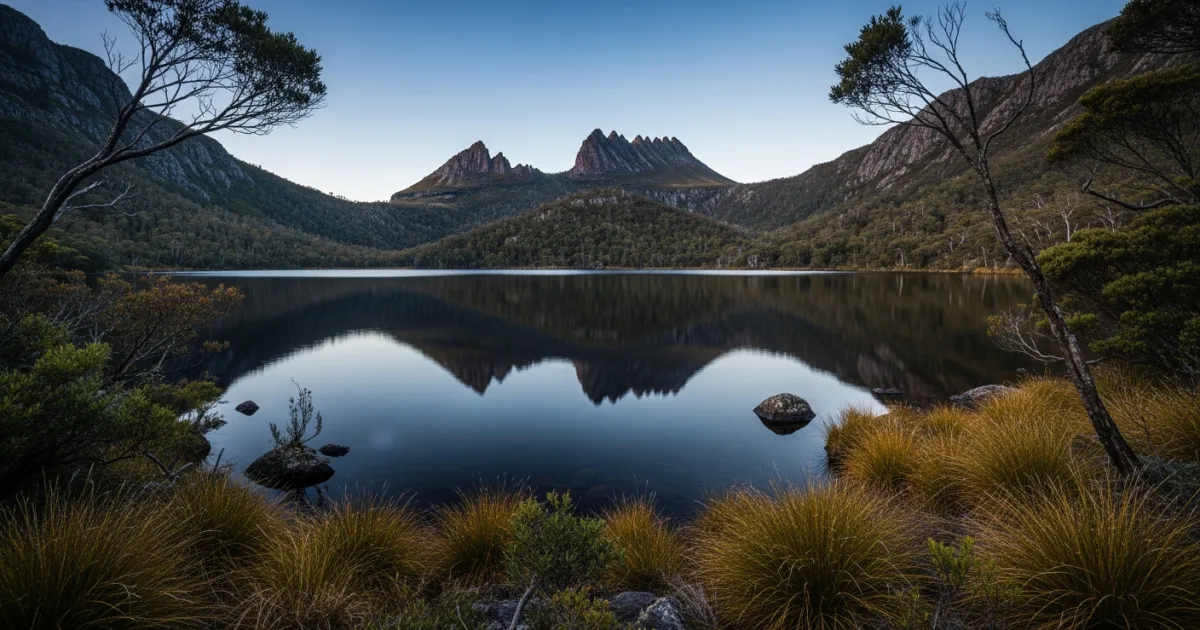
Tasmania, Australia's southernmost state, is an archipelago of 334 islands, with the main island offering a striking contrast of rugged wilderness, rich history, and culinary excellence. Separated from the mainland by the Bass Strait, it has evolved a unique ecosystem, home to rare flora and fauna like the Tasmanian devil and the ancient Huon pine. The island's compact size makes it an ideal road trip destination, allowing travelers to transition from the alpine peaks of Cradle Mountain to the pristine, white sands of Wineglass Bay in a single day. Hobart, the capital, provides a cultural anchor with its colonial architecture, vibrant Salamanca Market, and the provocative Museum of Old and New Art (MONA).
Reasons to Visit
- Unparalleled access to UNESCO World Heritage-listed wilderness.
- Encounters with unique wildlife found nowhere else on Earth.
- World-class farm-to-table dining and cool-climate wineries.
- Rich convict history at sites like Port Arthur.
- Thriving contemporary arts and cultural scene in Hobart.
Things to Avoid
- Driving at dawn or dusk when wildlife is most active on the roads.
- Underestimating the weather; alpine areas can experience snow in summer.
- Bringing fresh fruit or vegetables into the state due to strict biosecurity laws.
- Rushing the trip; the winding roads take longer to navigate than maps suggest.
Local Transportation Tips
Renting a car or campervan is the most practical way to explore Tasmania, offering the freedom to access remote national parks and coastal towns. Public buses connect major hubs like Hobart, Launceston, and Devonport, but services to regional areas are limited. Guided tour buses are a great alternative for those who prefer not to drive.
Travel Etiquette
- Respect the natural environment by adhering to 'Leave No Trace' principles.
- Stay on marked trails to protect fragile alpine vegetation and prevent the spread of root rot.
- Observe wildlife from a distance and never feed native animals.
- Acknowledge the traditional owners of the land, the Palawa people, when visiting cultural sites.
Recommended Age Group
Tasmania offers diverse experiences suitable for various age groups, though its rugged nature favors active travelers.
- Babies (0-2 years): Neutral. Long driving distances and rugged terrain can make travel challenging, though family-friendly accommodations are available.
- Kids (3-12 years): Recommended. Children will love the wildlife sanctuaries, easy nature walks, and interactive museums.
- Teens (13-19 years): Recommended. Adventure activities like mountain biking in Derby, kayaking, and hiking are perfect for active teens.
- Adults (20-64 years): Recommended. The blend of challenging hikes, world-class wineries, and cultural sites like MONA provides an ideal adult getaway.
- Seniors (65+ years): Recommended. Scenic drives, accessible boardwalks in national parks, and rich historical sites offer a comfortable and engaging experience.
Accessibility Level: Medium
- Many national parks offer wheelchair-accessible trails, such as the Russell Falls track in Mt Field National Park.
- Major attractions like MONA and Port Arthur Historic Site are fully equipped with ramps, elevators, and accessible facilities.
- Accessible accommodation is widely available in Hobart and Launceston, but should be booked in advance in regional areas.
- Public transport in major cities includes low-floor buses, though regional transport options are less accommodating.
Did You Know?
Tasmania has the world's cleanest air, regularly measured at the Cape Grim Baseline Air Pollution Station, and rainwater so pure it is shipped globally.
Cool Statistics
- Over 40% of Tasmania is protected as national parks and reserves.
- The island has 334 surrounding islands.
- Tasmania is home to the tallest flowering plants in the world, the Swamp Gum.
- The state produces some of the world's most sought-after black truffles.







Buy a compatible power adapter for your trip