Disclosure: This site contains affiliate links. We may earn a commission if you make a purchase, at no extra cost to you.

>
>
>
Saint-Laurent-du-Maroni Region

Saint-Laurent-du-Maroni Region

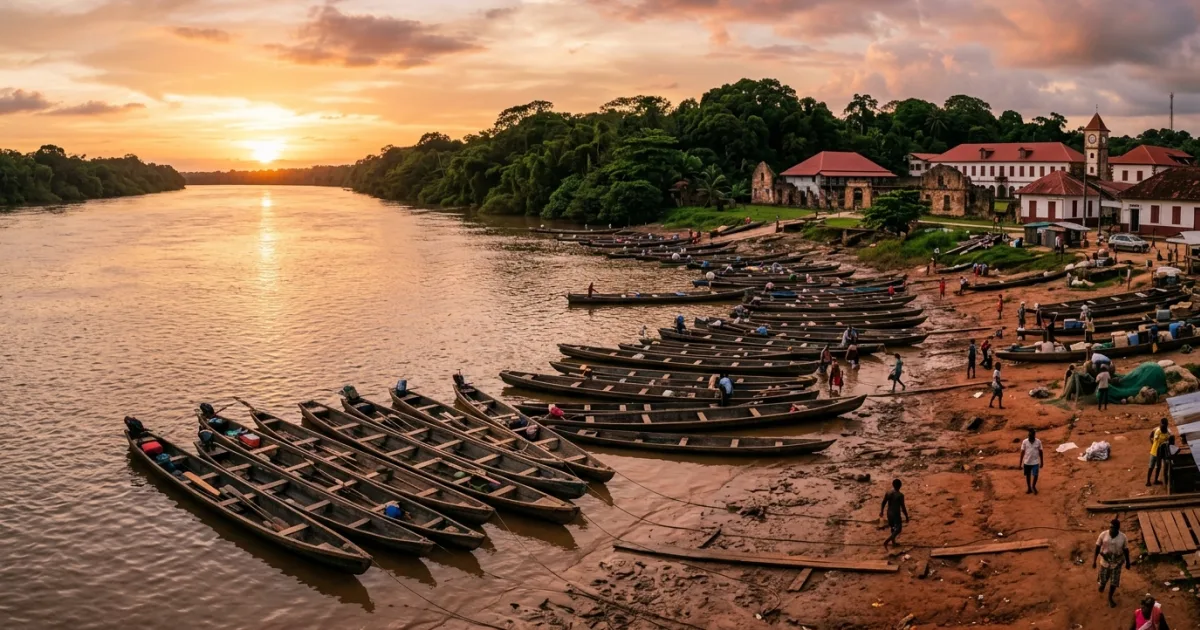
Maroni River with wooden pirogues at Saint-Laurent-du-Maroni in French Guiana

Saint-Laurent-du-Maroni Region Overview & Key Highlights

The Saint-Laurent-du-Maroni Region occupies the northwestern territory of French Guiana, fronting the international river boundary shared with Suriname. The area's heart is Saint-Laurent-du-Maroni, a tranquil town lined with decaying wooden colonial architecture and the brick pavilions of the infamous penal processing facility, the Camp de la Transportation. Exploring the region requires balancing sober historic reflections with adventurous river navigation, where traditional Maroon and Kali'na Amerindian craftspeople maintain ancient woodworking and weaving techniques along the riverbanks. Beyond the central settlement, the region expands into pristine equatorial forests, meandering waterways, and coastal nesting habitats. Travelers can journey downriver to the Yalimapo beaches within the Amana Nature Reserve to observe majestic leatherback sea turtles nesting under moonlit skies, or head upriver via pirogue to explore isolated Bushinengue communities such as Grand-Santi and Papaïchton. Accessible primarily via Route Nationale 1 from Cayenne or by ferry across the river from Albina, Suriname, this remote district presents an extraordinary blend of Amazonian nature and raw South American heritage.

Saint-Laurent-du-Maroni Region Travel Guide: Logistics & In-Depth Tips

The Saint-Laurent-du-Maroni Region anchors the western edge of French Guiana, framing the wide, muddy waters of the Maroni River against a background of unbroken equatorial forest. The area's administrative center, Saint-Laurent-du-Maroni, was constructed specifically in the mid-19th century to receive and process convict ships from metropolitan France. Here, convicts—including legendary figures like Henri Charrière (Papillon)—were sorted before assignment to jungle labor camps or the offshore salvation islands. Today, the Camp de la Transportation stands as an open-air historical monument where visitors can wander through silent brick dormitories, iron-barred punishment blocks, and overgrown administrative courtyards that reveal France's penal past.

Beyond the architectural footprint of colonization, the region vibrates with dynamic indigenous and Maroon life. Descendants of enslaved Africans who escaped coastal plantations centuries ago—the Bushinengue peoples, including the Saramaka and Aluku—have created a unique cultural world along the river, renowned for intricate Tembé geometric woodcarvings and dugout canoe navigation. Downstream, where the Maroni empties into the Atlantic, the coastal village of Awala-Yalimapo hosts one of the planet's premier nesting grounds for giant leatherback turtles. From tracking biodiversity in the Amana Nature Reserve to gliding past riverfront canopy walls in a long wooden pirogue, the Saint-Laurent-du-Maroni Region offers an untamed, authentic gateway into the Amazonian Guianas.

Reasons to Visit

  • Explore the profound, eerie architecture of the Camp de la Transportation, France's historic gateway to penal exile.
  • Embark on motorized pirogue journeys along the Maroni River into remote Maroon and Amerindian communities.
  • Witness giant leatherback turtles laying eggs on the Atlantic beaches of Awala-Yalimapo between April and July.
  • Admire authentic Tembé wood carvings and traditional river crafts created by local Bushinengue artisans.
  • Experience a rare cultural intersection of European governance, Amazonian nature, and Caribbean-Maroon lifestyles.

Things to Avoid

  • Do not board long-distance river pirogues without verifying that life jackets are available and fuel supplies are adequate.
  • Avoid touching or shining bright white flashlights on nesting sea turtles at Awala-Yalimapo; use red lights and maintain a respectful distance.
  • Do not cross into Albina, Suriname, on unregulated pirogues without obtaining the proper border stamps from French and Surinamese immigration officials.
  • Avoid walking unattended through unlit outer neighborhoods or near river docks after dark.

Local Transportation Tips

Transportation within the Saint-Laurent-du-Maroni Region relies on a combination of paved roadways and river transport. Route Nationale 1 (RN1) connects Saint-Laurent directly to Cayenne via Kourou, taking roughly three to four hours by car or shared minivan (taxi collectif). Within Saint-Laurent, walking and local taxis are sufficient to explore the town center. To reach settlements upstream or navigate across to Suriname, motorized pirogues departing from the river docks serve as the region's aquatic buses, charging standard shared fares or negotiable charter rates.

Travel Etiquette

  • Always greet people with a polite 'Bonjour' or 'Bonsoir' before asking questions or starting transactions in shops and markets.
  • Ask for permission before photographing local residents, particularly in Amerindian and Maroon villages along the river.
  • Dress modestly when entering traditional villages or public administrative buildings, avoiding swimwear away from swimming areas.
  • Show quiet respect when walking through the cells and execution grounds of the Camp de la Transportation.

Recommended Age Group

The Saint-Laurent-du-Maroni Region is best suited for experienced travelers and older families seeking raw history and eco-adventures.

  • Babies (0-2 years): Not Recommended. Tropical heat, humidity, required yellow fever shots, and open river boats make travel here challenging with infants.
  • Kids (3-12 years): Neutral. Children interested in wildlife and boats will enjoy turtle watching and river rides, though logistics can be demanding.
  • Teens (13-19 years): Recommended. The compelling penal history at Camp de la Transportation, outdoor camping in carbets, and active river pirogue trips resonate strongly with teenagers.
  • Adults (20-64 years): Recommended. Perfect for independent explorers, history enthusiasts, and nature lovers looking for authentic off-the-beaten-track travel.
  • Seniors (65+ years): Neutral. Active seniors comfortable with tropical conditions and stepping in and out of long wooden boats will enjoy the destination, but limited medical facilities upriver require caution.

Accessibility Level: Medium

  • Paved sidewalks in central Saint-Laurent-du-Maroni are often uneven with high curbs, though the main museum areas of Camp de la Transportation have flat ground-level courtyards.
  • River travel by pirogue requires stepping down onto floating docks or muddy riverbanks, posing significant physical hurdles for wheelchair users.
  • Accessible transport services and adapted vehicles are extremely scarce outside of Cayenne.

Did You Know?

Convicts arriving in Saint-Laurent-du-Maroni were assigned numbers and spent their sentences cutting timber, clearing jungle paths, and constructing the very town infrastructure that stands today, with some convicts carving their names and graffiti directly into the cell walls where they can still be read.

Cool Statistics

  • The Maroni River stretches for roughly 611 kilometers, forming virtually the entire border between French Guiana and Suriname.
  • More than 70,000 convicts were transported from France to Saint-Laurent-du-Maroni between 1852 and 1938.
  • Awala-Yalimapo protects several kilometers of beach that host hundreds of nesting leatherback sea turtles during peak season.


Address:

Saint-Laurent-du-Maroni Region, French Guiana

Find Nearby Accommodations

Basic Info

address icon

COUNTRY & Region

French Guiana,
South America

ACCESSIBILITY LEVEL​

Medium
Currency icon

LOCAL CURRENCY​

Euro (EUR)
Price level icon
High
Safety Level icon

SAFETY LEVEL

Duration icon

Recommended Duration

• 1-7 days
• More than a week

Electricity

electricity icon

Electricity

220-240V, 
50Hz
Plug Socket icon

Plug Type

• Type C (Round pin)
• Type E (Two round pins with earth pin)
Plug types
Click To View Plug Types
Saint-Laurent-du-Maroni Region is part of our
Conscious Travel collection

Things To Do In Saint-Laurent-du-Maroni Region

Total: 1

Colonial wooden architecture along the Mana River in French Guiana
Mana sits at 3,219m as India's first border village. Explore Bheem Pul, permits, and top trails with our 2026 guide.

Activities To Do In Saint-Laurent-du-Maroni Region

Best Time To Visit Saint-Laurent-du-Maroni Region

The climate in Saint-Laurent-du-Maroni is equatorial, characterized by warm temperatures year-round with high humidity and marked rainy and dry seasons.

  • August to November (Dry Season): The optimal window for travel, featuring drier tracks, lower humidity, and reliable conditions for pirogue travel and forest walks.
  • April to July (Turtle Nesting & Green Season): Heavy tropical downpours are frequent, but this period coincides with peak leatherback sea turtle nesting along the beaches of Awala-Yalimapo.
  • December to January (Petit Été de Mars): A brief, variable respite from the rains offering lush vegetation and lower crowds before the major wet season arrives.

Average Temperatures Per Month

Remember to check the weather forecast a few days before the trip and before heading to the airport.

Safety Level icon

Safety Level

Saint-Laurent-du-Maroni is generally calm, but petty theft and opportunistic pickpocketing occur near river crossing points and market areas. Avoid walking alone near the riverbanks or unlit side streets late at night. Ensure river pirogues provide operational life jackets before embarking on journeys with strong currents. Bring appropriate insect protection to mitigate vector-borne risks like dengue and malaria, and drink exclusively bottled or purified water in rural riverside camps.

The rating is based on multi-year peace, crime, and security indices. Before you go, always verify current conditions through official government travel advisories.

Emergency Numbers

Police: 17
Ambulance: 15

No internet needed • Includes local translations • Free for TravelingWiz readers

Spoken Languages

French (official), Guianese Creole, Sranan Tongo, Maroon languages (Aukan, Saramaccan), Amerindian languages (Kali'na)

Learn The Language

  • Bonjour: Hello (Standard French)
  • Au revoir: Goodbye (Standard French)
  • Merci: Thank you (Standard French)
  • S’il vous plaît: Please (Standard French)
  • Fa waka?: How are you? (Sranan Tongo / River lingua franca)
  • Mi de bun: I am fine (Sranan Tongo)
  • Combien ça coûte?: How much does it cost? (Standard French)
  • Où est la pirogue?: Where is the canoe? (Standard French)
Travel Booking Partner - TravelingWiz

Trip Cost & Budgeting for Saint-Laurent-du-Maroni Region, 2026

Everything you need to know about money while traveling
Is Saint-Laurent-du-Maroni Region expensive for tourists in 2026? Yes, while slightly less expensive than Cayenne, travel costs remain high due to its reliance on imported European goods. Expect to pay around €3.20 for a cappuccino, €5.00 for a beer, and €20.00 for a mid-range meal. Our Human Verified prices reflect these French territory rates. Use the data table below to calculate your specific daily budget based on your travel style.
Currency icon

LOCAL CURRENCY​:

Euro (EUR)
Price level icon
High
Major hotels and supermarkets accept cards, but cash in euros is essential for pirogues, small markets, and taxis.

Per person, per day – pocket cash for small purchases.

Local: 14
Euro (EUR)
≈ 16 USD

Full daily spend estimation (accommodation, food, transportation, attractions).

Travel Style
Euro (EUR)
≈ USD ($)
Budget
75
85
Mid-range
135
154
Comfort
300
342

The Prices, Daily costs, and calculator results are estimates for planning purposes only. Actual costs may vary based on season, booking timing, personal spending habits, and currency fluctuations. TravelingWiz cannot be held responsible for discrepancies between these estimates and your final trip expenses.

  • Take shared taxis or public buses for travel between towns rather than booking private transfers.
  • Eat lunch at local Creole market stalls near the riverfront for budget-friendly authentic meals.
  • Agree on pirogue canoe fares across the Maroni River before stepping on board to prevent overcharging.
  • Buy daily supplies and water at municipal supermarkets rather than smaller tourist convenience shops.

Pre-Order Tickets

Avoid disappointment when tickets sell out — and skip the long lines by booking online in advance. You’ll often save up to 20% too.
Save up to 20%

Travel Discounts & Coupons

Save on hotels, attractions, transport, and gear — find verified discounts for smarter travel spending.
Verified Coupons

What To Pack

  • High-strength insect repellent containing DEET or Picaridin for mosquito protection
  • Lightweight, breathable long-sleeve shirts and pants to guard against sun and insect bites
  • Sturdy dry bags to protect cameras, phones, and travel documents during river pirogue journeys
  • Quick-drying trail shoes or water sandals with secure straps
  • Malaria prophylaxis as recommended by a travel clinic prior to river excursions
  • A wide-brimmed sun hat, polarized sunglasses, and reef-safe sunscreen
  • French plug adapter (Type C/E) and a durable portable battery bank
  • Cash in Euros, as rural settlements and boat operators do not accept payment cards
We couldn't find tips for Saint-Laurent-du-Maroni Region.
If you got any, please share

Recommended Itineraries for Traveling to Saint-Laurent-du-Maroni Region

We couldn't find itineraries for Saint-Laurent-du-Maroni Region.
you can contact us for custom trip plan

Food & Drink Highlights

Local Food Overview

Gastronomy in the Saint-Laurent-du-Maroni Region blends French techniques with deep-rooted Creole traditions, Amazonian river catches, and Maroon culinary staples. Cassava serves as a fundamental foundation, processed into crisp 'couac' granules or flatbreads called 'galettes de manioc'. Fresh catches from the Maroni River, such as Machoiran and Aïmara, are simmered in spicy Creole pimentade sauces, grilled over wood fires, or prepared in rich curries. Smoked meats known as boucané are combined with tropical roots, wild greens, and palm oils to produce deep, hearty flavors unique to the Guyanese shield.
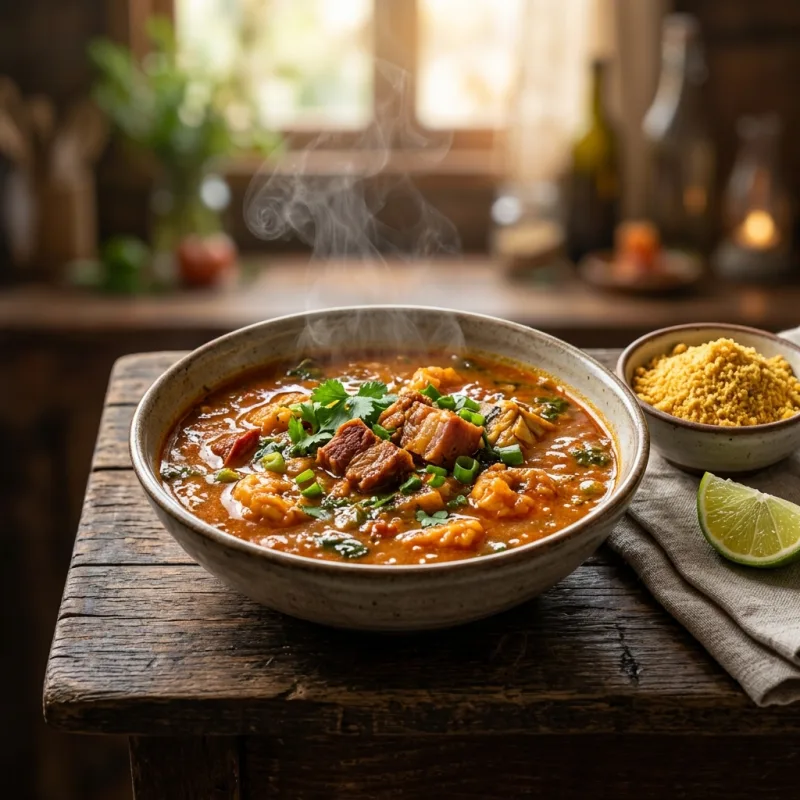
A traditional bowl of Bouillon d'Awara stew with cassava and smoked meats in French Guiana

Must Try Dish

Bouillon d'Awara - A rich, slow-simmered celebratory stew cooked in a vibrant orange paste extracted from the fruit of the awara palm, layered with smoked fish, boucané pork, chicken, and wild greens. It is traditionally savored over several days, offering a savory, earthy profile deeply tied to local Creole heritage.
Food Experiences Title Icon

Food
Experiences

Discover cooking classes, tastings and local food tours

No food experience found
Maya, the human travel expert at TravelingWiz, offering curated, non-AI expertise

Maya’s Final Checklist for Saint-Laurent-du-Maroni Region

Logistics shouldn’t be the focus of your trip—the experience should. I’ve hand-vetted these essential partners to ensure your arrival, stay, and exploration are as smooth as an Athenian breeze.

Where to Stay

From boutique hotels to local apartments—compare thousands of options and find the perfect stay in the best neighborhood.

Air Travel

Getting there should be seamless. Compare the best routes and prices across top airlines to start your journey on the right note.

Local Guides

Connect with experts who know the destination best. Get personalized advice and insider tips to help you plan your perfect trip.

Travel Protection

The “Engineer’s” rule: always have a backup. Secure your trip with a plan that covers every “what if” and unexpected change.

Car Rentals

Explore at your own pace with total freedom. Compare reliable rental options and find the right vehicle for your adventure.

Visa Services

Don’t let paperwork slow you down. Get expert assistance with your application to ensure all your entry documents are in order.

FAQs

Yes, informal motorized pirogues and an official car ferry regularly cross the Maroni River between Saint-Laurent-du-Maroni and Albina, Suriname. Travelers must ensure they process exit stamps at the French border post and entry formalities at Surinamese customs before continuing.
Older children and teenagers will find the history fascinating, but the somber reality of solitary confinement cells and harsh colonial penal labor may be intense or boring for very young children.
Renting a car from Cayenne or Saint-Laurent gives you access to coastal reserves like Awala-Yalimapo and nearby forest sites, while upriver Maroon settlements require taking local motorized pirogues from the riverfront.
Yes, proof of Yellow Fever vaccination is an absolute entry requirement for entering French Guiana, checked strictly upon arrival at airports and border crossings.

Your Insights Matter

TravelingWiz grows through the stories of our community. If you’ve recently explored ,Saint-Laurent-du-Maroni Region share your tips and stories to help us perfect our guides for the next traveler.

Related Articles

Check out our related articles and blog posts to learn even more about the destination.

No related articles found

Don’t Travel Alone

Share with your friends and family

Where should we send your offline card?

We hate spam just as much as you do

newsletter_consent *