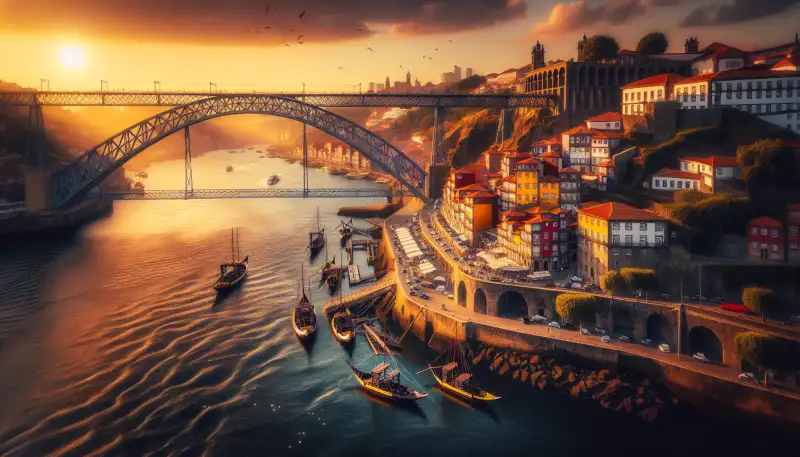
Scenic view of Porto, showcasing its main landmarks including the Dom Luís I Bridge and Ribeira district.

Intro

Porto is a historic coastal city in northwest Portugal, renowned for its stately bridges and Port wine production. The Ribeira district, a UNESCO World Heritage Site, is characterized by narrow, cobblestone streets, merchant houses, and riverside cafés. The city's charm lies in its intricate architecture, from the baroque Clérigos Tower to the modern Casa da Música. Visitors can enjoy cellar tours in Vila Nova de Gaia, ride historic trams, explore vibrant markets, and savor traditional Portuguese cuisine. Its hilly terrain offers breathtaking panoramic views of the Douro River and the Atlantic Ocean.

Additional Information

Porto, an ancient city with a youthful spirit, offers a sensory journey unlike any other. Its steep hills, colorful azulejo-tiled buildings, and intricate iron bridges tell stories of centuries past, while a burgeoning food scene, lively nightlife, and contemporary art spaces signal its dynamic future. The Douro River is the city's lifeblood, connecting it to the vineyards upstream that produce its most famous export, Port wine. Wander through the medieval alleyways of the Ribeira, marvel at the grandeur of São Bento railway station, and cross the iconic Dom Luís I Bridge for breathtaking views. Porto is a city that rewards exploration, offering a new discovery around every corner.

Reasons to Visit

  • World-Class Port Wine: Explore the cellars across the Douro River in Vila Nova de Gaia and indulge in tastings of this iconic fortified wine.
  • UNESCO World Heritage Site: The historic center, Ribeira, is a labyrinth of medieval streets, colorful houses, and stunning architecture.
  • Stunning Architecture: From the Gothic beauty of São Francisco Church to the iconic Dom Luís I Bridge and contemporary designs like Casa da Música, Porto is an architectural marvel.
  • Gastronomic Delights: Savor traditional Portuguese dishes, from hearty Francesinha to fresh seafood and delicious pastries like Pastel de Nata.
  • Vibrant Culture and Art: Discover a thriving arts scene, numerous museums, lively fado performances, and bustling street markets.
  • Picturesque Riverfront: Enjoy boat tours along the Douro River, offering unique perspectives of the city and its surroundings.

Things to Avoid

  • Wearing Uncomfortable Shoes: Porto is very hilly with many cobblestone streets, so comfortable walking shoes are essential.
  • Only Sticking to Tourist Traps: While the main attractions are wonderful, venture into less-known neighborhoods for authentic experiences.
  • Not Booking Port Wine Cellar Tours in Advance: Especially during peak season, popular tours can sell out.
  • Forgetting to Carry Some Cash: While cards are widely accepted, some smaller shops, cafes, or street vendors might prefer cash.
  • Underestimating the Hills: Be prepared for steep climbs; factor in extra time for walking or utilize public transport/funiculars.

Local Transportation Tips

  • Metro: Porto has an efficient and modern metro system connecting the city center with various neighborhoods and the airport. Purchase an Andante card.
  • Trams: The historic trams (lines 1, 18, 22) are a charming way to see the city and offer scenic routes, particularly Tram 1 along the Douro.
  • Buses: A comprehensive bus network covers areas not reached by the metro or tram. The Andante card works here too.
  • Walking: Many of Porto's main attractions are walkable, especially within the historic center, but be prepared for steep inclines and cobblestones.
  • Funicular dos Guindais: A convenient funicular connects the Ribeira district to the Batalha neighborhood at the top of a hill, offering great views.
  • Taxis & Ride-Sharing: Taxis and ride-sharing apps (like Uber or Bolt) are readily available and can be useful for longer distances or late-night travel.

Travel Etiquette

  • Greetings: A simple 'Olá' (hello) and 'Obrigado/a' (thank you – 'o' for men, 'a' for women) are always appreciated.
  • Dining: It's common for couvert (bread, olives, pâté) to be placed on your table. You will be charged for it if you eat it; you can politely decline if you don't want it.
  • Tipping: Tipping is not mandatory but appreciated for good service, usually around 5-10% in restaurants and rounding up for taxis.
  • Respect for History: When visiting churches or historical sites, dress modestly and be mindful of noise levels.
  • Punctuality: While generally relaxed, try to be on time for tours or reservations.

Did You Know?

  • Porto is known as the 'Invicta Cidade' (Invincible City) because it was never conquered by invaders.
  • The Livraria Lello bookstore in Porto is said to have inspired J.K. Rowling's Harry Potter series, known for its stunning Art Nouveau interiors.
  • The Dom Luís I Bridge, an iconic symbol of Porto, was designed by a student of Gustave Eiffel.
  • Porto boasts one of the oldest tram systems in Europe, dating back to 1895.

Cool Stats

  • Population: Approximately 230,000 within city limits, over 1.7 million in the metropolitan area.
  • UNESCO World Heritage: The Historic Centre of Porto has been a UNESCO World Heritage Site since 1996.
  • Bridges: Porto is famous for its six bridges crossing the Douro River.
  • Port Wine Production: The Douro Valley, connected to Porto, is the world's first demarcated wine region, established in 1756.
  • Average Annual Visitors: Over 2 million tourists annually, with numbers steadily growing.

Accessibility Level: Medium

Porto presents a moderate challenge for accessibility due to its hilly topography and numerous cobblestone streets, particularly in the historic Ribeira district. Many older buildings lack ramps or elevators. However, modern infrastructure, including the metro and some newer public spaces, is more accessible. Many key attractions have made efforts to improve accessibility.

Tips:

  • Utilize the metro system, which is generally wheelchair-friendly with elevators at most stations.
  • Plan routes carefully, favoring flatter areas or using local buses and taxis for navigating steeper inclines.
  • Check specific attraction websites for detailed accessibility information before visiting.
  • Consider staying in accommodations in flatter parts of the city or near accessible public transport hubs.
  • Be aware that historic tram rides might not be accessible for all mobility levels.

Address:

Porto, Portugal

Find Nearby Accommodations

Basic Info

address icon

COUNTRY & Region

Portugal,
Europe
Medium
Currency icon

LOCAL CURRENCY​

Euro (EUR)
Price level icon
Medium
Safety Level icon
Duration icon

Recommended Duration

• 3-5 hours (Half a day)
• Full day
• 1-7 days

Electricity

electricity icon

Electricity

220-240V,
50Hz
Plug Socket icon

Plug Type

• Type C (Round pin)
• Type F (Two round pins with earth clips)
Plug types
Click To View Plug Types

Activities To Do In Porto

Best Time To Visit

Best time is May to September.

Spring (March-May):

  • Pleasant temperatures, fewer crowds than summer.
  • Ideal for walking and outdoor exploration.
  • The city comes alive with blooming flowers.

Summer (June-August):

  • Warm and sunny, perfect for river activities and beach visits.
  • Peak tourist season, so expect larger crowds and higher prices.
  • Longer daylight hours for sightseeing.

Autumn (September-November):

  • Mild temperatures, harvest season in the Douro Valley (wine tours).
  • Fewer tourists after early September.
  • Chances of rain increase towards November.

Winter (December-February):

  • Cooler temperatures, higher chance of rain.
  • Fewer tourists, offering a more local experience.
  • Cozy atmosphere, especially around Christmas.

Remember to check the weather forecast a few days before the trip and before heading to the airport.

Safety Level icon

SAFETY Level

Porto is generally a very safe city, but like any popular tourist destination, it's wise to take standard precautions. Be aware of pickpockets in crowded areas, especially on public transport and around major attractions like Ribeira. Keep an eye on your belongings, avoid walking alone in poorly lit areas at night, and be cautious of unsolicited offers or aggressive street vendors. Emergency services can be reached by dialing 112.

The rating is based on multi-year peace, crime, and security indices. Before you go, always verify current conditions through official government travel advisories.

Spoken Languages

Portuguese

Trip Cost & Budgeting for Porto, 2026

Everything you need to know about money while traveling

Is Porto expensive for tourists in 2026? Porto remains a highly affordable and value-for-money destination in Western Europe. Expect to pay around 1.80 EUR for a coffee, 3.00 EUR for a pint of domestic beer, and 25.00 EUR for a standard main meal in a mid-range restaurant. These are Human Verified prices to help set realistic expectations for your trip. Use the data table below to calculate your specific daily budget based on your travel style.

Currency icon

LOCAL CURRENCY​:

Euro (EUR)
Price level icon
Medium
Cash is commonly used, but cards are accepted in larger establishments. Carry both.

Per person, per day – pocket cash for small purchases.

Local: 30
Euro (EUR)
≈ 35 USD

Full daily spend estimation (accomodation, food, transportation, attractions).

Travel Style
Euro (EUR)
≈ USD ($)
Budget
75
88
Mid-range
140
164
Comfort
310
363

The Prices, Daily costs, and calculator results are estimates for planning purposes only. Actual costs may vary based on season, booking timing, personal spending habits, and currency fluctuations. TravelingWiz cannot be held responsible for discrepancies between these estimates and your final trip expenses.

  • Book hotels in advance for better deals.
  • Utilize public transport like the Andante pass for cost-effective travel.
  • Seek out local 'tascas' or 'Prato do Dia' for affordable and authentic meals.
  • Explore the city's walkable areas to save on transport costs.

Pre-Order Tickets

Avoid disappointment when tickets sell out — and skip the long lines by booking online in advance. You’ll often save up to 20% too.
Save up to 20%

Travel Discounts & Coupons

Save on hotels, attractions, transport, and gear — find verified discounts for smarter travel spending.
Verified Coupons

What To Pack

  • Comfortable Walking Shoes: Essential for navigating hilly, cobblestone streets.
  • Layers of Clothing: Weather can change, especially by the river or coast.
  • Rain Jacket/Umbrella: Especially outside of summer, quick showers are possible.
  • Adapter/Converter: For Type C/F plugs and 220-240V electricity.
  • Sunscreen & Hat: For sunny days, particularly in warmer months.
  • Small Backpack: For day trips and carrying essentials.
  • Camera: For capturing Porto's picturesque scenery.
  • Swimsuit: If planning beach visits or hotel pools.
We couldn't find tips for Porto.
If you got any, please share

Recommended Itineraries for this Destination

We couldn't find itineraries for Porto.
you can contact us for custom trip plan

Food & Drink Highlights

Local Food Overview

Porto's culinary scene is a robust celebration of traditional Portuguese flavors, emphasizing fresh seafood, hearty meats, and comfort food. It's a city where history is tasted in every dish, from the rich stews of the interior to the fresh catches from the Atlantic. While Port wine is its most famous liquid export, local wines from the Douro and Vinho Verde regions also complement the diverse gastronomic offerings. Dining in Porto is an experience, often served in cozy tascas or vibrant mercados, reflecting the city's soulful and authentic character.
Francesinha - A hearty sandwich originating from Porto

Must Try Dish

Francesinha - A truly iconic Porto sandwich, featuring layers of various meats (steak, ham, sausage), covered in melted cheese, and drowned in a rich, spicy tomato and beer sauce, often served with a side of French fries.

Food Experiences

No food experience found

GetReady

Plan your trip seamlessly with our trusted partners and expert guidance. Follow these steps to book everything you need or connect with a local tour guide for personalized support

Step 1: Find the Perfect Accommodation

Explore a wide range of hotels, boutique stays, and vacation rentals to suit every traveler’s needs and budget. From luxury options to cozy family stays, find the best place for your trip.

Step 2: Book Your Flights

Secure the best flight deals for your destination. With our trusted partners, booking flights is quick and hassle-free.

Step 3: Let a Tour Guide Help

Not sure where to start? A professional local tour guide can create a customized itinerary or assist you in planning your trip. Make your journey seamless and stress-free.

Step 4: Rent a Car

Travel at your own pace by renting a car. Whether you’re exploring cities or embarking on a road trip, find reliable and convenient car rental options.

Step 5: Get Travel Insurance

Protect yourself and your loved ones with comprehensive travel insurance. Our partners offer plans to cover every aspect of your journey.

Step 6: Need a Visa?

Check visa requirements for your destination and apply quickly with trusted services. Simplify the process and ensure you’re ready to travel without delays.

FAQs

Porto is largely walkable, especially its historic core. However, be prepared for numerous steep hills and cobblestone streets. Comfortable shoes are highly recommended.
The best way to get around is a combination of walking, using the efficient metro system, and occasionally buses or taxis for longer distances or very steep areas. Historic trams offer a charming, albeit slower, sightseeing option.
While Portuguese is the official language, English is widely spoken in tourist areas, hotels, restaurants, and by younger generations. Learning a few basic Portuguese phrases is always appreciated by locals.
Port wine is a sweet, fortified wine produced exclusively in the Douro Valley. You can try it by visiting one of the many Port wine lodges and cellars in Vila Nova de Gaia, directly across the Douro River from Porto, which offer tours and tastings.
Yes, Porto boasts several beautiful beaches easily accessible by tram, bus, or metro. Foz do Douro and Matosinhos are popular choices for sunbathing, surfing, and enjoying fresh seafood.
The most efficient way to get from Porto Airport (OPO) to the city center is by metro. Take the E Line (purple) directly from the airport to Trindade station, which is a major hub. The journey takes approximately 25-30 minutes and requires an Andante card, which you can purchase and load with tickets at the airport metro station.
In tourist areas, hotels, restaurants, and major attractions in Porto, you’ll generally find that English is widely spoken, especially by younger generations. However, learning a few basic Portuguese phrases like ‘Olá’ (hello), ‘Obrigado/a’ (thank you), ‘Por favor’ (please), and ‘Com licença’ (excuse me) will be greatly appreciated by locals and can enhance your experience, particularly in smaller shops or less touristy neighborhoods.
For first-time visitors who want to be close to the main attractions, the **Ribeira** (historic riverfront) and **Baixa** (downtown) areas are ideal, offering vibrant atmosphere, restaurants, and easy access to transport. For nightlife, consider staying near **Galerias de Paris**. Families might prefer the slightly quieter yet well-connected **Boavista** or **Cedofeita** districts. For a more local and charming experience, **Miragaia** or **Massarelos** offer great options.
Yes, Porto boasts several excellent urban beaches easily accessible from the city center. Matosinhos Beach is very popular, known for its surf schools and seafood restaurants, and can be reached directly by metro (A Line to Matosinhos Sul). Further south, Foz do Douro offers a more upscale atmosphere with lovely promenades and cafes, accessible by tram (Line 1) or bus. Both offer great opportunities for seaside relaxation and strolls.
Yes, Porto is a great base for day trips! The most popular is a visit to the Douro Valley, famous for its wine production and stunning landscapes. You can join organized bus tours, take a scenic train from São Bento station to towns like Pinhão or Régua, or even book a river cruise. Other options include Braga (known for its religious sites) and Guimarães (a UNESCO World Heritage city), both easily reachable by train or bus.

Help Us Improve

If you visited
Porto
click here to share your tips and stories.

This will help us improve our guides for the entire travelers community.

Related Articles

Check out our related articles and blog posts to learn even more about the destination.
No related articles found

Don’t Travel Alone

Share with your friends and family

Join travel lovers and get exclusive travel tips, coupons and more!

Register

Now!