

What Makes the Most Accessible Cities in Europe Truly Accessible?
When researching accessible travel destinations Europe offers, these are the five criteria that actually matter:
- Public transport has step-free access, ramps, or accessible buses and trams
- Hotels offer rooms designed for mobility needs — not just a wider door
- Major attractions have lift access, audio guides, and staff trained to assist
- Pavements and pathways are smooth, well-maintained, and clearly marked
- Information is readily available — including accessibility maps and real-time helplines
With that standard in mind, here are Europe’s standout cities for 2026.
1. Amsterdam, Netherlands
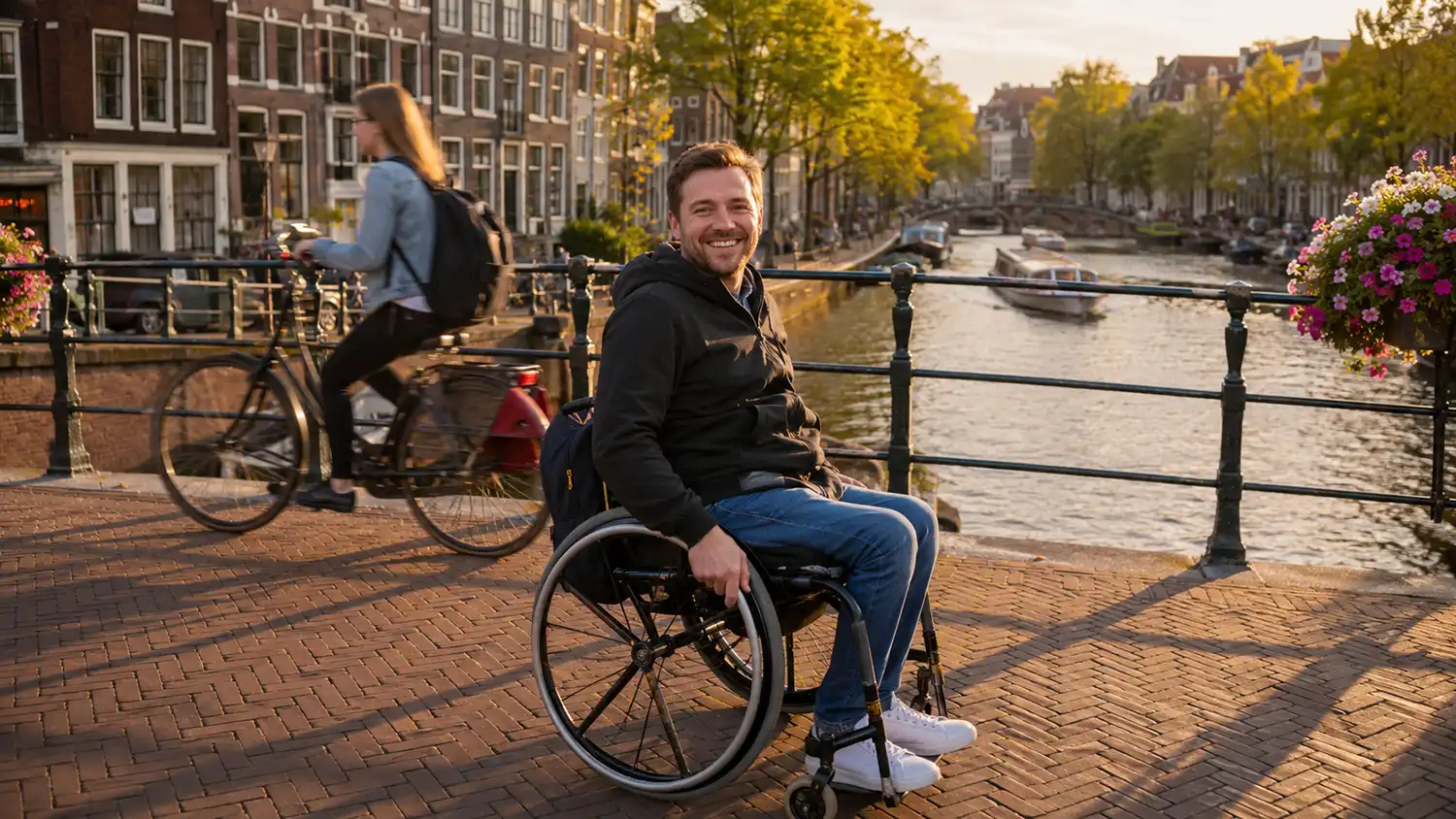
Amsterdam consistently tops accessibility rankings, and 2026 is its strongest year yet.
Transport: Nearly all trams, metros, and buses are wheelchair accessible. Under the new EAA regulations, GVB is rolling out mandatory haptic and visual updates to all electronic ticketing terminals by late 2026, making ticket machines independently navigable for visually impaired and mobility-limited travelers. Central Station has step-free access throughout.
Attractions: The Rijksmuseum and Van Gogh Museum both offer excellent wheelchair access, audio guides, and accessible toilets. The Anne Frank House has an accessible entrance and lift — book in advance.
Practical tip: Many canal boat operators offer accessible vessels – look for those marked “rolstoel toegankelijk.” The flat city centre terrain is a genuine bonus for wheelchair users.
2. Barcelona, Spain
Barcelona’s accessibility infrastructure has caught up with its ambitions – and then some.
Transport: The metro has lifts at the majority of stations, all mapped on the TMB accessibility guide. Accessible taxis can be pre-booked via the TMB app.
Attractions: La Sagrada Família has a dedicated accessible entrance with lifts to upper galleries. Parc Güell’s monumental zone is fully accessible, though the hillside areas are more challenging.
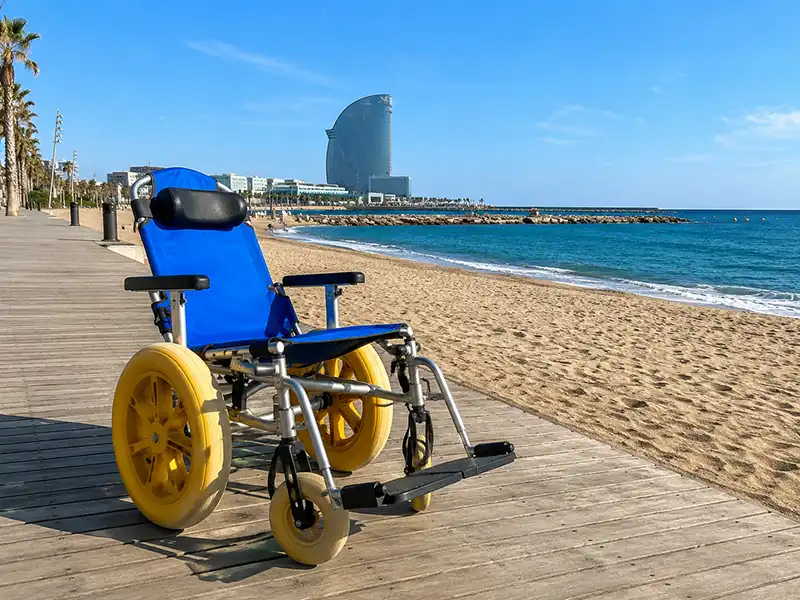
Beach access: Barceloneta Beach has wooden boardwalks, accessible changing rooms, and beach wheelchairs available for free loan in summer – a genuine game changer.
Practical tip: The Gothic Quarter’s cobblestones are tough. Stick to the Rambla del Poblenou or the waterfront for smooth, flat walking.
3. Vienna, Austria
Vienna’s meticulous approach to accessibility is embedded in city planning – not bolted on afterward.
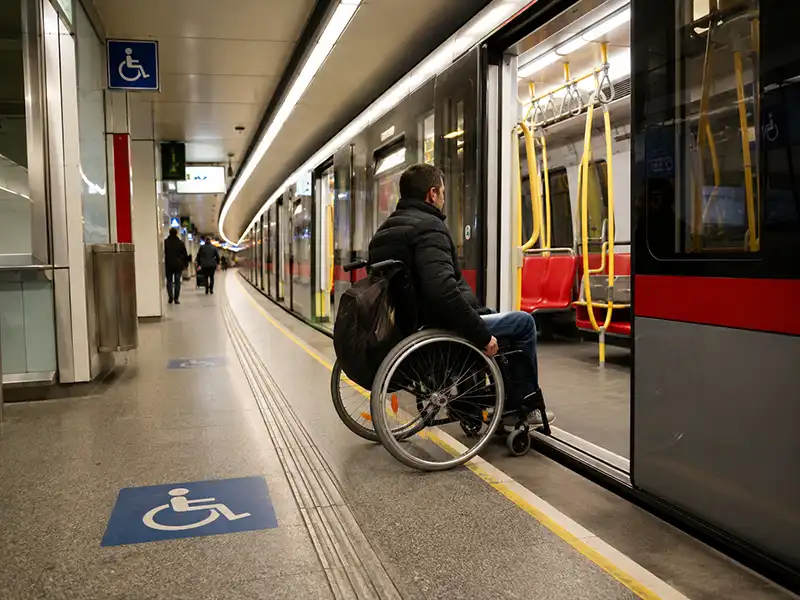
Transport: The U-Bahn is fully step-free at every station. The WienerLinien app’s new “Barrier-Free Routing” filter now syncs with live station elevator maintenance statuses – if a lift is out of service, the app automatically re-routes you around it in real time. This is the most sophisticated accessible routing tool of any European transit app.
Attractions: The Kunsthistorisches Museum, Belvedere, and Schönbrunn Palace all have full wheelchair access and accessible audio guides. The Vienna State Opera offers dedicated wheelchair spaces and infrared hearing loops.
Hotels: Vienna has a higher density of certified accessible accommodation than almost any other European capital. Look for the “Barrierefreiheit” (barrier-free) certification when booking.
4. Edinburgh, Scotland
Scotland’s capital surprises many visitors – impressive given its medieval hill-and-valley layout.
Transport: All Lothian Buses are low-floor and wheelchair accessible. Edinburgh Trams run fully accessible vehicles. Edinburgh Airport has received consistent high marks for accessibility services.
Attractions: The National Museum of Scotland is fully accessible across all floors. Edinburgh Castle has a shuttle vehicle for the steep approach and lifts throughout. Dynamic Earth offers exceptional wheelchair access and an Audio Description tour.
Honest caveat: The Royal Mile’s cobblestones are genuinely challenging. The city’s accessible route maps route visitors around the worst sections – download them from Edinburgh Council’s website before you go.
5. Lisbon, Portugal
Lisbon has transformed its accessibility provision dramatically – remarkable for a city built on seven steep hills.
Transport: Most metro stations are now fully accessible. The modern low-floor 15E Tram to Belém completely bypasses the step barriers of the historic yellow tram cars – giving you the iconic Lisbon tram experience without the accessibility nightmare. Carris Metropolitana buses are all low-floor across the network.
Flat zone: The riverfront area of Belém is completely flat and contains some of Lisbon’s best sights – the Jerónimos Monastery, Belém Tower, and the MAAT museum are all accessible and within easy rolling distance of each other.
Practical tip: Avoid the Alfama district if mobility is a concern. Belém, Parque das Nações, and the Avenida da Liberdade are flat, well-paved, and beautiful alternatives.
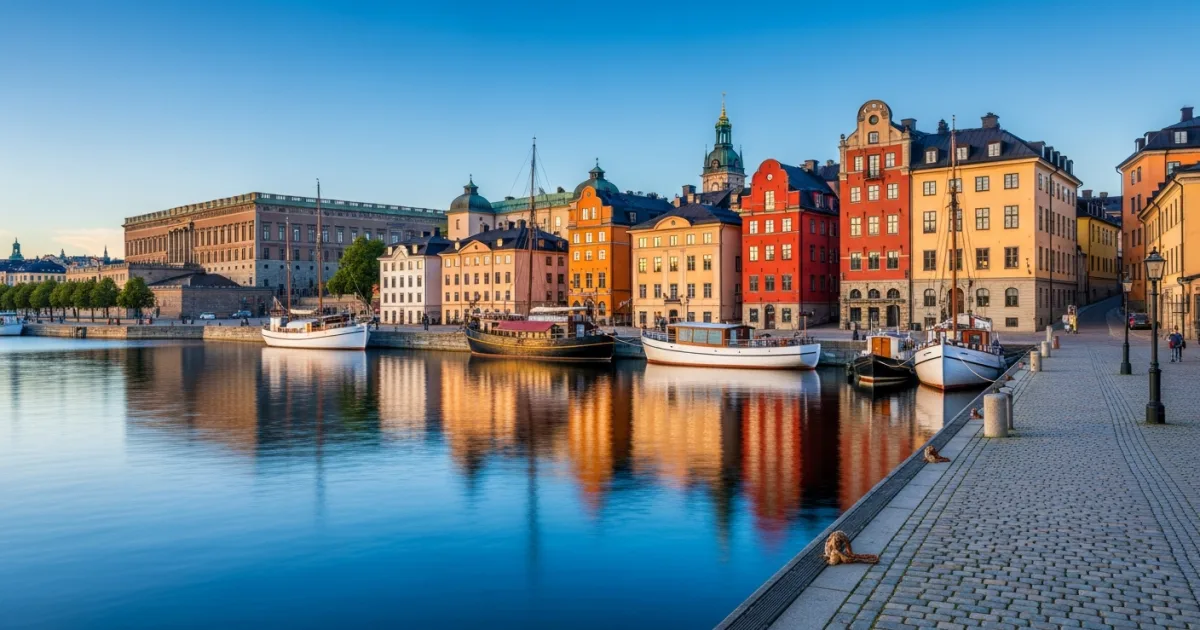
6. Stockholm, Sweden
Sweden’s commitment to universal design runs deep – it’s law, culture, and infrastructure combined.
Transport: The Tunnelbana is fully accessible, Stockholm’s ferry network includes accessible vessels, and the Arlanda Express from the airport has dedicated wheelchair spaces with level boarding.
Attractions: The Vasa Museum, ABBA: The Museum, and Skansen Open-Air Museum all have excellent accessibility. The Djurgården island – home to most major museums – has flat, well-maintained paths throughout.
Extra plus: Stockholm’s “Stockholm for Everyone” initiative provides a dedicated helpline for disabled visitors, and the city’s pharmacies stock printed accessibility guides in multiple languages.
Practical Tips for Accessible Travel in Europe
Before You Go
- Book accommodation early – accessible rooms are limited and sell out fast – book now with Booking.com
- Contact attractions directly to confirm current lift and access status (it changes frequently)
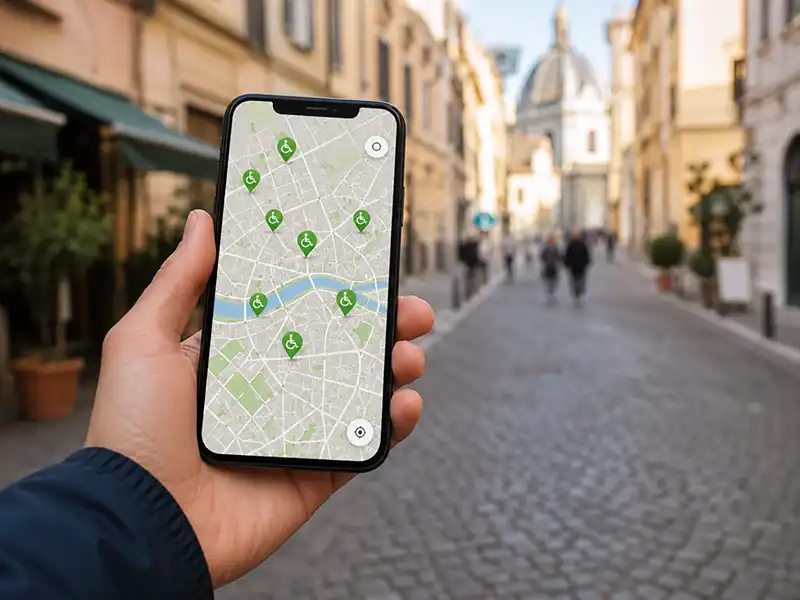
- Download offline maps — Wheelmap and AccessNow show crowd-sourced accessibility ratings for thousands of European locations
- Get the right travel insurance – generic policies often exclude power-wheelchair transit damage or mobility equipment loss. We recommend booking specialized travel insurance with mobility equipment coverage – it’s the one thing most travelers wish they’d sorted before departure, not after.