
If you want to experience Mekong Delta slow travel, most standard trips leave Ho Chi Minh City in the morning and come back the same night. The bus takes two to three hours each way, so the day is mostly road, with a floating market, a coconut workshop and a sampan ride fitted in between. The Delta you see that way is real, but it is the Delta at its busiest and most hurried. I stay three days and two nights, the first night in Can Tho and the second in Vinh Long, and the trip changes completely. The market is still there, but so are the evenings, the orchards and the mornings before the tour boats arrive.
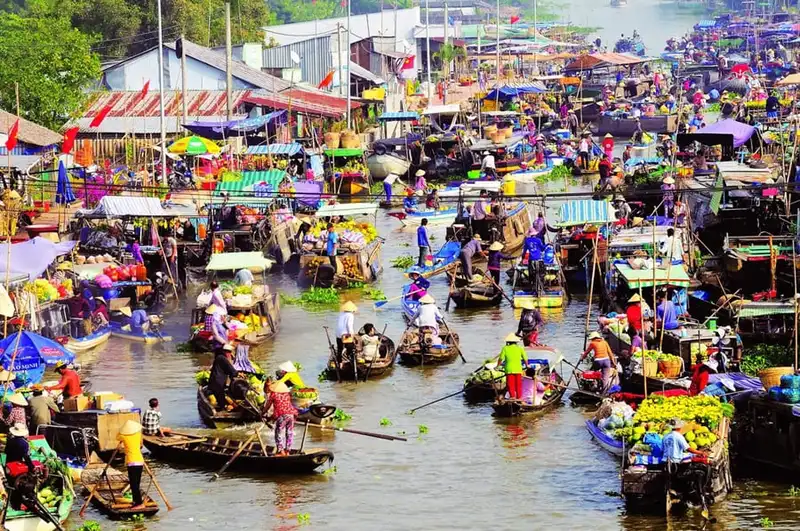
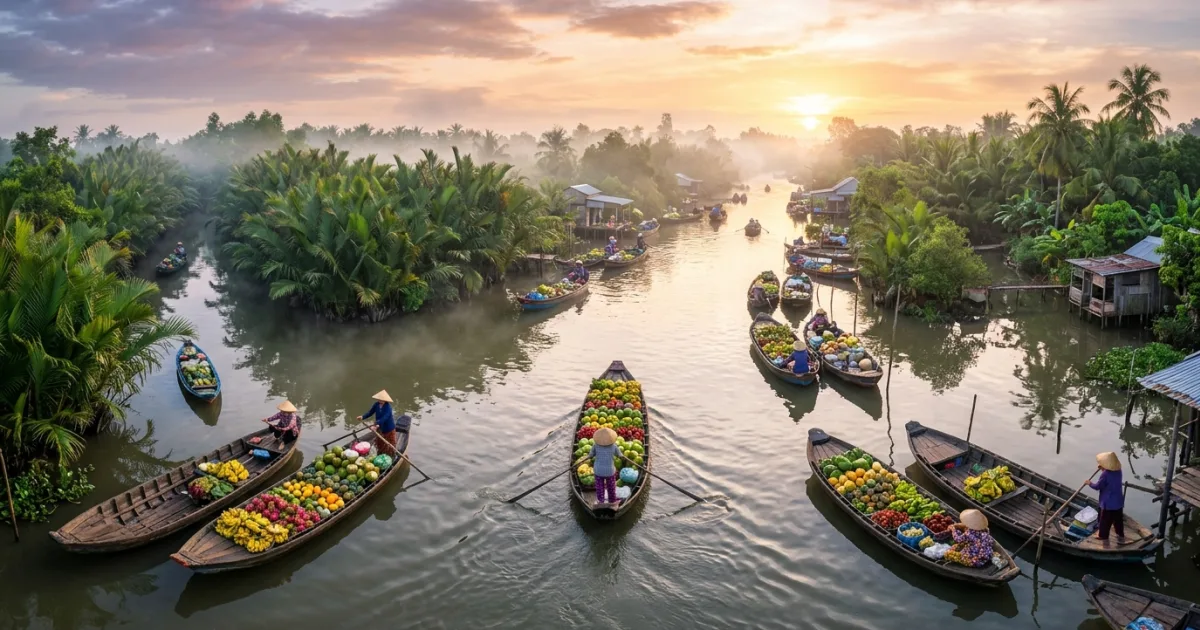
Cai Be floating market. Photo: Vietadvisor
Why three days changes the trip
The Delta runs on water timetables. The market happens at dawn, the orchards are best mid-morning, the river goes quiet at noon, and the wharf fills again in the evening. A day trip catches one of those. Three days catches all of them, plus the gaps in between where nothing is scheduled, and those gaps are where the Delta stops feeling like a tour.
The classic route most first-timers take runs My Tho, Ben Tre and Can Tho in two or three days. My slow version narrows it: Can Tho and Vinh Long only, fewer stops, longer at each. Cutting two towns out of the plan feels wrong the first time you do it, and it is the whole point. You stop collecting places and start noticing how one place works across a full day.
Day 1: Ho Chi Minh City to Can Tho
I take a morning bus and reach Can Tho with the afternoon still ahead, which matters more than it sounds. The day-trip boats are already on their way back to Ho Chi Minh City by then, and Can Tho belongs to itself again.
The afternoon is for walking. Ninh Kieu wharf sits at the edge of the city centre, and the riverfront there is where Can Tho spends its evenings. I walk the wharf, eat hu tieu from a streetside stall for lunch and banh xeo in the evening, and sleep near the wharf so the morning boats are a short walk away. Nothing on day one is a sight in the guidebook sense. It is a city getting ready for the night, and after a morning on a bus that is exactly right.
The evening is also the time to sort out the next morning. The guesthouses near the wharf all know sampan drivers, and asking in the evening gets you a driver who shows up at dawn, while asking at dawn gets you whoever is left. I ask for a small boat, a driver who will go into the narrow canals, and a stop at an orchard, and I settle the route before I sleep. That one conversation is the difference between a morning that works and a morning spent negotiating on a dock in the dark.
Day 2: Cai Rang at dawn, then the small canals
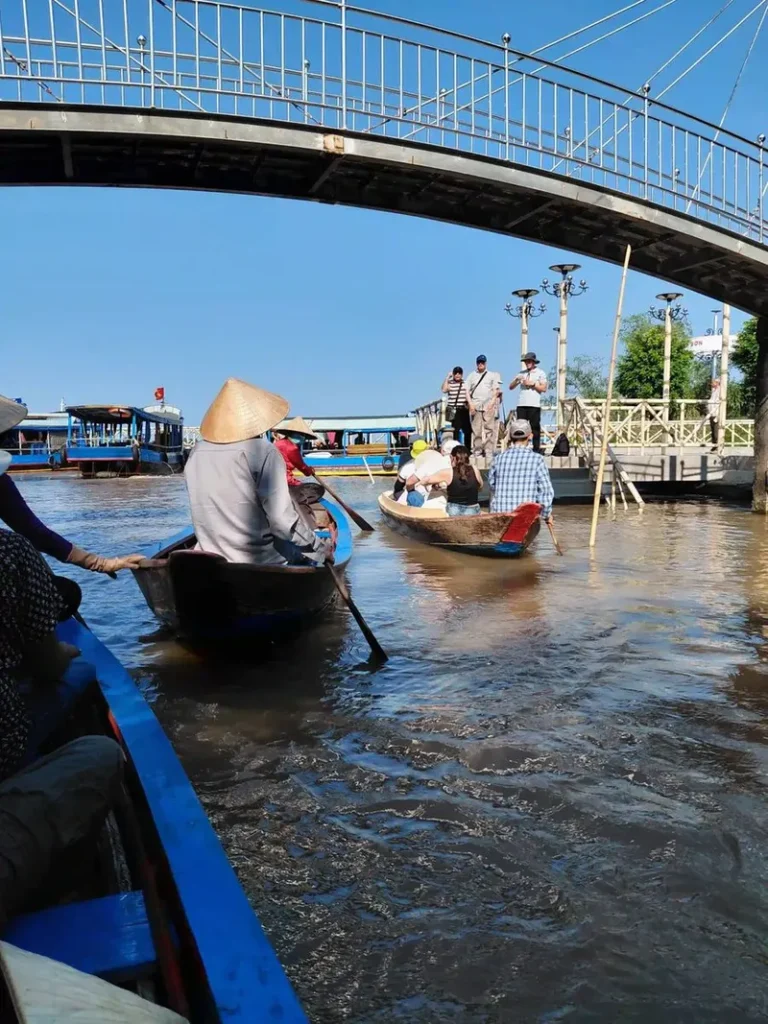
Sampans on the river passing under a bridge. Photo: Vietadvisor
Two kinds of boat leave Can Tho in the morning, and the choice between them decides the day. The big tour boats carry twenty or thirty people, follow a fixed route and leave on a fixed schedule. The small sampans carry a handful, go into canals the big boats cannot enter, and stop where you ask them to. I take the small sampan every time now, and the price difference, split between two or three people sharing, is small enough that it stops mattering.
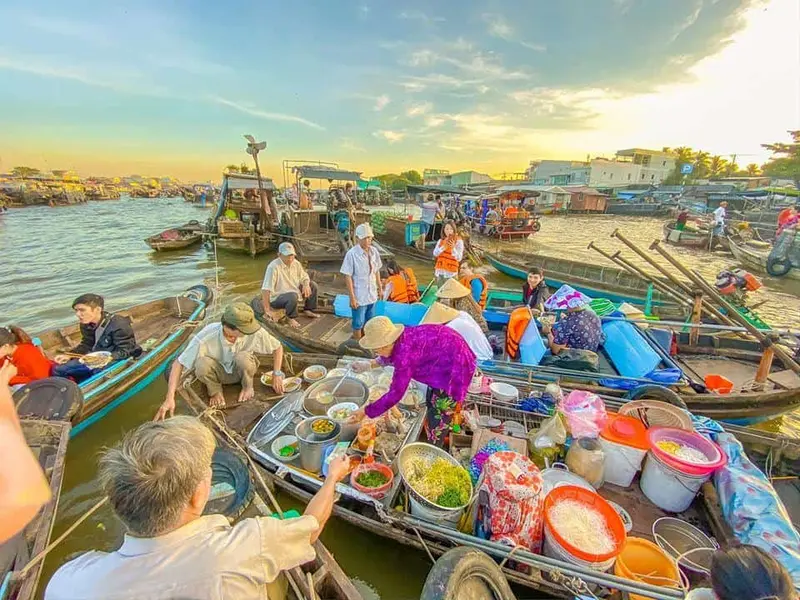
Can Tho’s Cai Rang Market in the early morning. Photo: Vietadvisor
Cai Rang is a morning market, and the boats that leave at dawn see it at its fullest, with produce boats tied up and smaller boats moving between them selling coffee and noodles. By mid-morning the big boats have come and gone and the market thins out, which is when the sampan earns its keep: it turns off the main river into the narrow canals, past houses on stilts and coconut palms, to an orchard stop where the fruit comes off the trees around you.
The orchard stop is the part people underestimate. The fruit changes with the season, and the farm stops are small enough that you talk to the people running them. Whatever is in season gets eaten, coconut water gets cut open on the spot, and with the sampan booked for the morning there is no schedule pulling you back. The canal ride back is quieter than the ride out, and that quiet stretch, with the palms overhead and no other boats around, is the best part of the day.
The afternoon is deliberately empty. Back in Can Tho by early afternoon, the hours get spent doing very little, which is the part of the trip the day boats never get. The river at noon is quiet, the heat sits over the water, and the city slows down. Then the wharf fills again in the evening, and the second evening in Can Tho feels different from the first, because now the stalls worth returning to are familiar.
Late in the afternoon I take the bus to Vinh Long, about an hour by road, and sleep near the river there. Vinh Long is smaller and quieter than Can Tho, and the evening there is quieter too, which suits the last day.
Day 3: Vinh Long orchards and the slow morning
Vinh Long has no single sight that justifies the trip on its own, and that is why I like it. The morning is for the orchards on An Binh island and the lanes between them, where the fruit changes with the season and the farm stops are small enough that you talk to the people running them. Cycling between orchards is the best way to do it, and the island is flat, so the riding is easy even in the heat.
The island lanes are narrow and the traffic is mostly bicycles and motorbikes, so the cycling feels relaxed in a way road cycling in Vietnam usually does not. Stops happen whenever something looks good, which is often, and the route never gets planned tightly, because the island is small and every lane leads back to the river sooner or later. A morning spent like that, with no entry tickets and no fixed stops, is the slowest part of the whole trip, and it is the part I think about most afterwards.
Lunch is canh chua ca, sour fish soup, at a riverside place, and then the bus back to Ho Chi Minh City in the afternoon. The Delta is behind you by evening, which is the right way round: the slow part first, the city after.
Do you need a tour?
For a day trip, a tour saves planning time, and I understand why most people take one. For three slow days, you do not, because the pieces are easy to arrange locally: the bus from Ho Chi Minh City, the morning sampan from the wharf, the orchard stops in Vinh Long. The one thing worth arranging in advance is the small boat for Cai Rang, since the good sampan drivers get booked by the guesthouses near the wharf.
The one place a tour still helps is language. At the market and on the boats, English is limited, and a driver who speaks some English changes the morning, because you can ask where the boats came from and what is in season. I ask the guesthouse for a driver with some English when I book the boat, and that request costs nothing extra.
The classic route most first-timers take runs My Tho, Ben Tre and Can Tho in two or three days, and the full set of three Delta itineraries covers that version plus the longer off-beat run through Chau Doc and Tra Su. My three days sit inside that shape, just slower, with Vinh Long in place of a second rushed stop.
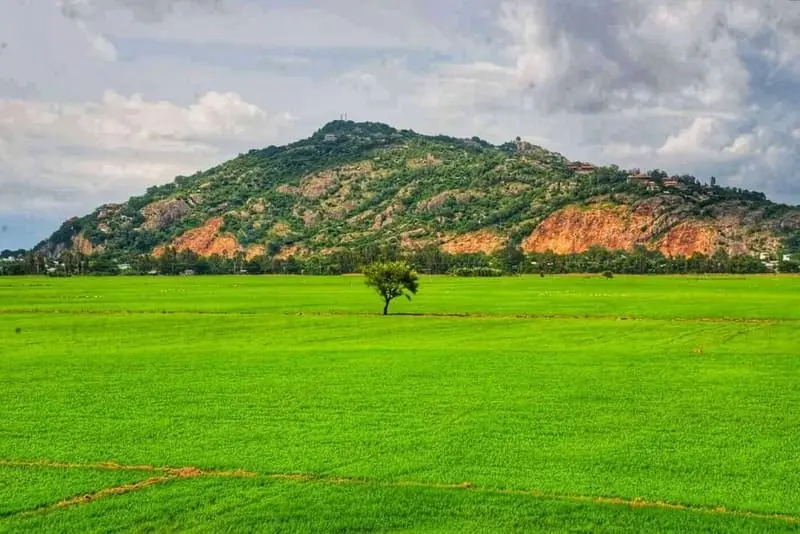
Sam Mountain near Chau Doc. Photo: Vietadvisor
Where to sleep
In Can Tho I sleep near Ninh Kieu wharf, because the morning boats leave from there and a short walk at dawn beats a taxi in the dark. In Vinh Long, a room near the river, where the rooms are fewer and the town is quieter. Rooms near the river in Vinh Long are fewer than in Can Tho, so booking ahead in the dry months is worth it. Neither stay needs to be expensive. A clean room near the water and a good breakfast cover everything this trip asks of a hotel.
Breakfast matters more here than on most trips, because the market morning starts early and a guesthouse that serves breakfast before dawn saves you from hunting for food in the dark. Asking about breakfast time when booking in Can Tho is one question worth remembering.
What three slow days cost
30 to 50 dollars a day covers a slow Delta trip at budget level, and 60 to 100 dollars covers it comfortably, with the same shape: buses, boats, market food and a room near the river. The boats are the main variable. A seat on a big boat costs less than a private sampan, and a private sampan costs more than a seat, but split between two or three people sharing, the difference is small, and the small boat is the part of the trip I would not cut.
A rough day looks like this: the bus money is the smallest part, the boat is the biggest single cost of the morning, and food stays cheap all day, since market food and riverside lunches are priced for locals. The room is the second biggest cost, and a room near the wharf in Can Tho costs more than one near the river in Vinh Long, which is one more reason the Vinh Long night is good value.
Food is cheap across the Delta. Hu tieu for breakfast, banh xeo in the evening, canh chua ca for lunch, fruit from the orchards in Vinh Long. Small VND notes save a lot of waiting at market stalls and on boats, since change for large notes is not always there.
When to go and what to pack
The dry season, December to April, has clear skies and the fullest markets. The wet season, May to November, is greener and quieter, and I still go in the wet season, since the mornings are usually dry and the crowds are thinner. Either way the packing is the same: light clothes, a hat, sunscreen, bug spray, and a rain jacket in the wet months.
One date to watch is Tet, the lunar new year, usually in late January or February. Boats and buses fill up around it, some stalls close, and the Delta is at its most festive and its most crowded at the same time. Tet week is worth avoiding for this trip, and the dates are worth checking when a visit falls close to them.
The bus back to Ho Chi Minh City leaves Vinh Long in the afternoon, and the Delta is behind you by evening.
Vu is the founder of Vietadvisor.travel, a Vietnam travel blog written from Vietnam. He writes firsthand guides to Hanoi, Ninh Binh, Ha Giang, Phu Quoc and Ho Chi Minh City.