

A safari trip packing list is more than just a collection of clothes; it is a critical part of your preparation for one of the most unique experiences on earth. Before you even reach for your suitcase, it is vital to have your logistics in order. If you are still in the early stages of your journey, start with our Complete Guide to Planning a Safari Trip to Africa to ensure your itinerary is set.
Once your destination is locked in, the challenge becomes navigating strict weight limits and specific bush requirements. Packing for Africa presents unique challenges, from strict weight limits on small bush planes to the need for specific neutral-colored clothing. A generic checklist won’t help you navigate these nuances, which is why a personalized approach is essential for every traveler.
Why a Standard Checklist Fails for Safari
Most generic travel lists include “one size fits all” advice. On a safari, however, you need to account for fluctuating temperatures, dusty game drives, and the specific rules of local lodges. A standard list doesn’t remind you that bright white or dark blue clothing can attract unwanted insects or that your luggage must be soft-sided for certain transfers.
By using an interactive safari trip packing list, you ensure that specialized items—like high-quality binoculars, insect repellent, and specific medical supplies—are never left behind.
Introducing the Interactive Packing & Planning Hub
To help you prepare for the wild, we’ve developed the Interactive Packing List & Planning Hub. While our planning guide covers the “where” and “when,” this tool moves beyond the static PDF to handle the “how”:
-
Weight-Sensitive Planning: If your trip includes small aircraft with strict 15kg limits, the hub helps you prioritize the essentials so you don’t get stuck at the airstrip.
-
Climate & Seasonal Shifts: Winter in the bush can be freezing at dawn and scorching by noon. Our tool suggests the exact layers you need based on the season of your visit.
-
Health & Medical Reminders: From antimalarials to specific care for chronic conditions, the hub sets reminders to help you consult your doctor and fill prescriptions well in advance.
-
Shared Adventure: Traveling with a group? You can share your safari trip packing list with your companions to ensure the group has everything from communal flashlights to specialized field guides.
Essential Categories for Your Safari Trip Packing List
When you build your list in our hub, focus on these essential categories to ensure total preparedness:
1. The Photography & Vision Kit
You aren’t just there to see the animals; you’re there to remember them. A smartphone often isn’t enough. Your list should include a camera with a telephoto lens (at least 200mm) and a high-quality pair of 10×42 binoculars. Our hub will remind you to pack spare memory cards and batteries, as charging opportunities can be limited in remote camps.
2. Strategic Clothing & Layers
Safari fashion isn’t about style; it’s about utility. Focus on neutral tones like khaki, tan, and olive. Avoid camouflage (which is illegal for civilians in some countries) and dark blue or black (which attracts tsetse flies). The “onion” method—packing multiple thin layers—is the best way to handle the cool mornings and hot afternoons.
3. Safety and Health Essentials
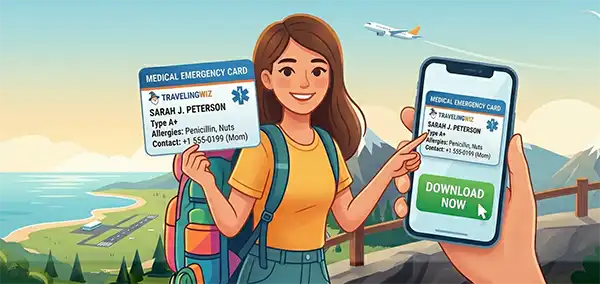
Being in the bush means being far from a pharmacy. Your safari trip packing list must include a comprehensive first-aid kit, high-SPF sunscreen, and insect repellent. For those traveling with specific health needs, such as managing medical conditions, it is vital to have a clear plan. We strongly recommend using our Free Emergency Medical Card tool to generate an offline card with your medical details translated for local use.
4. Documentation & Africa Travel Requirements
Ensure you have checked the official travel health notices for your specific destination. You will likely need proof of vaccinations (like Yellow Fever) and specific visas. Our planning hub can set reminders for these “big ticket” items months before your departure.
Pro Tips for the Savvy Safari Traveler
-
Soft Luggage Only: Many safari transfers require soft-sided duffel bags because hard suitcases won’t fit in the luggage pods of small planes.
-
The “Bush Pharmacy”: Pack more than you think you need of basics like eye drops (for the dust) and rehydration salts.
-
Pack for the Morning: Remember that game drives start before sunrise. A light pair of gloves and a beanie can be lifesavers in an open-air vehicle.
Build Your Custom List Today
Don’t leave your trip of a lifetime to chance. Head over to our Interactive Packing List & Planning Hub and generate your personalized safari trip packing list in minutes.