Disclosure: This site contains affiliate links. We may earn a commission if you make a purchase, at no extra cost to you.

>
>
>
>
>
Dieng Plateau

Dieng Plateau

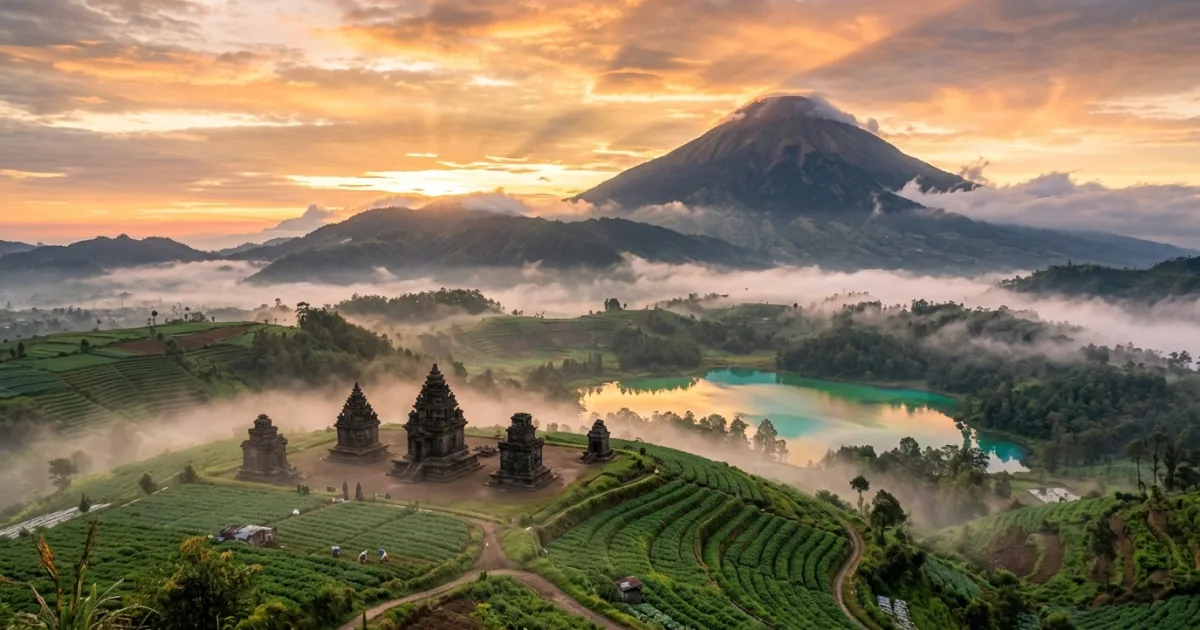
Panoramic view of Dieng Plateau temples, mist, and Mount Sindoro at golden sunrise

Dieng Plateau Overview & Key Highlights

Dieng Plateau is a dramatic volcanic caldera perched 2,000 meters above sea level in the highlands of Central Java. The region is renowned for its misty landscapes, steaming geothermal craters, vibrantly colored mineral lakes, and some of the oldest surviving Hindu temples in Indonesia, dating back to the 7th and 8th centuries. The highland climate provides an invigorating contrast to the tropical heat of Java's lowlands, occasionally dipping low enough during the dry season to produce morning frost. Travelers visit Dieng to experience the famous golden sunrise from Sikunir Hill, walk past bubbling sulfur pools at Sikidang Crater, and marvel at the shifting turquoise hues of Telaga Warna. Beyond natural wonders, the plateau preserves unique Javanese traditions, including the annual Dieng Culture Festival where children naturally born with dreadlocks participate in an ancient purification ritual. Whether trekking up Mount Prau or sampling steaming bowls of local noodles amid cool mountain air, Dieng offers an unforgettable and serene highland escape.

Dieng Plateau Travel Guide: Logistics & In-Depth Tips

Dieng Plateau, derived from the Sanskrit Di Hyang meaning 'Abode of the Gods', is a sacred high-altitude volcanic landscape in Central Java. Spanning the Wonosobo and Banjarnegara regencies at an elevation of roughly 2,093 meters, the plateau served as a thriving religious center during the Medang Kingdom. Today, ancient stone temples sit silently amid terraced potato fields, sulfur vents, and calm crater lakes, offering an atmosphere unlike anywhere else in the Indonesian archipelago.

Visitors are drawn to Dieng for its stark geological contrasts and peaceful pace of life. Early mornings begin with hikes up Sikunir Hill to catch panoramic golden sunrises framing distant volcanic peaks like Mount Sindoro and Mount Sumbing. Daytime adventures lead through the boardwalks of Sikidang Crater and along the shifting green-blue waters of Telaga Warna, followed by evenings warming up over regional specialties in traditional highland communities.

Reasons to Visit

  • Candi Arjuna Complex: Walk among 7th-century stone shrines representing some of the oldest religious architecture in Java.
  • Sikunir Hill Sunrise: Witness the world-renowned 'golden sunrise' revealing rolling morning clouds and majestic volcanic peaks.
  • Telaga Warna & Telaga Pengilon: View two adjacent crater lakes that show dramatically contrasting sulfurous turquoise and clear water colors.
  • Kawah Sikidang: Experience bubbling volcanic mud pools, mineral steam vents, and unique geothermal geology up close.
  • Mount Prau Ridge Trek: Summit one of Java's most scenic mountain ridges to enjoy vast rolling hills of teletubbies grass and spectacular stargazing.

Things to Avoid

  • Avoid stepping off designated boardwalks around volcanic craters where ground crusts can collapse into boiling mud.
  • Do not arrive without thick thermal clothing assuming Java is perpetually tropical; night temperatures regularly reach single digits.
  • Avoid relying on credit cards or digital payments, as nearly all local warungs and transport operators accept cash only.
  • Do not plan rigid hiking schedules during the peak rainy months when afternoon thunderstorms frequently cause trail closures.

Local Transportation Tips

Getting around Dieng Plateau is best done by renting a scooter, which can be acquired in Wonosobo or Dieng village for around IDR 75,000 to 100,000 per day. Local shared minibuses (microbuses) operate along the main road between Wonosobo and Dieng until late afternoon. For sunrise hikes to Sikunir Hill or trailheads to Mount Prau, hiring a local motorcycle taxi (ojek) or chartering a private car with driver from your homestay is the most reliable option.

Travel Etiquette

  • Dress modestly with covered shoulders and knees when visiting the sacred Arjuna Temple complex and rural villages.
  • Always use your right hand when offering money, handing over items, or receiving change.
  • Greet homestay hosts and locals with a soft smile and slight nod, which is deeply appreciated in Javanese highland culture.
  • Ask for permission before taking close-up portraits of local farmers working in the potato fields or during cultural festivals.

Recommended Age Group

Dieng Plateau welcomes varied travelers, though high altitudes and rough crater terrains require basic stamina.

  • Babies (0-2 years): Not Recommended. Freezing morning temperatures, high altitude, and airborne sulfur fumes near craters are unsuitable for infants.
  • Kids (3-12 years): Recommended. Older children will enjoy the flat, open grounds of Arjuna Temple, colorful lake viewpoints, and fascinating geothermal wonders.
  • Teens (13-19 years): Recommended. Ideal for adventurous teenagers interested in camping on Mount Prau, watching dramatic sunrises, and exploring volcanic landscapes.
  • Adults (20-64 years): Recommended. Perfect for hikers, culture enthusiasts, and photography buffs who appreciate cool mountain weather and ancient heritage.
  • Seniors (65+ years): Neutral. Ancient temples and scenic road stops are easily accessible, but steep steps at crater viewpoints and uneven dirt trails can be demanding.

Accessibility Level: Medium

  • The Candi Arjuna temple complex features relatively flat grass and stone pathways that are accessible with assistance, though some threshold steps remain.
  • Geothermal sites such as Kawah Sikidang offer elevated wooden boardwalks, though occasional missing slats and ramps require caution for wheelchair users.
  • Most sunrise viewpoints like Sikunir Hill and Mount Prau involve steep, unpaved dirt steps that are entirely inaccessible to motorized or manual wheelchairs.
  • Accessible public restrooms and specialized paratransit services are currently unavailable across the plateau; private chartered transport is strongly advised.

Did You Know?

Between July and August, Dieng Plateau experiences a localized weather event known as embun upas (poisonous dew), where ground temperatures drop below zero degrees Celsius and blanket the agricultural fields in crystalline white frost, a phenomenon almost unheard of elsewhere in tropical Indonesia.

Cool Statistics

  • 2,093 meters: The average elevation above sea level across the Dieng Plateau caldera.
  • 1,300+ years: The historical age of the Candi Arjuna temple compound, built circa 750–800 AD.
  • 0°C: The lowest winter morning temperature recorded during dry-season frost events.
  • 2,565 meters: The summit elevation of Mount Prau, towering directly above Dieng village.

Address:

Dieng Plateau, Central Java, Indonesia

Find Nearby Accommodations

Basic Info

address icon

COUNTRY & Region

Indonesia,
Asia

ACCESSIBILITY LEVEL​

Medium
Currency icon

LOCAL CURRENCY​

Indonesian Rupiah (IDR)
Price level icon
Low
Safety Level icon

SAFETY LEVEL

Duration icon

Recommended Duration

• 1-7 days
• Full day

Electricity

electricity icon

Electricity

220-240V, 
50Hz
Plug Socket icon

Plug Type

• Type C (Round pin)
• Type F (Two round pins with earth clips)
Plug types
Click To View Plug Types
Dieng Plateau is part of our
Coolcation collection

Activities To Do In Dieng Plateau

Best Time To Visit Dieng Plateau

The best time to visit the Dieng Plateau is during the dry season from May to September, when skies remain mostly clear for mountain viewpoints and sunrise hikes.

  • Dry Season (May–September): Offers the clearest views for Mount Prau and Sikunir Hill trekking. Temperatures can drop close to freezing between July and August, creating the rare tropical frost phenomenon known locally as embun upas.
  • Wet Season (October–April): Brings frequent rain showers and dense fog that can reduce visibility across the caldera, though the terraced hillsides turn exceptionally lush and vibrant green.

Average Temperatures Per Month

Remember to check the weather forecast a few days before the trip and before heading to the airport.

Safety Level icon

Safety Level

Dieng Plateau has an exceptionally low crime rate, and locals are welcoming and community-focused. The primary risks are environmental: stay on designated boardwalks around geothermal features like Sikidang Crater to avoid scalding thermal burns and hazardous sulfuric fumes. Take extra care on narrow, steep, winding mountain roads, especially when riding motorbikes during rain or thick mist. Pack appropriate cold-weather clothing to prevent mild hypothermia during pre-dawn sunrise hikes.

The rating is based on multi-year peace, crime, and security indices. Before you go, always verify current conditions through official government travel advisories.

Emergency Numbers

Police: 110
Ambulance: 118

No internet needed • Includes local translations • Free for TravelingWiz readers

Spoken Languages

Indonesian (Bahasa Indonesia) is universally understood, alongside the regional Javanese dialect. English is spoken primarily by guesthouse hosts and mountain guides.

Learn The Language

  • Halo: Hello
  • Terima kasih: Thank you
  • Tolong: Please / Help
  • Berapa harganya?: How much is this?
  • Permisi: Excuse me
  • Di mana toilet?: Where is the restroom?
  • Dingin sekali: Very cold
  • Selamat pagi: Good morning
Travel Booking Partner - TravelingWiz

Trip Cost & Budgeting for Dieng Plateau, 2026

Everything you need to know about money while traveling
Is Dieng Plateau expensive for tourists in 2026? Not at all, as this Central Javanese highland destination remains very budget-friendly. Based on Human Verified prices, you can expect to pay around 25,000 IDR for a coffee, 35,000 IDR for a local beer, and 45,000 IDR for a main restaurant meal. Accommodation and transport options are similarly affordable throughout the region. Use the data table below to calculate your specific daily budget based on your travel style.
Currency icon

LOCAL CURRENCY​:

Indonesian Rupiah (IDR)
Price level icon
Low
Cash is essential in Dieng, as ATMs are scarce and local homestays or vendors rarely accept credit cards.

Per person, per day – pocket cash for small purchases.

Local: 55000
Indonesian Rupiah (IDR)
≈ 25 USD

Full daily spend estimation (accommodation, food, transportation, attractions).

Travel Style
Indonesian Rupiah (IDR)
≈ USD ($)
Budget
302500
20
Mid-range
550000
45
Comfort
1210000
110

The Prices, Daily costs, and calculator results are estimates for planning purposes only. Actual costs may vary based on season, booking timing, personal spending habits, and currency fluctuations. TravelingWiz cannot be held responsible for discrepancies between these estimates and your final trip expenses.

  • Rent a motorbike in Wonosobo or Dieng village to explore local attractions affordably without hiring private cars.
  • Stay in local family-run homestays in Dieng Kulon for budget-friendly rates and warm mountain hospitality.
  • Carry small cash denominations (10,000 to 50,000 IDR) to pay site entry fees and parking smoothly.
  • Eat at traditional warungs to try regional dishes like Mie Ongklok and Purwaceng coffee at local prices.

Pre-Order Tickets

Avoid disappointment when tickets sell out — and skip the long lines by booking online in advance. You’ll often save up to 20% too.
Save up to 20%

Travel Discounts & Coupons

Save on hotels, attractions, transport, and gear — find verified discounts for smarter travel spending.
Verified Coupons

What To Pack

  • Warm layers, fleece jackets, and thermal underwear for cold mornings and nights
  • Sturdy hiking shoes or trekking boots with reliable grip for crater paths and sunrise hikes
  • Waterproof rain shell or poncho, especially during transitional weather months
  • High-SPF sunscreen and UV-blocking sunglasses due to high-altitude sun intensity
  • A headlamp or flashlight for early morning trail ascents such as Sikunir Hill
  • Moisturizing balm and lotion to soothe skin dried out by cold winds
  • Cash in small denominations, as ATMs are scarce across the plateau
We couldn't find tips for Dieng Plateau.
If you got any, please share

Recommended Itineraries for Traveling to Dieng Plateau

We couldn't find itineraries for Dieng Plateau.
you can contact us for custom trip plan

Food & Drink Highlights

Local Food Overview

Highland agriculture defines the cuisine of Dieng. The cool, fertile volcanic soil yields abundant cabbage, potatoes, mountain leeks, and the unique carica fruit, a mini papaya that thrives exclusively in this high elevation. Local meals are designed to warm the body, centering on hot broths, thick spiced gravies, deep-fried turmeric tempeh, and warming herbal drinks like purwaceng. Street vendors and modest warungs cluster near the temple sites and village intersections, serving freshly prepared comfort food alongside steaming sweet tea.
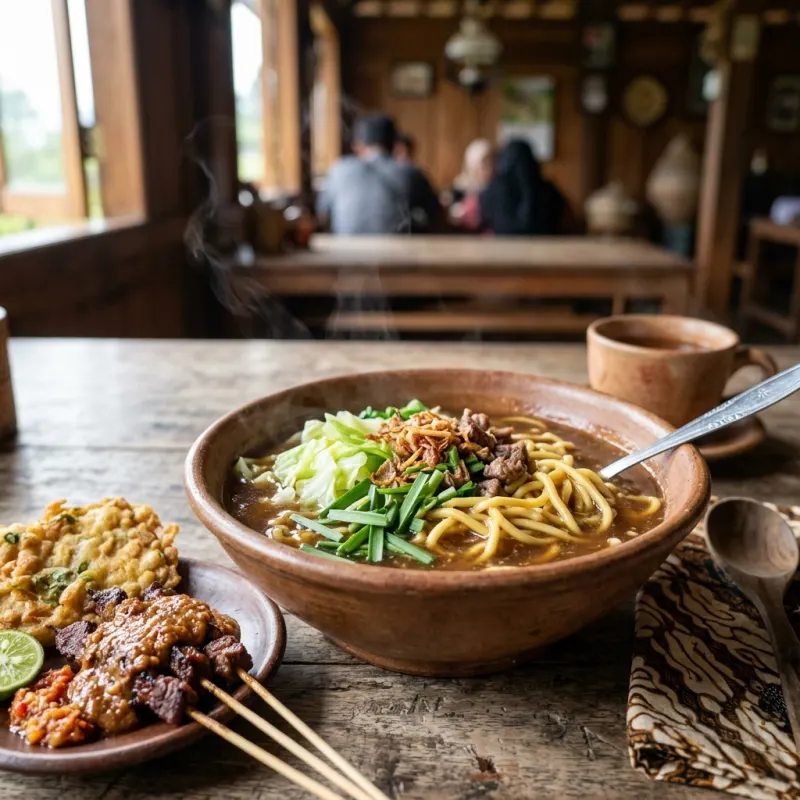
Authentic bowl of Javanese Mie Ongklok noodle soup with satay and tempeh in Dieng

Must Try Dish

Mie Ongklok - A signature Wonosobo noodle soup boiled with shredded cabbage and garlic chives, drenched in a thick, savory brown starch gravy seasoned with dried shrimp and spices, traditionally served with beef satay and crisp fried Tempe Kemul.
Food Experiences Title Icon

Food
Experiences

Discover cooking classes, tastings and local food tours

No food experience found
Maya, the human travel expert at TravelingWiz, offering curated, non-AI expertise

Maya’s Final Checklist for Dieng Plateau

Logistics shouldn’t be the focus of your trip—the experience should. I’ve hand-vetted these essential partners to ensure your arrival, stay, and exploration are as smooth as an Athenian breeze.

Where to Stay

From boutique hotels to local apartments—compare thousands of options and find the perfect stay in the best neighborhood.

Air Travel

Getting there should be seamless. Compare the best routes and prices across top airlines to start your journey on the right note.

Local Guides

Connect with experts who know the destination best. Get personalized advice and insider tips to help you plan your perfect trip.

Travel Protection

The “Engineer’s” rule: always have a backup. Secure your trip with a plan that covers every “what if” and unexpected change.

Car Rentals

Explore at your own pace with total freedom. Compare reliable rental options and find the right vehicle for your adventure.

Visa Services

Don’t let paperwork slow you down. Get expert assistance with your application to ensure all your entry documents are in order.

FAQs

Daytime temperatures usually range between 15°C and 20°C (59°F–68°F). During early mornings and late nights, especially between July and August, temperatures regularly plummet to 0°C–5°C (32°F–41°F), causing frost to settle over farmland.
Most travelers hire a private car or driver from Yogyakarta, which takes roughly 3 to 4 hours. Alternatively, budget travelers take a public bus from Yogyakarta to Wonosobo, then transfer to a local highland minibus (microbus) up to Dieng village.
It is an ancient tradition celebrated during the annual Dieng Culture Festival. Children on the plateau who spontaneously grow natural dreadlocks are believed to be blessed by mountain spirits; their hair is ceremonially shaved only after their specific material wish is granted by their parents.
Yes, Mount Prau is considered a beginner-to-intermediate hike that takes between 2 to 3 hours to summit from base camps like Patakbanteng or Kalilembu. However, hiring a local guide is recommended for safety, gear transport, and navigation in dense mist.

Your Insights Matter

TravelingWiz grows through the stories of our community. If you’ve recently explored ,Dieng Plateau share your tips and stories to help us perfect our guides for the next traveler.

Related Articles

Check out our related articles and blog posts to learn even more about the destination.

No related articles found

Don’t Travel Alone

Share with your friends and family

Where should we send your offline card?

We hate spam just as much as you do

newsletter_consent *