Surabaya stands as the thriving urban and commercial heart of East Java. Located along the Madura Strait, the city historically flourished as a bustling trading post and naval center under the Majapahit Empire, later evolving into a major colonial administrative port under the Dutch East Indies. It holds immense national significance as the 'City of Heroes', honoring the fierce defense mounted by local freedom fighters against British and Dutch forces in late 1945.
Today, visitors encounter an energetic city where past and present converge. The historic Old Town (Kota Tua) showcases grand colonial facades, while the vibrant heritage corridors of Ampel and Chinatown reflect centuries of intercontinental trade. Modern shopping complexes, bustling street food stalls, and a burgeoning cafe scene highlight Surabaya's dynamic transformation into an essential Indonesian urban stopover.
Reasons to Visit
- Deep historical heritage preserved in museums, national monuments, and colonial-era quarters.
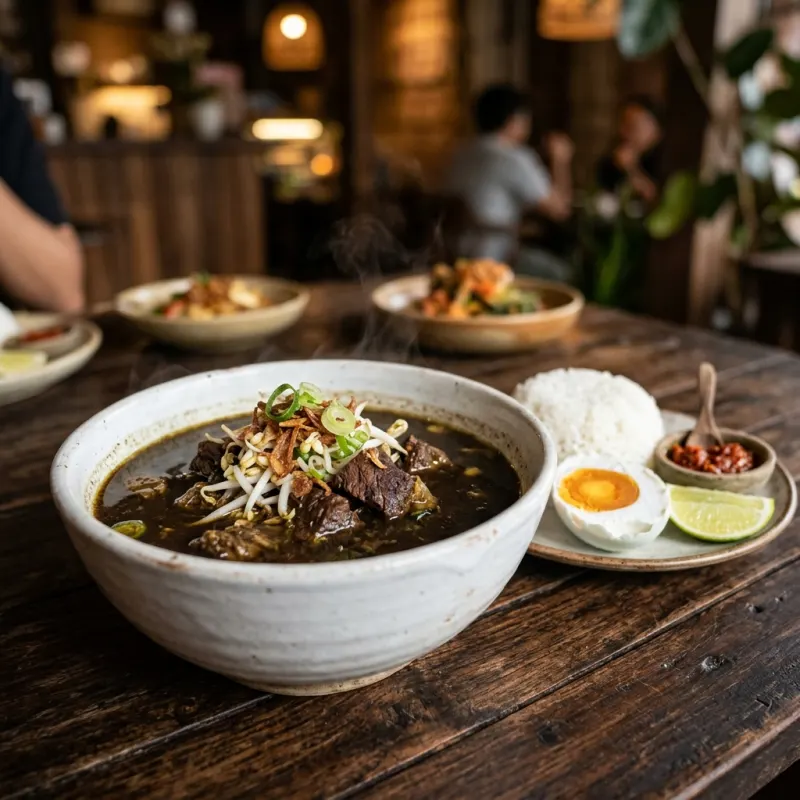
- Renowned street food culture spotlighting authentic East Javanese classics like Rawon and Rujak Cingur.
- Atmospheric cultural quarters including the historic Arab Quarter around Ampel Mosque and vibrant Chinatown.
- Convenient connectivity as the premier transport transit hub to Mount Bromo, Ijen Crater, and Madura Island.
Things to Avoid
- Avoid walking long distances along major highways due to missing sidewalks and high vehicle density.
- Avoid drinking unboiled tap water or consuming drinks with ice from unverified street stalls.
- Avoid underestimating midday heat and humidity by scheduling open-air visits for morning or late afternoon.
- Avoid wearing revealing beachwear in traditional quarters, public markets, and religious shrines.
Local Transportation Tips
Taxis and ride-hailing services (Grab and Gojek) are the most efficient modes of transit for travelers. Bluebird taxis offer dependable metered fares. For a unique experience, the Suroboyo Bus offers modern air-conditioned transit across key arterial corridors. Traditional cycle-rickshaws (becak) remain available in historic neighborhoods for short, leisurely rides, though prices should be negotiated beforehand.
Travel Etiquette
- Dress conservatively when visiting religious sites, keeping shoulders and knees fully covered.
- Use your right hand when giving, receiving items, or paying cash, as using the left hand is culturally impolite.
- Remove your footwear before entering private residences and designated areas of mosques.
- Maintain a calm, respectful demeanor in conversation; raising your voice in public is discouraged.
Recommended Age Group
Surabaya caters broadly to travelers seeking cultural and urban discovery, though infrastructure varies across quarters.
- Babies (0-2 years): Neutral. Modern malls and upscale hotels offer nursery amenities, but navigating older market streets with strollers is challenging.
- Kids (3-12 years): Recommended. Interactive attractions like the Submarine Monument (Monkasel), modern science centers, and large leisure parks provide engaging entertainment.
- Teens (13-19 years): Recommended. Vibrant modern cafes, shopping complexes, and rich historical exploration keep older youth thoroughly engaged.
- Adults (20-64 years): Recommended. The rich tapestry of heritage architecture, renowned local food culture, and authentic urban markets offers ideal exploration.
- Seniors (65+ years): Neutral. High daytime heat and uneven street pavements require mindful pacing, though accessible private car hires provide comfortable touring.
Accessibility Level: Medium
- Modern shopping malls, premier hotels, and airports provide ramp access, wide corridors, and accessible elevators.
- Historic districts and public sidewalks frequently feature high curbs, sudden breaks, and narrow pathways that pose challenges for wheelchair users.
- Hiring a private vehicle with an air-conditioned driver is the most barrier-free way to explore the metropolitan area comfortably.
Did You Know?
Surabaya's name is derived from the Javanese words 'suro' (shark) and 'boyo' (crocodile), originating from a local myth about an epic battle between the two creatures symbolizing strength, which is commemorated in the city's official emblem.
Cool Statistics
- Surabaya is home to Indonesia's longest sea crossing, the Suramadu Bridge, spanning 5.4 kilometers across the Madura Strait.
- The city preserves an authentic Soviet-built submarine (KRI Pasopati 410) converted into the Monkasel museum right in the urban center.
- Surabaya features one of Southeast Asia's largest historical Chinatown and Arab trading communities dating back centuries.






Buy a compatible power adapter for your trip