West Sumatra (Sumatera Barat) represents one of Indonesia's most culturally distinct and visually dramatic landscapes. Rising sharply from the Indian Ocean coastline around Padang, the land ascends into the volcanic spine of the Bukit Barisan range, where towering stratovolcanoes like Marapi, Singgalang, and Talang dominate the horizon. Between these volcanic peaks lie verdant highland plateaus, carved canyons, and deep caldera lakes, forming an extraordinary backdrop for the unique matrilineal civilization of the Minangkabau people.
Historically, the Minangkabau built their society around customary law (adat) integrated with Islamic tenets, creating distinctive architectural forms known as Rumah Gadang, marked by their curved, multi-tiered gabled roofs resembling water buffalo horns. Today, visitors can discover preserved cultural centres such as Batusangkar and the restored Pagaruyung Palace, navigate the 44 switchbacks of Kelok 44 plunging toward crater lake Maninjau, or rock-climb and trek amidst the vertical granite walls of Harau Valley. Balancing profound tradition with dramatic highland landscapes, West Sumatra remains an authentic frontier for cultural exploration and ecological adventure.
Reasons to Visit
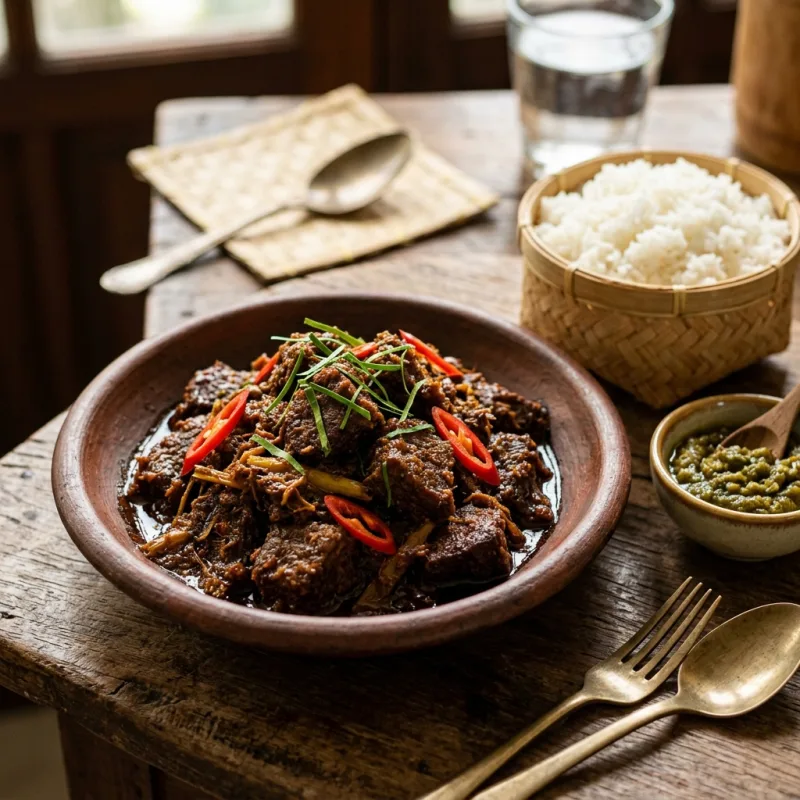
- Legendary Culinary Heritage: Savor authentic beef rendang, dendeng batokok, and spicy sate Padang at source in local highland warungs.
- Breathtaking Natural Canyons: Marvel at the sweeping limestone and granite bluffs of Harau Valley and the grand vistas of Sianok Canyon.
- Distinctive Minangkabau Architecture: Photograph the sweeping horned roofs of Rumah Gadang houses and grand communal clan buildings across Tanah Datar.
- Tranquil Volcanic Lakes: Unwind along the pristine shores of Lake Maninjau and Lake Singkarak framed by terraced hillsides.
- Epic Scenic Drives: Experience world-class road trips traversing architectural wonders like the Kelok 9 flyover and the dizzying turns of Kelok 44.
Things to Avoid
- Avoid wearing skimpy beachwear, sleeveless tops, or short shorts when walking around towns, rural villages, or dining in local establishments.
- Do not drink unfiltered tap water; use purified bottled water or refilled filtered supplies to prevent stomach upsets.
- Avoid planning overly tight transit schedules across mountain roads, as heavy trucks, weather delays, and winding routes frequently extend travel times.
- Do not ignore volcanic warning advisories issued by national disaster authorities regarding active peaks like Mount Marapi.
- Avoid eating or offering items with your left hand, which is considered unclean in local Minangkabau etiquette.
Local Transportation Tips
Travel across West Sumatra primarily relies on road transport due to the rugged mountainous topography. For independent travelers, shared intercity vans and minivans, commonly called 'travel', operate between Padang, Bukittinggi, Payakumbuh, and Batusangkar on fixed routes with affordable ticket pricing. Within towns like Bukittinggi and Padang, brightly painted public angkot (minibuses) cover inner-city routes, while ride-hailing apps like Grab and Gojek function efficiently in urban centers. For full-day exploration encompassing scenic viewpoints, rural weaving villages, and Harau Valley, hiring a private car and experienced driver is the safest, most flexible, and time-efficient option.
Travel Etiquette
- Remove your shoes before entering any private Minangkabau home, traditional Rumah Gadang, or mosque prayer hall.
- Always use your right hand when shaking hands, passing objects, or eating meals without cutlery.
- Greet locals with a soft handshake or slight bow with hands folded near the chest, especially when interacting with community elders.
- Ask for permission before taking close-up portraits of traditional weavers, farmers, or village residents.
- During the Islamic holy month of Ramadan, avoid eating, drinking, or smoking publicly during daylight hours out of cultural respect.
Recommended Age Group
West Sumatra provides a diverse range of cultural and outdoor experiences, making it appealing for varied age demographics, though its infrastructure is best suited to active and adaptable travelers.
- Babies (0-2 years): Not Recommended. Mountainous transit, limited pediatric medical facilities outside Padang, and bumpy terrain make logistics challenging for families with infants.
- Kids (3-12 years): Neutral. Children interested in waterfalls, boat rides on calm lakes, and dramatic wildlife may enjoy the area, though long drives on twisting roads can induce motion sickness.
- Teens (13-19 years): Recommended. Teenagers will appreciate the outdoor adventures, including canyon trekking in Sianok, bicycling around Lake Maninjau, and exploring underground wartime tunnels.
- Adults (20-64 years): Recommended. Highly rewarding for adult travelers passionate about authentic culinary traditions, road trips, cultural anthropology, and hiking.
- Seniors (65+ years): Neutral. While historical palaces and serene lake viewpoints are accessible, steep stairs, uneven sidewalks, and hilly terrain require moderate physical mobility.
Accessibility Level: Medium
- Urban sidewalks in Padang and Bukittinggi are frequently uneven, interrupted by curbs, open drains, or street vendors, presenting challenges for wheelchair users.
- Historical sights like Pagaruyung Palace and the Japanese Caves (Lobang Jepang) require climbing steep stairways without elevators or ramped alternatives.
- Accessible vehicles equipped with hydraulic wheelchair lifts are virtually unavailable across the province; private van charters require manual transfers.
- Main luxury and upscale business hotels in central Padang provide step-free lobby access and elevators, but rural homestays and mountain lodges are largely inaccessible.
- Accessible travel is best coordinated with private tour agencies capable of arranging dedicated assistance and barrier-free routing.
Did You Know?
The Minangkabau people of West Sumatra form the world's largest matrilineal society. Ancestral property, including land, rice fields, and traditional clan houses (Rumah Gadang), is passed down directly from mothers to daughters, while religious and political affairs are traditionally managed by men.
Cool Statistics
- 14,000+: Square miles (38,000+ km²) of dramatic mountainous and coastal terrain across the province.
- 44: Number of numbered hairpin switchbacks descending 600 vertical meters along the legendary Kelok 44 road to Lake Maninjau.
- No. 1: Beef Rendang, originating in West Sumatra, was ranked the world's most delicious food in CNN's international global poll.
- 2,891 meters: Elevation of Mount Marapi, the most active volcano in West Sumatra.






Buy a compatible power adapter for your trip