Perched high in the Barisan Mountains of West Sumatra, Bukittinggi sits at an elevation of approximately 930 meters above sea level, providing a welcome highland respite from the tropical heat of the lowlands. The city serves as the primary urban center for Minangkabau culture, recognized worldwide for its matrilineal social structure, distinctive horn-roofed Rumah Gadang architecture, and complex spice-laden culinary arts. Its heart is dominated by Jam Gadang, a clock tower gift presented by Queen Wilhelmina of the Netherlands in 1926 that still dictates the daily rhythm of local life.
Surrounding Bukittinggi are natural landscapes shaped by volcanic activity and dramatic erosion. The most prominent natural landmark is Ngarai Sianok (Sianok Canyon), a breathtaking rift valley with sheer 100-meter vertical cliffs framing tranquil rice paddies and winding streams. Directly beneath the city lies Lobang Jepang, an extensive subterranean network of military tunnels excavated by forced labor during the Japanese occupation in World War II. Combining deep historical significance with breathtaking highlands and world-class street gastronomy, Bukittinggi offers one of the most culturally complete travel experiences in Western Indonesia.
Reasons to Visit
- Jam Gadang & City Center: Witness the landmark clock tower, an enduring architectural icon featuring a roof styled in traditional Minangkabau buffalo-horn motifs.
- Ngarai Sianok & Great Wall: Trek along Janjang Koto Gadang, a miniature Great Wall of China-style staircase connecting Bukittinggi to the silversmith hamlet of Koto Gadang across a dramatic canyon.
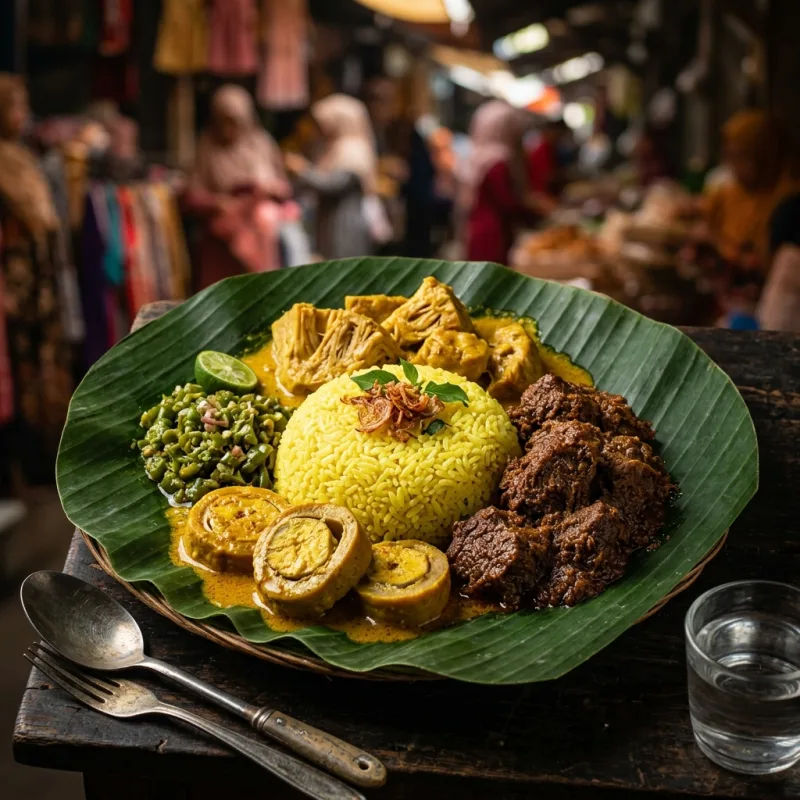
- Culinary Epicenter: Savor genuine Nasi Kapau at Los Lambuang, sampling rich gulai curries served fresh from massive communal bowls.
- World War II Underground Heritage: Explore the expansive tunnel chambers of Lobang Jepang, revealing wartime logistics and hidden military history.
- Traditional Architecture: Discover authentic Rumah Gadang clan houses adorned with intricate wood carvings and curving thatched eaves throughout surrounding highland villages.
Things to Avoid
- Avoid wearing skimpy clothing such as crop tops, short shorts, or sleeveless tank tops in public squares and markets, as West Sumatra is culturally conservative.
- Avoid touching someone's head or handing items over with your left hand, as the left hand is culturally considered impolite.
- Do not ignore volcanic warnings or trail closures on Mount Marapi, which is an active volcano prone to sudden phreatic eruptions.
- Avoid unmetered or unnegotiated transport rides; always agree on fares beforehand when hiring chartered cars or horse-drawn carriages (bendi).
- Do not venture off established canyon tracks during heavy downpours due to the hazard of flash floods and muddy slope destabilization.
Local Transportation Tips
Getting around Bukittinggi is simple and inexpensive. Shared minivans known as angkot (angangkutan kota) run designated color-coded routes across the city with fixed fares usually costing between 4,000 and 7,000 IDR per trip. For short jaunts around the Jam Gadang plaza, traditional two-wheeled horse carriages called bendi offer nostalgic rides (agree on the price before boarding). Ride-hailing apps like Grab and Gojek operate in Bukittinggi for motorbikes and cars, though availability may be limited late at night. Walking is very feasible within the compact downtown core between the clock tower, market district, and Panorama Park.
Travel Etiquette
- Greet locals with a slight nod or hand-to-chest gesture; handshake greetings among the same gender are common, but wait for local women to initiate contact.
- Always remove your footwear before entering private residences, homestays, and prayer halls.
- Use your right hand exclusively when passing money, shaking hands, or eating communal finger foods.
- Always ask permission before photographing local market vendors, artisans in Koto Gadang, or elders.
- Avoid displays of intense public affection in public parks and street areas.
Recommended Age Group
Bukittinggi welcomes travelers across generations, though its rugged canyon trails and steps require varying levels of mobility.
- Babies (0-2 years): Neutral. The downtown area around the clock tower is manageable, but steep staircases at Sianok Canyon and Lobang Jepang make strollers impractical.
- Kids (3-12 years): Recommended. Children enjoy riding the colorful horse-drawn bendi carriages, exploring Kinantan Zoo, and viewing the dramatic canyon cliffs.
- Teens (13-19 years): Recommended. Active teenagers will love descending the Great Wall of Koto Gadang, trekking through misty canyon paths, and exploring World War II bunker labyrinths.
- Adults (20-64 years): Recommended. Excellent cultural, hiking, and culinary immersion suitable for solo travelers, couples, and adventure seekers.
- Seniors (65+ years): Neutral. While cultural sites like Jam Gadang and heritage museums are easily accessed, navigating steep stairs in Sianok Canyon and the Japanese caves requires solid mobility.
Accessibility Level: Medium
- The plaza surrounding Jam Gadang features wide, paved, flat walkways that accommodate manual wheelchairs and mobility devices.
- Panorama Park has flat perimeter paths offering wheelchair-friendly canyon viewpoints, but entering Lobang Jepang requires descending steep, long flights of stairs.
- The Great Wall of Koto Gadang consists of hundreds of uneven concrete steps and is not wheelchair accessible.
- Public transportation options like angkot vans and bendi carriages are not wheelchair adapted; private vehicle charter with a driver is recommended for mobility-impaired visitors.
- Curb ramps and tactile paving remain scarce throughout older market districts and secondary residential roads.
Did You Know?
The mechanical clockwork inside Jam Gadang was crafted by the renowned German clockmaker Vortmann in Recklinghausen. Only two identical movements were ever produced: one installed in Bukittinggi's Jam Gadang, and the other powering London's famous Big Ben clock tower.
Cool Statistics
- Elevation: 930 meters (3,051 feet) above sea level, ensuring an average year-round temperature of 20°C to 25°C.
- Canyon Depth: Ngarai Sianok plunges between 100 and 120 meters deep along a fault line stretching approximately 15 kilometers.
- Japanese Tunnel Network: Lobang Jepang stretches roughly 1,400 meters underground with 21 interconnected chambers built up to 40 meters below street level.






Buy a compatible power adapter for your trip