

Low – budget‑friendly basics
Medium – moderate mid‑range costs
High – pricey lodging, dining & transport
Disclosure: This site contains affiliate links. We may earn a commission if you make a purchase, at no extra cost to you.
Low – budget‑friendly basics
Medium – moderate mid‑range costs
High – pricey lodging, dining & transport
5 shields = Excellent – very low crime or conflict.
4 shields = Safe – low risk, routine care.
3 shields = Relatively safe – use normal street smarts.
2 shields = Use caution – higher crime or periodic unrest.
1 shields = Avoid – active conflict or extreme danger.
Scores are derived from multi-year peace, homicide and security indices blended into a single 1-to-5 scale.
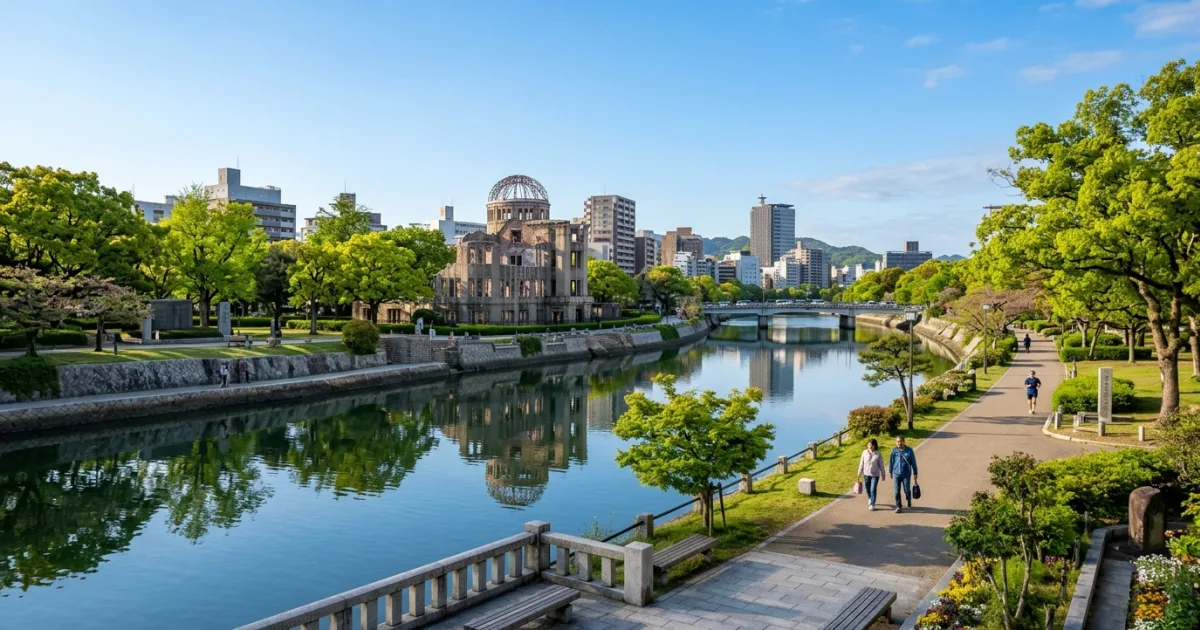
Hiroshima Peace Memorial Park spans over 120,000 square meters in the center of Hiroshima, dedicated entirely to the legacy of the world's first atomic bomb attack and the pursuit of lasting global peace. Positioned at the open delta between the Honkawa and Motoyasu rivers, the grounds encompass the skeletal remains of the Genbaku Dome (A-Bomb Dome), the Hiroshima Peace Memorial Museum, the Cenotaph for the A-bomb Victims, and numerous stone monuments. The atmosphere balances solemn historical reflection with beautifully maintained green lawns, walking paths, and reflecting pools. Visitors navigate an emotionally resonant space that documents catastrophic devastation alongside resilient urban renewal. The park welcomes international travelers year-round with clear multilingual signage, barrier-free walking routes, and dedicated memorial programs such as the annual August 6th Peace Memorial Ceremony. Experiencing the park provides deep insight into twentieth-century geopolitics, human resilience, and international disarmament advocacy.
Hiroshima Peace Memorial Park stands on the open delta of Nakajima district, an area that before August 6, 1945, served as the bustling commercial and political heart of Hiroshima. The detonation of the atomic bomb obliterated the neighborhood instantly. In 1949, rather than rebuilding commercial infrastructure, city leaders and the national government designated the ground as an open memorial zone dedicated to peace and international reconciliation, designed by legendary modernist architect Kenzo Tange.
Today, the park connects history directly with contemporary reflection. Walking from the Genbaku Dome across the Aioi Bridge toward the Cenotaph aligns the visitor's gaze through an open arch framing the eternal Peace Flame and the ruined dome in the distance. The flame has burned continuously since 1964 and will remain lit until all nuclear weapons on Earth are dismantled.
The Hiroshima Electric Railway (Hiroden) streetcar is the most efficient way to access the park. Board Tram Line 2 or Line 6 from JR Hiroshima Station and disembark at Genbaku-Dome-mae for the A-Bomb Dome, or at Chuden-mae or Hondori for the museum entrance. Standard transit IC cards (Suica, Pasmo, Icoca) work seamlessly on all trams.
Hiroshima Peace Memorial Park is a profound educational destination, though certain museum galleries contain graphic artifacts that require emotional maturity.
The Peace Flame burning in the central plaza has remained lit since August 1, 1964, and the municipal commitment states it will only be extinguished when every nuclear weapon on the planet has been abolished.

Hiroshima Peace Memorial Park is accessible year-round, but spring and autumn provide the most comfortable outdoor conditions.
| Month | °C | °F |
|---|---|---|
| Jan | 5 | 41 |
| Feb | 6 | 43 |
| Mar | 9 | 48 |
| Apr | 13 | 55 |
| May | 18 | 64 |
| Jun | 22 | 72 |
| Jul | 25 | 77 |
| Aug | 27 | 81 |
| Sep | 24 | 75 |
| Oct | 17 | 63 |
| Nov | 12 | 54 |
| Dec | 6 | 43 |
Remember to check the weather forecast a few days before the trip and before heading to the airport.
5 shields = Excellent – very low crime or conflict.
4 shields = Safe – low risk, routine care.
3 shields = Relatively safe – use normal street smarts.
2 shields = Use caution – higher crime or periodic unrest.
1 shields = Avoid – active conflict or extreme danger.
Scores are derived from multi-year peace, homicide and security indices blended into a single 1-to-5 scale.
The rating is based on multi-year peace, crime, and security indices. Before you go, always verify current conditions through official government travel advisories.
No internet needed • Includes local translations • Free for TravelingWiz readers

Low – budget‑friendly basics
Medium – moderate mid‑range costs
High – pricey lodging, dining & transport
Per person, per day – pocket cash for small purchases.
Full daily spend estimation (accommodation, food, transportation, attractions).
Travel Style | Japanese Yen (JPY) | ≈ USD ($) |
|---|---|---|
Budget | 10250 | 65 |
Mid-range | 18650 | 118 |
Comfort | 41050 | 259 |
The Prices, Daily costs, and calculator results are estimates for planning purposes only. Actual costs may vary based on season, booking timing, personal spending habits, and currency fluctuations. TravelingWiz cannot be held responsible for discrepancies between these estimates and your final trip expenses.
Choose a ready-made itinerary, plan your own trip, and keep TravelingWiz by your side while you travel.
Get the TravelingWiz app →
Discover cooking classes, tastings and local food tours
Logistics shouldn’t be the focus of your trip—the experience should. I’ve hand-vetted these essential partners to ensure your arrival, stay, and exploration are as smooth as an Athenian breeze.

Compare accommodation options and choose a stay that suits your plans and budget.
Connect with local guides for personalized help planning and exploring.
The “Engineer’s” rule: always have a backup. Secure your trip with a plan that covers every “what if” and unexpected change.
Don’t let paperwork slow you down. Get expert assistance with your application to ensure all your entry documents are in order.
Check out our related articles and blog posts to learn even more about the destination.
Share with your friends and family
