Disclosure: This site contains affiliate links. We may earn a commission if you make a purchase, at no extra cost to you.

Panoramic view of an immaculate Japanese dry landscape garden with sculpted pines and raked gravel in Yasugi

Yasugi Overview & Key Highlights

Yasugi is an idyllic cultural destination situated in eastern Shimane Prefecture along the scenic shores of Lake Nakaumi. Internationally acclaimed as the home of the Adachi Museum of Art, the town features immaculate Japanese gardens consistently ranked among the finest in the world, framed like living paintings against the surrounding rolling mountains. Beyond its horticultural fame, Yasugi preserves centuries of traditional Japanese craftsmanship as a historic center of Tatara ironmaking, yielding high-grade steel that shaped the nation's bladesmithing legacy. Visitors also encounter vibrant folk traditions, most notably the Yasugibushi loach-scooping dance, alongside serene forested mountain sanctuaries such as the ancient Kiyomizu-dera temple. The town offers a tranquil pace of travel characterized by scenic rural train lines, rich local cuisine, and restorative hot spring enclaves. Yasugi delivers a deeply authentic glimpse into heritage Japan, balancing world-class fine art collections with untamed natural beauty and peaceful provincial hospitality.

Yasugi Travel Guide: Logistics & In-Depth Tips

Nestled along the southeastern shores of Lake Nakaumi in Shimane Prefecture, Yasugi is celebrated across Japan as a center of refined aesthetics and enduring industrial history. Most travelers arrive drawn by the fame of the Adachi Museum of Art, whose expansive Japanese dry landscape, moss, and gravel gardens have been recognized as the best in Japan by the Journal of Japanese Gardening annually since 2003. Framed masterfully against the natural backdrop of Mount Joyan, these living canvases harmonize seamlessly with Yokoyama Taikan's masterpieces housed within the museum walls.

Beyond its landscape architecture, Yasugi possesses deep ties to ancient metallurgy. For centuries, the mountainous hinterlands around the town were the heartland of Tatara steelmaking, an ancient smelting method producing Tamahagane—the prized steel indispensable for forging Japanese katana. Today, visitors can uncover this complex craft at the Wakou Museum. Coupled with the sacred serenity of the 6th-century Kiyomizu-dera temple set amid ancient cedars and the spirited humor of the Yasugibushi loach-scooping folk performance, Yasugi represents a rich tapestry of classic Japanese heritage away from congested tourist corridors.

Reasons to Visit

  • Marvel at the Adachi Museum of Art's immaculate landscape gardens, universally celebrated as some of the most pristine in Japan.
  • Immerse yourself in ancient Buddhist tranquility under the towering cryptomeria trees of Kiyomizu-dera Temple.
  • Discover the ancient roots of samurai swords and Tatara steelmaking at the Wakou Museum.
  • Laugh and learn traditional Japanese folk humor at the Yasugibushi Performance Hall.
  • Sample authentic local specialties, from delicate freshwater loach nabe to freshly picked Yasugi strawberries.

Things to Avoid

  • Do not attempt to walk onto the gravel or lawns at the Adachi Museum of Art; the gardens are viewed exclusively from designated viewing corridors.
  • Avoid relying entirely on digital contactless payments, as suburban trains and regional buses frequently demand physical cash or IC transit cards.
  • Do not rush your visit to Kiyomizu-dera; allow ample time to hike up the forested stone stairway to the three-story pagoda.
  • Avoid visiting without verifying train and shuttle schedules, as rural departures run at wide intervals.

Local Transportation Tips

Yasugi is anchored by JR Yasugi Station on the JR San'in Main Line, connected via express and local trains to Matsue, Izumo, and Yonago. From the station, reaching key attractions like the Adachi Museum of Art is effortless thanks to complimentary yellow shuttle buses operating roughly every 30 to 45 minutes. For reaching Kiyomizu-dera and deeper rural landmarks, municipal yellow buses (Yasugi City Community Bus) operate fixed routes across town. Taxis wait outside JR Yasugi Station for quick transfers, and rental bicycles are available at the station tourist information office for cycling along Lake Nakaumi.

Travel Etiquette

  • Maintain a quiet, contemplative atmosphere inside art galleries and viewing areas of the Adachi Museum.
  • Remove shoes promptly when stepping onto tatami mats in temple pavilions, ryokan, or traditional tea rooms.
  • Bow slightly when greeting monks, shopkeepers, or museum staff as a polite sign of mutual respect.
  • Carry your trash with you throughout the day, as public waste bins are scarce in Japanese municipal areas.

Recommended Age Group

Yasugi appeals strongly to travelers who value art, horticultural design, contemplative historical sites, and regional culture.

  • Babies (0-2 years): Neutral. The Adachi Museum is stroller accessible, but the contemplative, whisper-quiet environment may feel restrictive for active infants.
  • Kids (3-12 years): Neutral. The Yasugibushi loach-scooping dance can entertain younger children, but expansive quiet galleries and contemplative gardens offer limited interactive play.
  • Teens (13-19 years): Neutral. Creative teens with an interest in Japanese history, manga backgrounds, and traditional blade forging will find value, though entertainment venues are few.
  • Adults (20-64 years): Recommended. Perfect for couples, solo travelers, and art enthusiasts seeking world-class gardens, historic temples, and exquisite traditional dining.
  • Seniors (65+ years): Recommended. Highly accessible museum pathways, leisurely pacing, gentle rural shuttles, and serene aesthetics make Yasugi an extraordinary destination for mature travelers.

Accessibility Level: Medium

  • The Adachi Museum of Art is fully wheelchair accessible with elevator access, smooth polished ramps, and complimentary manual wheelchair loans at the front desk.
  • Free shuttle buses between JR Yasugi Station and the Adachi Museum are standard coaches; travelers requiring wheelchair lifts should contact the museum in advance to coordinate accessible transport.
  • Kiyomizu-dera Temple features numerous steep stone staircases along its forested hillside path, making upper pagoda grounds challenging for visitors with limited mobility.
  • JR Yasugi Station provides elevator access to train platforms, tactile paving, and accessible multi-purpose restrooms.

Did You Know?

Adachi Zenko, the founder of the Adachi Museum of Art, famously stated that 'the garden is also a picture,' intentionally designing windows throughout the structure to act as picture frames around changing living landscapes.

Cool Statistics

  • #1 ranked Japanese garden for over 20 consecutive years by the Journal of Japanese Gardening.
  • Over 1,500 works of modern Japanese art, including approximately 120 paintings by Yokoyama Taikan.
  • More than 1,400 years of spiritual history preserved at Kiyomizu-dera, founded in 587 AD.

Address:

Yasugi, Japan

Find Nearby Accommodations

Basic Info

address icon

COUNTRY & Region

Japan,
Asia

ACCESSIBILITY LEVEL​

Medium
Currency icon

LOCAL CURRENCY​

Japanese Yen (JPY)
Price level icon
Medium
Safety Level icon

SAFETY LEVEL

Duration icon

Recommended Duration

• Full day
• 1-7 days

Electricity

electricity icon

Electricity

100-110V, 
60Hz
Plug Socket icon

Plug Type

• Type A (Flat blade)
• Type B (Flat blade with grounding pin)
Plug types
Click To View Plug Types
Yasugi is part of our
Solo Female Friendly collection

Activities To Do In Yasugi

Best Time To Visit Yasugi

Yasugi is a four-season destination, with distinct seasonal transformations in its celebrated gardens.

  • Spring (April to May): Mild temperatures, blossoming azaleas, and vibrant fresh greenery make this the ideal season for strolls around temple complexes.
  • Autumn (October to November): Crisp, dry air and fiery red maple foliage transform the gardens of the Adachi Museum and Kiyomizu-dera into living tapestries.
  • Winter (December to February): Quiet snowscapes blanket the manicured pines and mountain temples, offering peaceful solitude and pristine photographic opportunities.
  • Summer (June to August): Lush moss and lotus blooms thrive, though humidity and high temperatures require staying hydrated and exploring during morning hours.

Average Temperatures Per Month

Remember to check the weather forecast a few days before the trip and before heading to the airport.

Safety Level icon

Safety Level

Yasugi is an exceptionally safe Japanese municipality with virtually nonexistent violent crime. Exercise standard situational awareness, especially when walking along narrow rural roads lacking sidewalks after dark. During summer months, take precautions against heat exhaustion and stay alert for hornets on forested temple trails.

The rating is based on multi-year peace, crime, and security indices. Before you go, always verify current conditions through official government travel advisories.

Emergency Numbers

Police: 110
Ambulance: 119

No internet needed • Includes local translations • Free for TravelingWiz readers

Spoken Languages

Japanese (Standard & Izumo dialect); limited English at major cultural sites and transportation hubs.

Learn The Language

  • Konnichiwa – Hello
  • Arigatō gozaimasu – Thank you very much
  • Sumimasen – Excuse me / Pardon
  • Kore wa ikura desu ka? – How much is this?
  • Eigo ga hanasemasu ka? – Do you speak English?
  • Toire wa doko desu ka? – Where is the restroom?
  • O-kaikei kudasai – The bill, please
  • Sayōnara – Goodbye
Travel Booking Partner - TravelingWiz

Trip Cost & Budgeting for Yasugi, 2026

Everything you need to know about money while traveling
Yasugi is a moderately priced countryside destination that provides exceptional cultural value compared to Japan's major metropolitan centers. With TravelingWiz's Human Verified data, a typical traveler should expect to spend around $95 USD per day for a mid-range trip. Modest daily expenses include roughly $5 for artisanal teas or local snacks and $12 to $18 for a traditional lunch set in town. Click the Trip Cost Calculator button below the table to work out your personal budget for this trip.
Currency icon

LOCAL CURRENCY​:

Japanese Yen (JPY)
Price level icon
Medium
While the Adachi Museum of Art and major ticket counters accept international credit cards, small rural cafes, local buses, temple admission booths, and craft workshops exclusively require cash (JPY). Always carry sufficient physical yen, accessible via 7-Eleven or Japan Post ATMs at JR Yasugi Station.

Per person, per day – pocket cash for small purchases.

Local: 6000
Japanese Yen (JPY)
≈ 40 USD

Full daily spend estimation (accommodation, food, transportation, attractions).

Travel Style
Japanese Yen (JPY)
≈ USD ($)
Budget
7500
50
Mid-range
14250
95
Comfort
28500
190

The Prices, Daily costs, and calculator results are estimates for planning purposes only. Actual costs may vary based on season, booking timing, personal spending habits, and currency fluctuations. TravelingWiz cannot be held responsible for discrepancies between these estimates and your final trip expenses.

  • Take advantage of the free dedicated shuttle bus running frequently between JR Yasugi Station and the Adachi Museum of Art.
  • Purchase the San'in Tourist Pass or regional JR West rail pass to cover rural train transit between Matsue, Yasugi, and Yonago.
  • Foreign passport holders often receive discounted admission at major Shimane cultural attractions upon presenting their passport at the ticket counter.
  • Stay in local family-run minshuku or ryokan to experience authentic hospitality and multi-course seasonal dinners at reasonable rates.

Pre-Order Tickets

Avoid disappointment when tickets sell out — and skip the long lines by booking online in advance. You’ll often save up to 20% too.
Save up to 20%

Travel Discounts & Coupons

Save on hotels, attractions, transport, and gear — find verified discounts for smarter travel spending.
Verified Coupons

What To Pack

  • Slip-on walking shoes that are easily removed when entering temples, traditional ryokan, and museum viewing rooms.
  • Comfortable walking socks without holes, as footwear is frequently left at the entrance of cultural properties.
  • Light rain shell or compact umbrella, as weather along the Sea of Japan coast can shift rapidly.
  • Modest layers suitable for sacred sites like Kiyomizu-dera and air-conditioned museum galleries.
  • Universal plug adapter (Type A/B) and portable power bank for day trips across rural Shimane.
  • Pocket Wi-Fi or local eSIM card for navigating rural bus and train timetables.
We couldn't find tips for Yasugi.
If you got any, please share

Recommended Itineraries for Traveling to Yasugi

We couldn't find itineraries for Yasugi.
you can contact us for custom trip plan

Food & Drink Highlights

Local Food Overview

Yasugi's culinary identity is grounded in fertile agricultural soils, fresh freshwater bounty from Lake Nakaumi, and time-honored preservation techniques. The town is nationally famous for Dojō (freshwater loach), traditionally caught in local rice paddies and prepared in savory stews or crisp tempura alongside local mountain vegetables. Yasugi also boasts succulent seasonal strawberries (Beni-hoppe), fresh Izumo soba noodles served in layered lacquered bowls, and tender Shimane Wagyu beef raised on the prefecture's lush pasturelands. Meals are customarily complemented by artisanal sake brewed using local spring water and Tatara-filtered rice.
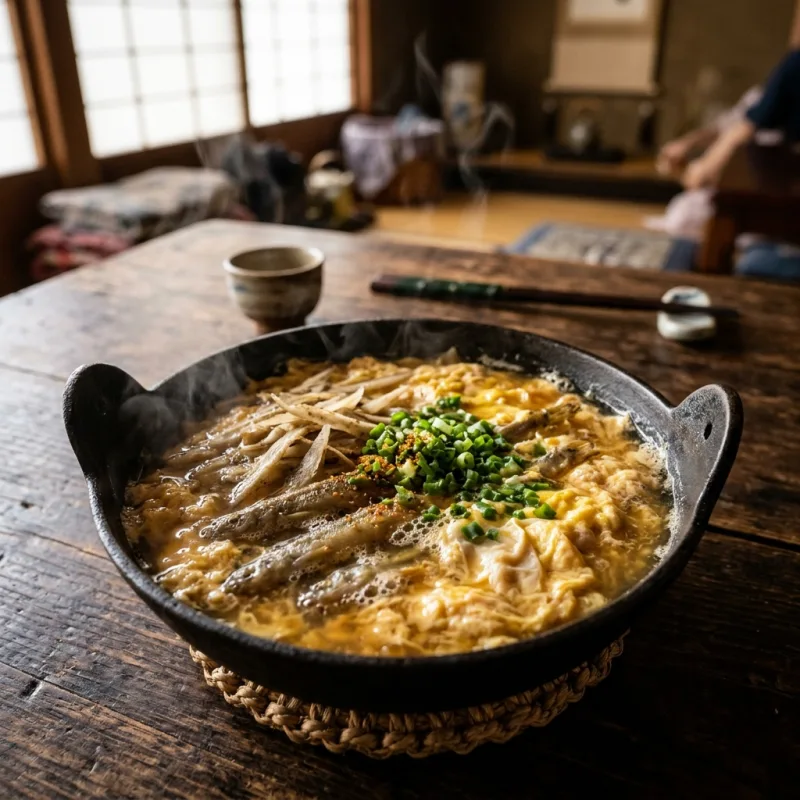
Japanese Dojo Nabe loach hot pot in a cast iron pot with burdock and scallions

Must Try Dish

Dojō Nabe - A traditional freshwater loach hot pot simmered with sweet burdock root, tender leeks, and beaten egg in a savory dashi-mirin broth. It delivers an earthy, deeply comforting flavor that has fueled local artisans and dancers for generations.
Food Experiences Title Icon

Food
Experiences

Discover cooking classes, tastings and local food tours

No food experience found
Maya, the human travel expert at TravelingWiz, offering curated, non-AI expertise

Maya’s Final Checklist for Yasugi

Logistics shouldn’t be the focus of your trip—the experience should. I’ve hand-vetted these essential partners to ensure your arrival, stay, and exploration are as smooth as an Athenian breeze.

Where to Stay

From boutique hotels to local apartments—compare thousands of options and find the perfect stay in the best neighborhood.

Air Travel

Getting there should be seamless. Compare the best routes and prices across top airlines to start your journey on the right note.

Local Guides

Connect with experts who know the destination best. Get personalized advice and insider tips to help you plan your perfect trip.

Travel Protection

The “Engineer’s” rule: always have a backup. Secure your trip with a plan that covers every “what if” and unexpected change.

Car Rentals

Explore at your own pace with total freedom. Compare reliable rental options and find the right vehicle for your adventure.

Visa Services

Don’t let paperwork slow you down. Get expert assistance with your application to ensure all your entry documents are in order.

FAQs

A dedicated, free shuttle bus runs regularly between JR Yasugi Station and the Adachi Museum of Art, taking approximately 20 minutes each way.
No, the gardens are designed as a living painting intended to be contemplated through floor-to-ceiling glass windows and framed architectural openings from inside the museum pavilion.
Yasugi Bushi is a famous Japanese folk song and comic dance where performers use bamboo baskets to simulate catching loaches in mud, performed live at the Yasugibushi Performance Hall.
Yes, Yasugi is an easy 15- to 25-minute train ride on the JR San’in Main Line from either Matsue or Yonago, making it an ideal day excursion.

Your Insights Matter

TravelingWiz grows through the stories of our community. If you’ve recently explored ,Yasugi share your tips and stories to help us perfect our guides for the next traveler.

Related Articles

Check out our related articles and blog posts to learn even more about the destination.

No related articles found

Don’t Travel Alone

Share with your friends and family

Where should we send your offline card?

We hate spam just as much as you do

newsletter_consent *