Disclosure: This site contains affiliate links. We may earn a commission if you make a purchase, at no extra cost to you.
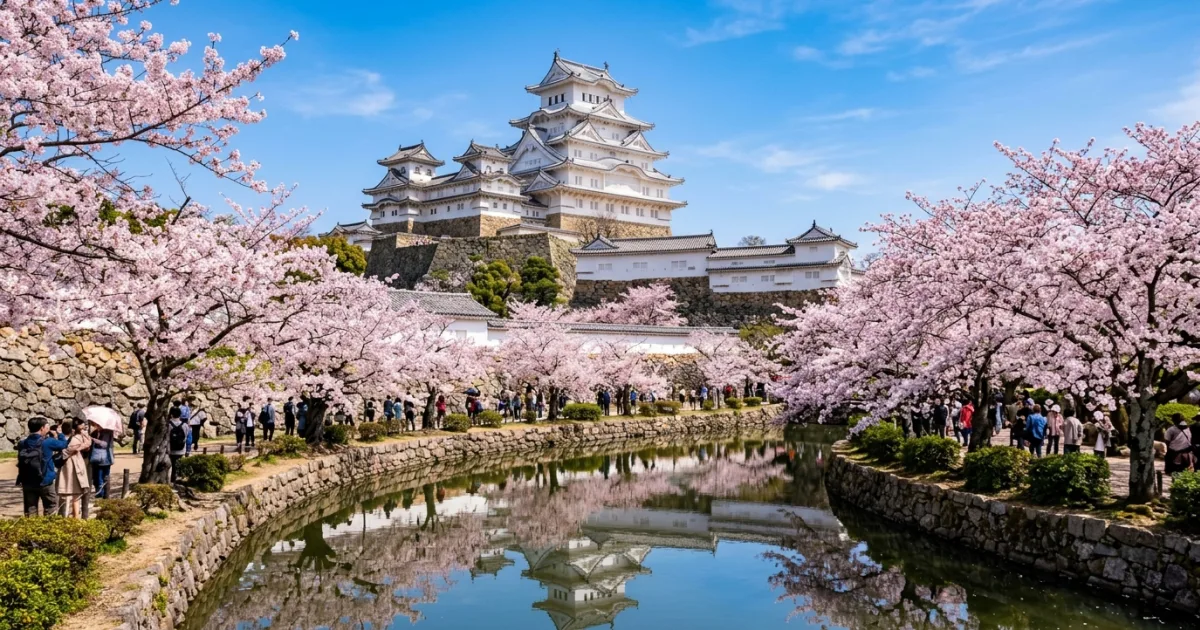
Himeji Castle surrounded by blooming cherry blossoms and water moat in spring

Basic Info

COUNTRY & Region

Japan,
Asia

ACCESSIBILITY LEVEL​

  • High: Widely accessible with good facilities for disabilities.
  • Medium: Some accessible options, but limitations exist.
  • Low: Limited accessibility; many barriers for disabilities.
Medium

LOCAL CURRENCY​

Japanese Yen (JPY)

Price Level

Low – budget‑friendly basics

Medium – moderate mid‑range costs

High – pricey lodging, dining & transport

Medium

SAFETY LEVEL

5 shields = Excellent – very low crime or conflict.

4 shields = Safe – low risk, routine care.

3 shields = Relatively safe – use normal street smarts.

2 shields = Use caution – higher crime or periodic unrest.

1 shields = Avoid – active conflict or extreme danger.

Scores are derived from multi-year peace, homicide and security indices blended into a single 1-to-5 scale.

Recommended Duration

Full day, 1-7 days

Himeji Overview & Key Highlights

Himeji is a historic castle city in southwestern Hyogo Prefecture, renowned globally for preserving Japan's finest surviving feudal fortress. Anchored by the UNESCO World Heritage-listed Himeji Castle—often called the White Heron Castle due to its brilliant white plastered exterior—the city blends grand architectural legacy with serene Edo-period landscapes and modern provincial ease. Beyond the central fortress walls, sprawling samurai precincts like Koko-en Garden showcase traditional Japanese horticulture across nine distinct walled courtyards fed by cascading streams. While frequently explored as a day trip between Osaka, Kyoto, and Hiroshima, Himeji rewards deeper stays with atmospheric mountain retreats and distinct Kansai culinary traditions. Just north of the city center, Mount Shosha hosts the ancient Engyo-ji temple complex, hidden within dense cedar forests and celebrated as an authentic location for historical film productions. Compact transit links, pedestrian-friendly boulevards, and specialized food scenes—including ginger-infused oden and morning kissaten almond toast—make Himeji an exceptionally rewarding urban encounter.

Himeji Travel Guide: Logistics & In-Depth Tips

Himeji is the second-largest city in Hyogo Prefecture, strategically located on the historical Sanyo route connecting the Kansai region to western Honshu. Its defining icon, Himeji Castle, dates in its present form to 1609, surviving wartime air raids, earthquakes, and modernization campaigns intact. The complex features a labyrinth of eighty-three buildings, fortified stone walls called mushigaeshi, and defensive murder holes that illustrate classical Japanese castle defense architecture at its apex.

Surrounding the fortress, the modern city unfolds with broad avenues, covered shopping arcades, and tranquil cultural enclaves. Directly west of the moat lies Koko-en, constructed on the former site of samurai residences and divided into nine independent landscape gardens that embody traditional Edo-era garden design. Further north, the sacred peak of Mount Shosha offers deep cedar forests and the sprawling wooden halls of Engyo-ji, an 11th-century Tendai Buddhist complex accessible via ropeway that provides a serene, crowd-free contrast to the central city.

Reasons to Visit

  • Marvel at Himeji Castle, an authentic UNESCO World Heritage original wooden keep unmatched in architectural scale across Japan.
  • Wander through Koko-en Garden's nine historically reconstructed Edo-style gardens featuring traditional teahouses and koi ponds.
  • Ride the ropeway up Mount Shosha to wander the ancient wooden temple halls of Engyo-ji surrounded by tranquil cedar forests.
  • Savor distinctive local gastronomy, from ginger-infused Himeji oden to sweet morning almond butter toast.
  • Experience an exceptionally walk-friendly city located directly on the bullet train corridor between Osaka and Hiroshima.

Things to Avoid

  • Avoid wearing tight or lace-up shoes that are difficult to take off, as castle exploration requires removing footwear multiple times.
  • Do not attempt to push strollers or pull rolling luggage inside the keep; leave them in lockers at the main entrance.
  • Avoid scheduling visits during peak midday hours in cherry blossom season if you want to bypass 1- to 2-hour queue controls at the main keep.
  • Do not skip Koko-en Garden; visitors often rush past it despite it being one of western Japan's finest landscaped grounds.

Local Transportation Tips

Himeji is exceptionally easy to navigate on foot. The grand thoroughfare of Otemae-dori leads directly from JR Himeji Station to the castle entrance in a straight, 15-minute flat walk. The Shinkansen bullet train and JR Sanyo Main Line stop at Himeji Station, providing high-speed access to Kobe, Osaka, Kyoto, and Hiroshima. For local transit, the Shinki Castle Loop Bus circles between the station, castle, and museum district for a flat 100 yen fare. Reaching Mount Shosha requires catching Shinki Bus #8 from Himeji Station North Exit directly to the Mount Shosha Ropeway terminal, taking approximately 30 minutes.

Travel Etiquette

  • Remove your shoes promptly when stepping onto raised wooden flooring at the castle keep and place them in the provided plastic tote bag.
  • Speak quietly and refrain from running on historic castle floorboards to maintain safety and preservation standards.
  • Follow arrows along designated one-way paths inside the castle corridors and respect marked photography restrictions in sacred temple sanctuaries at Mount Shosha.
  • Never walk while eating street snacks; consume treats beside the stall or shop where purchased.

Recommended Age Group

Himeji provides exceptional experiences for history enthusiasts and casual walkers, though historical preservation constraints impact very young children and travelers with mobility challenges.

  • Babies (0-2 years): Neutral. Paved outer moats and city avenues accommodate strollers smoothly, but baby carriages are strictly banned inside the castle keep's steep wooden ladder-stairs.
  • Kids (3-12 years): Recommended. Feudal samurai armaments, hidden escape trapdoors, castle grounds, and the adjacent Himeji City Zoo spark great curiosity for school-age children.
  • Teens (13-19 years): Recommended. The immersive ninja and warrior lore, interactive VR viewing stations, and dramatic photography settings offer strong appeal.
  • Adults (20-64 years): Recommended. World-class architectural preservation, quiet temple walks at Engyo-ji, and regional sake tastings make it an ideal cultural destination.
  • Seniors (65+ years): Neutral. The flat castle grounds, Koko-en Garden, and Mount Shosha ropeway are very accessible, but the castle keep's near-vertical 50-degree staircases require solid knee strength and agility.

Accessibility Level: Medium

  • The path from Himeji Station along Otemae-dori is completely flat with textured paving guides and curb ramps.
  • Castle inner baileys feature ramp routes and crushed gravel paths; specialized electric off-road wheelchairs are available for loan at the castle entrance office.
  • The interior of the main keep contains no modern elevators and is entirely inaccessible to wheelchairs due to historic ladder-style stairways.
  • The Mount Shosha Ropeway and Koko-en Garden grounds are largely step-free and wheelchair accessible.

Did You Know?

Himeji Castle's dazzling white exterior is coated in shikkui, a specially formulated fire-resistant slaked lime plaster containing boiled seaweed extract, shell ash, and hemp fibers designed to repel fire arrows during feudal sieges.

Cool Statistics

  • Himeji Castle preserves 83 distinct historical structures, including 8 National Treasures and 74 Important Cultural Properties.
  • The main keep stands 46.4 meters high above its stone hill base, visible from nearly every elevated angle in the city center.
  • More than 1,000 Somei Yoshino and yamazakura cherry blossom trees frame the castle's outer and inner moats.

Address:

Himeji, Japan

Find Nearby Accommodations

Electricity

100-110V, 
60Hz

Plug Type

Type A (Flat blade), Type B (Flat blade with grounding pin)
Plug types
Click To View Plug Types
Himeji is part of our
Set-Jetting collection

Activities To Do In Himeji

Best Time To Visit Himeji

Himeji experiences four distinct seasons, each offering a distinct aesthetic contrast against the white castle walls.

  • Spring (Late March to Mid-April): The most iconic season, characterized by hundreds of blooming Somei Yoshino cherry trees around the castle moats. Temperatures are mild, though crowd density is at its annual peak.
  • Autumn (October to November): Crisp, dry weather with vibrant crimson maple foliage framing the carp ponds of Koko-en Garden and the sacred cedar trails of Mount Shosha.
  • Winter (December to February): Quietest travel period with fewer crowds, brisk clear days, and occasional dustings of snow highlighting the castle's layered gables.
  • Summer (June to August): Hot and humid conditions punctuated by June rainy season; early morning visits are strongly recommended to beat castle heat.

Average Temperatures Per Month

Average monthly temperaturesMonthly source values, with Celsius and Fahrenheit equivalents in the following data table.-5°23°5°41°15°59°25°77°35°95°JanJan: 4°C / 39°FFebFeb: 5°C / 41°FMarMar: 9°C / 48°FAprApr: 13°C / 55°FMayMay: 18°C / 64°FJunJun: 22°C / 72°FJulJul: 26°C / 79°FAugAug: 28°C / 82°FSepSep: 25°C / 77°FOctOct: 18°C / 64°FNovNov: 12°C / 54°FDecDec: 6°C / 43°F
View temperature data
Average monthly temperatures
Month°C°F
Jan439
Feb541
Mar948
Apr1355
May1864
Jun2272
Jul2679
Aug2882
Sep2577
Oct1864
Nov1254
Dec643

Remember to check the weather forecast a few days before the trip and before heading to the airport.

Safety Level

5 shields = Excellent – very low crime or conflict.

4 shields = Safe – low risk, routine care.

3 shields = Relatively safe – use normal street smarts.

2 shields = Use caution – higher crime or periodic unrest.

1 shields = Avoid – active conflict or extreme danger.

Scores are derived from multi-year peace, homicide and security indices blended into a single 1-to-5 scale.

Himeji ranks among Japan's safest urban environments with minimal crime day or night. Exercise caution inside the castle keep, as historical wooden staircases incline at steep angles up to 50 degrees and become slippery in socks. When taking the Mount Shosha ropeway and hiking forest trails, stay on marked footpaths to avoid encounters with native mamushi pit vipers during warm months.

The rating is based on multi-year peace, crime, and security indices. Before you go, always verify current conditions through official government travel advisories.

Emergency Numbers

Police: 110
Ambulance: 119

No internet needed • Includes local translations • Free for TravelingWiz readers

Spoken Languages

Japanese (Standard & Kansai-ben dialect); basic English is understood at major transport hubs and tourist information centers.
Travel Booking Partner - TravelingWiz

Learn The Language

  • Konnichiwa — Hello
  • Arigatou gozaimasu — Thank you very much
  • Sumimasen — Excuse me / Pardon me
  • Kore wa ikura desu ka? — How much is this?
  • O-kaikei kudasai — The bill, please
  • Eigo ga hanasemasu ka? — Do you speak English?
  • Tasukete kudasai — Please help me
  • Doko desu ka? — Where is…?

Trip Cost & Budgeting for Himeji, 2026

Everything you need to know about money while traveling
Is Himeji expensive for tourists in 2026? Himeji is a moderately priced Japanese destination that offers great value compared to Tokyo or Kyoto. Expect to pay around ¥400 for a cappuccino, ¥500 for a domestic beer, and ¥2,500 for a mid-range meal. Featuring Human Verified prices, local dining and station business hotels keep daily expenses manageable while exploring the iconic white castle. Use the data table below to calculate your specific daily budget based on your travel style.

LOCAL CURRENCY​:

Japanese Yen (JPY)

Price Level:

Low – budget‑friendly basics

Medium – moderate mid‑range costs

High – pricey lodging, dining & transport

Medium

Cards Vs. Cash

Major hotels and train stations accept credit cards, but small restaurants, street stalls, and temple entries require cash.

How Much Cash to Carry (on you)

Per person, per day – pocket cash for small purchases.

Local: 1850
Japanese Yen (JPY)
≈ 12 USD

Average Daily Costs (per person)

Full daily spend estimation (accommodation, food, transportation, attractions).

Travel Style
Japanese Yen (JPY)
≈ USD ($)
Budget
10200
64
Mid-range
18500
117
Comfort
40700
256
Note

The Prices, Daily costs, and calculator results are estimates for planning purposes only. Actual costs may vary based on season, booking timing, personal spending habits, and currency fluctuations. TravelingWiz cannot be held responsible for discrepancies between these estimates and your final trip expenses.

Best Value Tips

  • • Purchase a Himeji Castle and Koko-en Garden combined ticket to save on admission fees for both sights.
  • • Eat lunch set menus (teishoku) at local shopping arcades near Himeji Station for budget-friendly dining.
  • • Load an ICOCA or Suica IC card for fast payments on local buses, local trains, and convenience stores.
  • • Book station-side business hotels early to secure affordable accommodation within easy walking distance of top attractions.

Tours & Tickets

Explore tours, attractions, and ticket options to plan your visit.
Plan ahead

Travel Offers & Coupons

Browse travel offers and coupons from our affiliate partners.
Affiliate partner offers

What To Pack

  • Slip-on walking shoes: You must remove your footwear and carry it in provided bags when climbing the wooden main keep of Himeji Castle.
  • Thick socks: Castle floorboards can be cold and smooth, making sturdy, non-slip socks essential year-round.
  • Compact daypack: Strollers and bulky luggage are prohibited inside the castle's upper floors due to narrow historic passages.
  • Hand towel (tenugui): Many traditional public restrooms and wash areas in shrines and gardens do not provide paper hand towels.
  • Portable power bank: Heavy photo and map usage during castle exploration drains mobile phone batteries rapidly.
Only the good stuff!
Browse recommended travel gear
Check out our free packing list tool

Recommended Itineraries for Traveling to Himeji

Take your itinerary with you

Choose a ready-made itinerary, plan your own trip, and keep TravelingWiz by your side while you travel.

Get the TravelingWiz app

Food & Drink Highlights

Local Food Overview

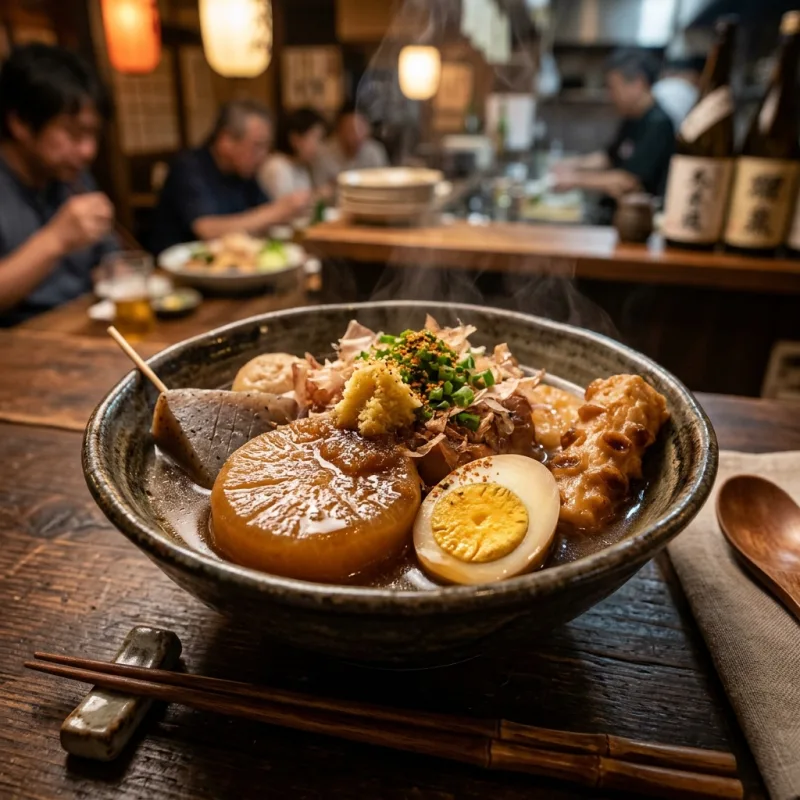
Himeji's culinary profile is defined by hearty local comfort fare and the bounty of the nearby Harima Sea. The signature regional dish is Himeji Oden, a savory simmer of daikon radish, fish cakes, and tofu distinguished by its serving style: coated in fragrant grated ginger mixed with rich soy sauce. Fresh seafood traditions thrive with anago (saltwater conger eel), served grilled over rice or as tempura. For morning dining, the city's unique cafe culture revolves around thick-cut toast spread with crushed almond butter, toasted until golden and caramelized.

Must Try Dish

Himeji Oden - A comforting hot pot of braised daikon, boiled eggs, and fish cakes served uniquely with sharp grated ginger in soy sauce.
Steaming bowl of traditional Himeji Oden with ginger soy sauce

Maya’s Final Checklist for Himeji

Logistics shouldn’t be the focus of your trip—the experience should. I’ve hand-vetted these essential partners to ensure your arrival, stay, and exploration are as smooth as an Athenian breeze.

Maya, the human travel expert at TravelingWiz, offering curated, non-AI expertise

Where to Stay

Compare accommodation options and choose a stay that suits your plans and budget.

Air Travel

Compare flight options and find a route that fits your plans.

Local Guides

Connect with local guides for personalized help planning and exploring.

Travel Protection

The “Engineer’s” rule: always have a backup. Secure your trip with a plan that covers every “what if” and unexpected change.

Car Rentals

Compare rental options and choose a car that suits your trip.

Visa Information

Don’t let paperwork slow you down. Get expert assistance with your application to ensure all your entry documents are in order.

FAQs

Direct Sanyo Shinkansen bullet trains reach Himeji Station from Shin-Osaka in approximately 30 minutes, and from Kyoto in about 45 to 55 minutes. Alternatively, JR Special Rapid services connect Osaka Station to Himeji in roughly 65 minutes without requiring a bullet train surcharge.
No. Wheeled suitcases and large backpacks are prohibited inside the historic main keep to protect original wooden structures. Coin lockers are available at Himeji Station and outside the castle ticketing pavilion.
The exterior grounds and lower baileys have paved ramps and gravel paths suitable for wheelchairs with assistance, but the interior of the main keep requires climbing six levels of steep wooden staircases with no elevators.

Your Insights Matter

TravelingWiz grows through the stories of our community. If you’ve recently explored ,Himeji share your tips and stories to help us perfect our guides for the next traveler.

Where should we send your offline card?

We hate spam just as much as you do

newsletter_consent *