Disclosure: This site contains affiliate links. We may earn a commission if you make a purchase, at no extra cost to you.

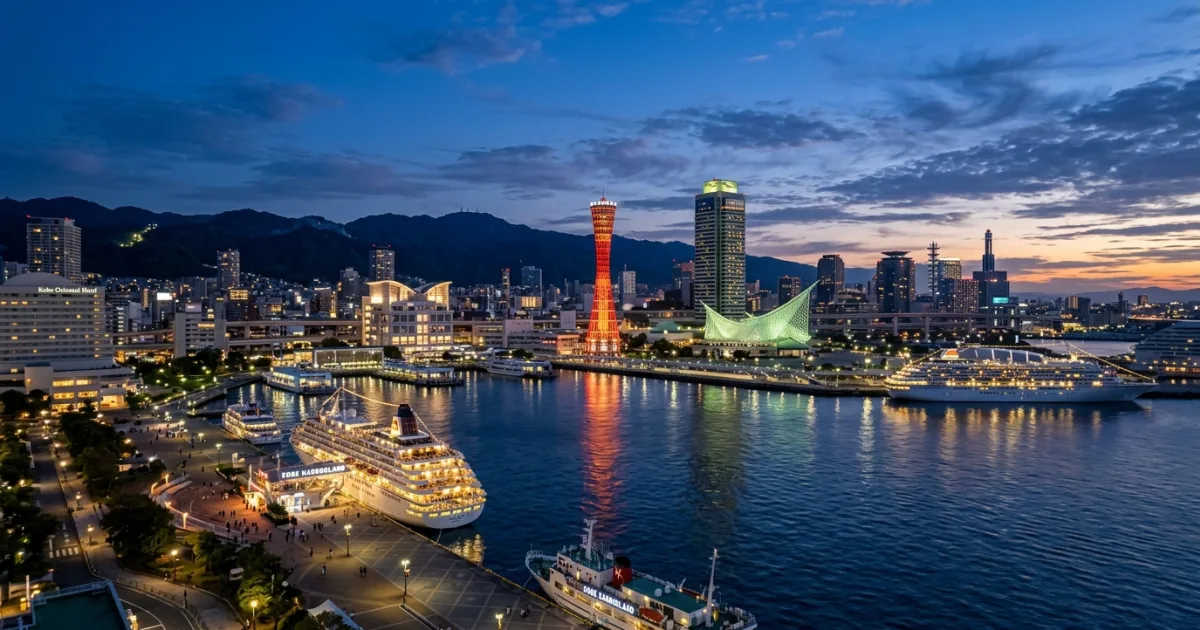
Panoramic sunset view of the Port of Kobe harbor with illuminated red Kobe Port Tower and Mount Rokko background

Kobe Overview & Key Highlights

Kobe is a dynamic Japanese port city situated between the Seto Inland Sea and the Rokko Mountain Range in Hyogo Prefecture. Renowned worldwide for its exquisitely marbled Tajima cattle beef, the city offers a cosmopolitan atmosphere shaped by its opening to foreign commerce in 1868. Visitors encounter preserved Western-style residences in Kitano-cho, bustling streets in Nankinmachi Chinatown, and an active maritime cultural hub across the revitalized harborfront. Beyond urban architecture and historic districts, Kobe provides quick access to Arima Onsen, one of Japan's oldest thermal spring resorts, tucked neatly behind Mount Rokko. Efficient cable cars and ropeways transport travelers from downtown high-rises to alpine botanical gardens and night observation decks overlooking Osaka Bay. The compact urban footprint allows seamless exploration via reliable rail networks, scenic harbor walkways, and historic sake brewing neighborhoods in the Nada district.

Kobe Travel Guide: Logistics & In-Depth Tips

Nestled snugly between Osaka Bay and the Rokko mountain range, Kobe serves as the capital of Hyogo Prefecture and one of Japan's most historic gateway cities. In the late 19th century, Kobe became one of the country's first ports opened to foreign commerce, fostering an architectural and culinary tapestry uncommon across Honshu. Western consuls, foreign merchants, and Chinese traders established permanent communities, leaving behind the picturesque Victorian and brick residences of the Kitano Ijinkan district and the lively pedestrian avenues of Nankinmachi.

Today, the city combines maritime commerce with serene natural retreats. Travelers can stroll the modern boardwalks of Harborland and Meriken Park before riding the Shin-Kobe Ropeway into the verdant Nunobiki Herb Gardens within minutes. Further over the crest of Mount Rokko lies Arima Onsen, a geothermally rich mountain sanctuary featuring mineral waters prized since the 8th century. With its compact layout and world-class rail connections, Kobe is an essential Japanese cultural and culinary crossroads.

Reasons to Visit

  • Savor certified, authentic A5 Tajima-strain Kobe beef prepared directly in front of you by master teppanyaki chefs.
  • Witness the '10 Million Dollar Night View' overlooking Osaka Bay from the peak of Mount Maya via the Maya Ropeway.
  • Relax in the mineral-rich gold (Kinsen) and silver (Ginsen) thermal waters of historic Arima Onsen.
  • Tour traditional wooden sake storehouses in Nada-Gogo, Japan's premier sake-producing district.
  • Explore the eclectic 19th-century foreign merchant residences preserved across the hillside Kitano-cho neighborhood.

Things to Avoid

  • Avoid assuming all beef labeled 'Wagyu' in tourist areas is certified Kobe beef; always verify the 10-digit tracking certificate and restaurant certification bronze seal.
  • Avoid planning your transit solely around Shin-Kobe Station for local sightseeing, as central shopping and nightlife cluster around Sannomiya Station.
  • Avoid skipping reservations for dinner at established teppanyaki houses, which routinely book out weeks in advance.
  • Avoid taking mountain cable cars during heavy storm alerts or dense fog, when visibility is severely reduced.

Local Transportation Tips

Kobe features one of the most accessible and interconnected public transit systems in Japan. The main urban transportation focal point is Sannomiya Station, which accommodates JR West, Hankyu Railway, Hanshin Main Line, Port Liner, and the Kobe Municipal Subway. The Shin-Kobe Station, situated roughly 1.5 kilometers north, serves the Sanyo Shinkansen bullet train network. For tourist routes between harbor attractions and hillside mansions, the green City Loop Bus provides hop-on, hop-off transit. Access to Mount Rokko and Mount Maya is facilitated by public city buses connecting directly to cable cars and ropeways.

Travel Etiquette

  • Stand on the right side of escalators in Kobe and the wider Kansai region (unlike Tokyo, where riders stand on the left).
  • Refrain from walking while eating street snacks in markets; finish food near the vendor's stall or dispose of trash properly.
  • Wash thoroughly before stepping into public onsen baths at Arima, and ensure your small towel never touches the communal water.
  • Tipping is not customary in Japanese restaurants, hotels, or taxis; polite gratitude is conveyed with a bow and verbal thanks.

Recommended Age Group

Kobe accommodates all generations with ease due to flat harbor promenades, high-efficiency transport, and diverse attractions.

  • Babies (0-2 years): Neutral. Most central stations and shopping centers feature elevators and nursing rooms, though hilly residential streets in Kitano require baby carriers rather than strollers.
  • Kids (3-12 years): Recommended. Harbor cruises, the Kobe Anpanman Children's Museum, animal interactions at Kobe Animal Kingdom, and scenic ropeway rides offer high entertainment value.
  • Teens (13-19 years): Recommended. Vibrant shopping along Motomachi, anime shops in Center Gai, delicious street food in Nankinmachi, and breathtaking skyline lookouts engage teenage travelers.
  • Adults (20-64 years): Recommended. Unrivaled gastronomic tours, historical brewery visits in Nada, architecture walking paths, and luxurious onsen retreats make the city ideal for adults.
  • Seniors (65+ years): Recommended. Exceptionally clean streets, widespread barrier-free access, gentle rail transit, and restorative hot springs cater smoothly to older travelers.

Accessibility Level: Medium

  • Kobe Municipal Subway stations, JR hubs, and the Port Liner are fully equipped with tactile paving, elevator access, and multi-purpose barrier-free restrooms.
  • The waterfront zones of Harborland and Meriken Park feature broad, flat pathways with minimal grade changes.
  • The hillside topography of Kitano-cho and Nunobiki waterfalls involves steep slopes and stone steps, which can present challenges for manual wheelchairs without vehicular assistance.

Did You Know?

Kobe's historic recovery following the devastating 1995 Great Hanshin-Awaji Earthquake transformed international earthquake-resistant engineering standards, a resilience commemorated at the Kobe Port Earthquake Memorial Park.

Cool Statistics

  • Kobe produces roughly 25% of Japan's domestic sake output within the Nada-Gogo district.
  • The summit of Mount Rokko stands at 931 meters above sea level, directly flanking the sea.
  • Arima Onsen is recognized as one of Japan's three oldest hot spring resorts, documented in the Nihon Shoki from 720 AD.


Address:

Kobe, Japan

Find Nearby Accommodations

Basic Info

address icon

COUNTRY & Region

Japan,
Asia

ACCESSIBILITY LEVEL​

Medium
Currency icon

LOCAL CURRENCY​

Japanese Yen (JPY)
Price level icon
Medium
Safety Level icon

SAFETY LEVEL

Duration icon

Recommended Duration

• 1-7 days
• Full day

Electricity

electricity icon

Electricity

100-110V, 
60Hz
Plug Socket icon

Plug Type

• Type A (Flat blade)
• Type B (Flat blade with grounding pin)
Plug types
Click To View Plug Types
Kobe is part of our
Solo Female Friendly collection

Activities To Do In Kobe

Best Time To Visit Kobe

Kobe experiences four distinct seasons, with spring and autumn offering optimal conditions for sightseeing and mountain exploration.

  • March to May: Mild weather with cherry blossoms blooming across Ikuta Shrine and Mount Maya; average highs range between 15°C and 23°C.
  • June to August: Humid and warm with temperatures reaching 32°C; excellent for evening bay cruises and summer harbor fireworks.
  • September to November: Crisp air and vibrant autumn foliage across the Rokko mountains; dry, sunny days ideal for walking tours.
  • December to February: Cool winter temperatures averaging 4°C to 10°C, perfect for soaking in Arima Onsen and viewing the historic Kobe Luminarie light displays.

Average Temperatures Per Month

Remember to check the weather forecast a few days before the trip and before heading to the airport.

Safety Level icon

Safety Level

Kobe is exceptionally safe with low rates of violent and petty crime. Standard awareness is advised in busy transit corridors like Sannomiya late at night. In the event of seismic activity, follow guidance from municipal transit workers and hotel staff, as Kobe possesses some of the most advanced disaster prevention infrastructure in the world.

The rating is based on multi-year peace, crime, and security indices. Before you go, always verify current conditions through official government travel advisories.

Emergency Numbers

Police: 110
Ambulance: 119

No internet needed • Includes local translations • Free for TravelingWiz readers

Spoken Languages

Japanese (primary); English is standard on transit signage and widely spoken at major hotels and tourist information centers.

Learn The Language

  • Konnichiwa — Hello
  • Arigatou gozaimasu — Thank you very much
  • Sumimasen — Excuse me / Pardon me
  • Kore o kudasai — Please give me this
  • Ikura desu ka? — How much is it?
  • Eigo ga hanasemasu ka? — Do you speak English?
  • O-kaikei o onegaishimasu — Check, please
  • Tasukete kudasai — Please help me
Travel Booking Partner - TravelingWiz

Trip Cost & Budgeting for Kobe, 2026

Everything you need to know about money while traveling
Is Kobe expensive for tourists in 2026? While not cheap, Kobe offers moderate prices compared to Tokyo. Expect to pay around 370 JPY for a cappuccino, 330 JPY for a draft beer, and 1,200 to 2,500 JPY for a standard restaurant meal. With these Human Verified prices, mid-range travelers can enjoy the city comfortably without overspending. Use the data table below to calculate your specific daily budget based on your travel style.
Currency icon

LOCAL CURRENCY​:

Japanese Yen (JPY)
Price level icon
Medium
Credit cards are widely accepted at hotels and major shops, but cash is essential for small eateries, shrines, and local buses.

Per person, per day – pocket cash for small purchases.

Local: 2100
Japanese Yen (JPY)
≈ 66 USD

Full daily spend estimation (accommodation, food, transportation, attractions).

Travel Style
Japanese Yen (JPY)
≈ USD ($)
Budget
11550
50
Mid-range
21000
110
Comfort
46200
250

The Prices, Daily costs, and calculator results are estimates for planning purposes only. Actual costs may vary based on season, booking timing, personal spending habits, and currency fluctuations. TravelingWiz cannot be held responsible for discrepancies between these estimates and your final trip expenses.

  • • Buy an ICOCA IC card for convenient pay-as-you-go travel on trains, subways, buses, and at convenience stores.
  • • Enjoy lunch set menus at Kobe beef restaurants to savor premium wagyu at a fraction of dinner prices.
  • • Purchase a Kobe City Bus and Subway 1-Day Pass if you plan to visit multiple city attractions in a day.
  • • Take advantage of tax-free shopping at department stores and pharmacies by presenting your passport at checkout.

Pre-Order Tickets

Avoid disappointment when tickets sell out — and skip the long lines by booking online in advance. You’ll often save up to 20% too.
Save up to 20%

Travel Discounts & Coupons

Save on hotels, attractions, transport, and gear — find verified discounts for smarter travel spending.
Verified Coupons

What To Pack

  • Slip-on walking shoes for frequent removal at shrines, ryokan, and traditional dining establishments
  • Lightweight layers and windproof outerwear for fluctuating temperatures between Mount Rokko summits and sea level
  • Portable power bank to support digital transport cards and continuous navigation
  • Compact umbrella or packable raincoat for sudden coastal or mountain showers
  • Small hand towel or washcloth, standard for Japanese public restrooms and hot spring visits
We couldn't find tips for Kobe.
If you got any, please share

Recommended Itineraries for Traveling to Kobe

We couldn't find itineraries for Kobe.
you can contact us for custom trip plan

Food & Drink Highlights

Local Food Overview

Kobe stands at the apex of Japanese gastronomic refinement, celebrated internationally for genuine Tajima-gyu beef graded A4 and A5 for its intricate marbling and melt-in-mouth texture. Beyond beef, the city's coastal position yields fresh seafood from the Akashi Strait, particularly sea bream and octopus. Kobe's century-old merchant history established an elite bakery and confectionery culture, home to renowned patisseries, European chocolatiers, and Western-style pork cutlets. The Nada-Gogo district accounts for nearly a quarter of Japan's sake production, fueled by mineral-rich Miyamizu spring water and Yamada Nishiki rice.
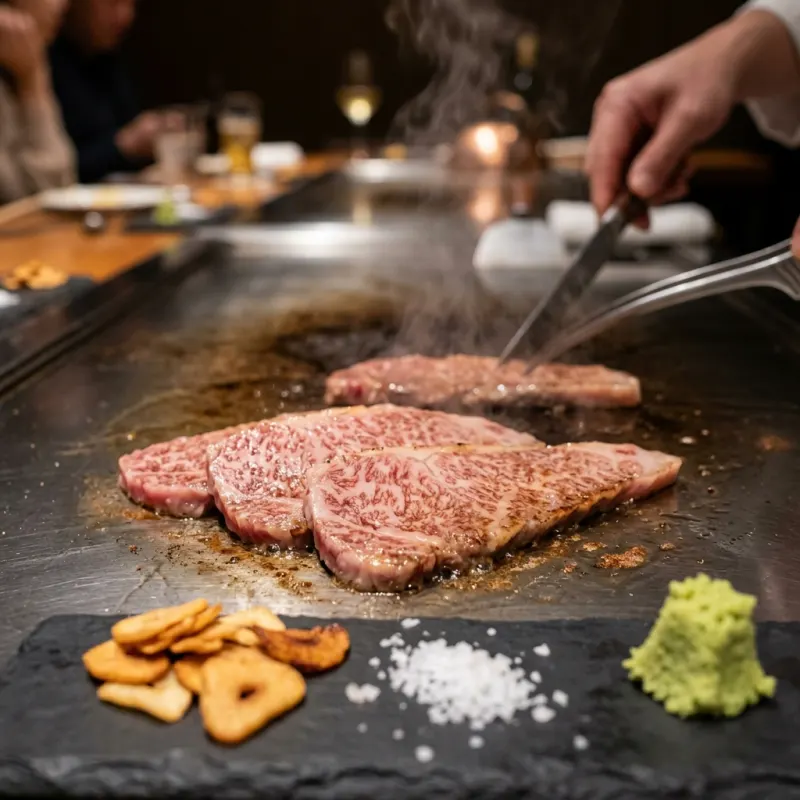
Sizzling slices of authentic Kobe beef on a hot teppanyaki iron griddle with garlic chips

Must Try Dish

Authentic Kobe Beef Teppanyaki - Premium cuts of Tajima-gyu beef are seared over a flat iron griddle alongside seasonal garlic chips, wasabi, and sea salt. The fat liquefies at human body temperature, producing an incomparable buttery tenderness and sweet umami finish.
Food Experiences Title Icon

Food
Experiences

Discover cooking classes, tastings and local food tours

No food experience found
Maya, the human travel expert at TravelingWiz, offering curated, non-AI expertise

Maya’s Final Checklist for Kobe

Logistics shouldn’t be the focus of your trip—the experience should. I’ve hand-vetted these essential partners to ensure your arrival, stay, and exploration are as smooth as an Athenian breeze.

Where to Stay

From boutique hotels to local apartments—compare thousands of options and find the perfect stay in the best neighborhood.

Air Travel

Getting there should be seamless. Compare the best routes and prices across top airlines to start your journey on the right note.

Local Guides

Connect with experts who know the destination best. Get personalized advice and insider tips to help you plan your perfect trip.

Travel Protection

The “Engineer’s” rule: always have a backup. Secure your trip with a plan that covers every “what if” and unexpected change.

Car Rentals

Explore at your own pace with total freedom. Compare reliable rental options and find the right vehicle for your adventure.

Visa Services

Don’t let paperwork slow you down. Get expert assistance with your application to ensure all your entry documents are in order.

FAQs

Kobe is easily reached via the JR Special Rapid service, taking approximately 21 minutes from Osaka Station to Sannomiya Station and roughly 50 minutes from Kyoto Station. The Shinkansen high-speed rail stops directly at Shin-Kobe Station.
Certified restaurants display a bronze statuette of a Tajima steer alongside a valid certificate of authenticity featuring the Japanese Chrysanthemum seal and a 10-digit individual cattle identification number.
While Kobe works well as a day trip from Osaka or Kyoto, staying one to two nights allows you to experience the Mount Maya nighttime panorama, explore Nada’s sake breweries, and relax at Arima Onsen.

Your Insights Matter

TravelingWiz grows through the stories of our community. If you’ve recently explored ,Kobe share your tips and stories to help us perfect our guides for the next traveler.

Related Articles

Check out our related articles and blog posts to learn even more about the destination.

No related articles found

Don’t Travel Alone

Share with your friends and family

Where should we send your offline card?

We hate spam just as much as you do

newsletter_consent *