Disclosure: This site contains affiliate links. We may earn a commission if you make a purchase, at no extra cost to you.
Yoshino

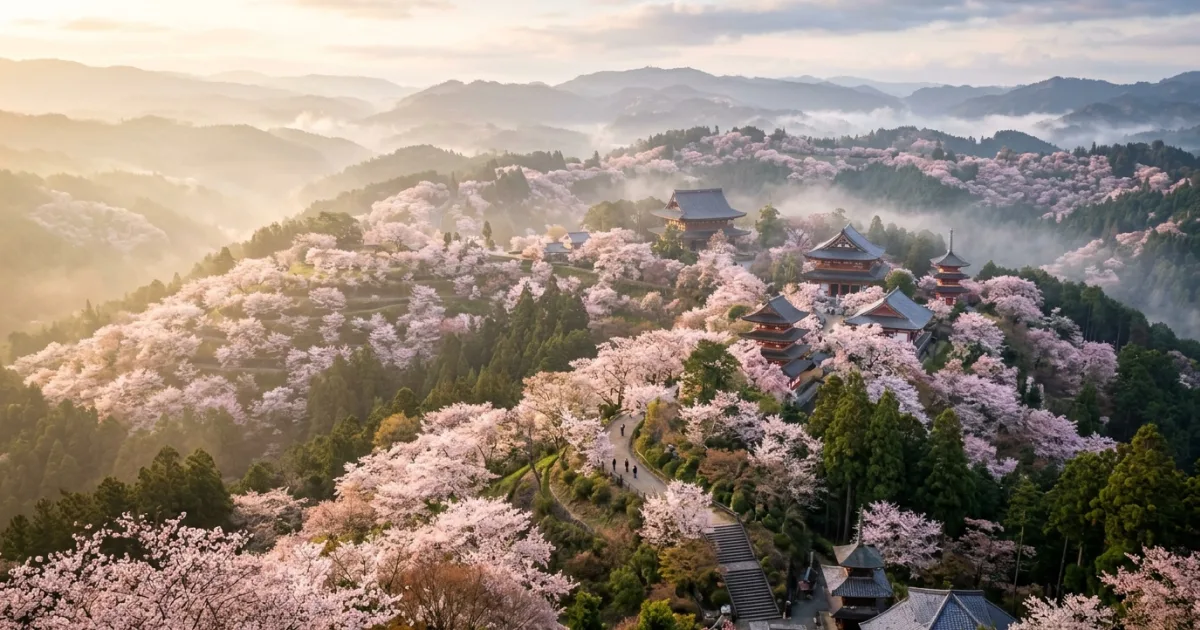
Panoramic view of Mount Yoshino covered in blooming pink cherry blossoms with historic temple pagodas

Basic Info

COUNTRY & Region

Japan,
Asia

ACCESSIBILITY LEVEL​

  • High: Widely accessible with good facilities for disabilities.
  • Medium: Some accessible options, but limitations exist.
  • Low: Limited accessibility; many barriers for disabilities.
Medium

LOCAL CURRENCY​

Japanese Yen (JPY)

Price Level

Low – budget‑friendly basics

Medium – moderate mid‑range costs

High – pricey lodging, dining & transport

Medium

SAFETY LEVEL

5 shields = Excellent – very low crime or conflict.

4 shields = Safe – low risk, routine care.

3 shields = Relatively safe – use normal street smarts.

2 shields = Use caution – higher crime or periodic unrest.

1 shields = Avoid – active conflict or extreme danger.

Scores are derived from multi-year peace, homicide and security indices blended into a single 1-to-5 scale.

Recommended Duration

1-7 days, Full day

Yoshino Overview & Key Highlights

Yoshino is a historic mountain town nestled in the heart of Nara Prefecture, renowned across Japan as the spiritual heartland of Shugendo mountain asceticism and the nation's premier cherry blossom destination. Over 30,000 wild mountain sakura trees cascade down the slopes of Mount Yoshino, divided into four distinct elevations—Shimo Senbon (lower), Naka Senbon (middle), Kami Senbon (upper), and Oku Senbon (inner)—creating a gradual blossoming display that unfolds across several weeks each spring. Beyond its seasonal flora, Yoshino forms a core section of the UNESCO World Heritage-designated 'Sacred Sites and Pilgrimage Routes in the Kii Mountain Range.' Visitors navigate steep forested ridges punctuated by sacred cedar groves, tranquil ryokan inns, and centuries-old architectural treasures like Kinpusen-ji, the grand headquarters of Shugendo featuring towering blue-skinned Zao Gongen deities. Autumn brings brilliant crimson foliage, while summer offers cool mountain breezes and lush bamboo thickets away from Kansai's sweltering plains. The town offers an authentic glimpse into classical Japanese spirituality, traditional craftwork, and time-honored mountain hospitality connected directly to Osaka and Kyoto via express train lines.

Yoshino Travel Guide: Logistics & In-Depth Tips

Yoshino sits majestically in the southern mountainous district of Nara Prefecture, functioning for over a millennium as one of Japan's most revered holy lands. The town's life revolves around Yoshinoyama, a continuous ridge running from the Yoshino River up into the rugged Omine range. According to legend, the 7th-century mystic En no Gyoja founded the syncretic religion of Shugendo here, carving images of the deity Zao Gongen into sacred mountain cherry wood. Consequently, chopping down cherry trees was forbidden, sparking the planting of thousands of saplings by devoted pilgrims over centuries.

Today, Yoshino harmonizes ancient spirituality with spectacular alpine scenery. Kinpusen-ji Temple's massive Zao-do hall dominates the skyline as the second-largest historic wooden structure in Japan, while Yoshimizu Shrine preserves historical connections to Emperor Godaigo and legendary warrior Minamoto no Yoshitsune. Beyond the bustling springtime bloom, Yoshino offers solitary forest hiking along the ancient Omine Okugakemichi trail, natural hot springs, and artisanal workshops dedicated to handmade Yoshino washi paper and cedar barrel crafts.

Reasons to Visit

  • Experience Japan's most legendary cherry blossom spectacle, featuring over 30,000 mountain sakura trees.
  • Explore UNESCO World Heritage sites including Kinpusen-ji, Yoshimizu Shrine, and Yoshino Mikumari Shrine.
  • Immerse yourself in authentic Shugendo spiritual heritage and ancient pilgrim walking routes.
  • Savor rare culinary traditions like authentic persimmon leaf sushi and freshly prepared Yoshino arrowroot sweets.
  • Escape the urban crowds of Kansai for tranquil ryokan stays overlooking misty forested ridges.

Things to Avoid

  • Avoid wearing smooth-soled or high-heeled shoes; the mountain roads are steep, uneven, and can get slick when wet.
  • Do not rely entirely on the ropeway during peak spring weekends, as queue times can exceed an hour; use walking trails or shuttle buses instead.
  • Avoid planning a spring blossom day trip without booking your express train tickets well in advance.
  • Do not pick or break cherry blossom branches or remove flora from the sacred mountain forest.

Local Transportation Tips

Yoshino Station serves as the primary gateway at the mountain base. From the station, the Yoshino Ropeway—Japan's oldest operational aerial ropeway—lifts passengers to the lower village ridge at Shimo Senbon. Local shuttle buses operate seasonally between the station and the middle and upper elevations (Naka Senbon and Kami Senbon). Most sightseeing within the historic sectors is accomplished on foot along a single winding, paved ridgeline road.

Travel Etiquette

  • Remove your shoes and place them in the provided shelves before stepping onto the wooden floorboards of any temple or shrine hall.
  • Turn off camera flashes and observe photography restrictions inside sacred prayer spaces, especially around holy statues.
  • Take all personal trash with you; public waste receptacles are scarce along mountain nature trails to preserve the biosphere.
  • Keep noise levels down in the early morning and late evening out of respect for residing temple monks and ryokan guests.

Recommended Age Group

Yoshino accommodates diverse travelers, but its mountainous terrain requires adequate mobility.

  • Babies (0-2 years): Not Recommended. Steep inclines, stone stairs, and crowded trails make stroller navigation nearly impossible.
  • Kids (3-12 years): Neutral. Children with stamina will enjoy the cable car and ropeway, but extensive uphill walking can lead to fatigue.
  • Teens (13-19 years): Recommended. Great for outdoor-oriented youth interested in hiking, anime-related folklore, photography, and samurai history.
  • Adults (20-64 years): Recommended. Ideal for cultural exploration, scenic day hikes, romantic ryokan getaways, and photography.
  • Seniors (65+ years): Neutral. Older travelers with good mobility will adore the cultural depth, though steep slopes demand frequent rest breaks or reliance on shuttle buses.

Accessibility Level: Medium

  • Yoshino Station has step-free platform access, but surrounding village routes climb steep mountainsides.
  • Kinpusen-ji and Yoshimizu Shrine involve historic gravel grounds, stone thresholds, and flighted staircases that present significant wheelchair barriers.
  • Seasonal accessible minibuses can transport mobility-impaired visitors to intermediate viewpoints, but independent wheelchair transit is challenging.

Did You Know?

Kinpusen-ji's main hall houses three 7-meter-tall statues of Zao Gongen that are stained deep lapis-lazuli blue to symbolize fierce, unyielding compassion. These hidden treasures are revealed to the public only during special exhibition periods throughout the year.

Cool Statistics

  • Home to approximately 30,000 mountain sakura trees spanning around 200 distinct varieties.
  • Features the second-largest historic wooden structure in Japan: the Zao-do Hall at Kinpusen-ji, standing 34 meters high.
  • Designated a UNESCO World Heritage site in 2004 under the 'Sacred Sites and Pilgrimage Routes in the Kii Mountain Range'.

Address:

Yoshino, Japan

Find Nearby Accommodations

Electricity

100-110V, 
60Hz

Plug Type

Type A (Flat blade), Type B (Flat blade with grounding pin)
Plug types
Click To View Plug Types
Yoshino is part of our
Slow Travel & Nature collection

Activities To Do In Yoshino

Best Time To Visit Yoshino

Yoshino transitions beautifully across four distinct mountain seasons, with visitation peaking during spring blossoms and autumn color transformations.

  • Spring (Late March to Mid-April): The legendary cherry blossom bloom progresses up the mountain; expect high visitor crowds, book accommodations months ahead.
  • Summer (June to August): Verdant lush greenery, misty morning mountain passes, and cooler temperatures than urban Kansai, complemented by seasonal fireflies.
  • Autumn (Late October to Late November): Breathtaking crimson and gold maple leaves sweep the hillsides with crisp, dry hiking weather.
  • Winter (December to February): Quiet, snow-dusted temple eaves, peaceful hot-spring soaking, and minimal tourist presence.

Average Temperatures Per Month

Average monthly temperaturesMonthly source values, with Celsius and Fahrenheit equivalents in the following data table.-5°23°5°41°15°59°25°77°35°95°JanJan: 4°C / 39°FFebFeb: 5°C / 41°FMarMar: 9°C / 48°FAprApr: 14°C / 57°FMayMay: 18°C / 64°FJunJun: 22°C / 72°FJulJul: 26°C / 79°FAugAug: 27°C / 81°FSepSep: 24°C / 75°FOctOct: 17°C / 63°FNovNov: 12°C / 54°FDecDec: 6°C / 43°F
View temperature data
Average monthly temperatures
Month°C°F
Jan439
Feb541
Mar948
Apr1457
May1864
Jun2272
Jul2679
Aug2781
Sep2475
Oct1763
Nov1254
Dec643

Remember to check the weather forecast a few days before the trip and before heading to the airport.

Safety Level

5 shields = Excellent – very low crime or conflict.

4 shields = Safe – low risk, routine care.

3 shields = Relatively safe – use normal street smarts.

2 shields = Use caution – higher crime or periodic unrest.

1 shields = Avoid – active conflict or extreme danger.

Scores are derived from multi-year peace, homicide and security indices blended into a single 1-to-5 scale.

Yoshino is exceptionally safe with negligible crime rates. The main considerations involve terrain: mountain paths can be slick during damp conditions, and walking along narrow roadside segments requires vigilance when shuttle buses pass.

The rating is based on multi-year peace, crime, and security indices. Before you go, always verify current conditions through official government travel advisories.

Emergency Numbers

Police: 110
Ambulance: 119

No internet needed • Includes local translations • Free for TravelingWiz readers

Spoken Languages

Japanese. English signage is present at major train stations and primary UNESCO temples, though limited in family-run shops.
Travel Booking Partner - TravelingWiz

Learn The Language

  • Konnichiwa – Hello
  • Arigatou gozaimasu – Thank you very much
  • Sumimasen – Excuse me / Pardon
  • Kore wa ikura desu ka? – How much is this?
  • Eigo ga hanasemasu ka? – Do you speak English?
  • Toire wa doko desu ka? – Where is the restroom?
  • O-kaikei kudasai – Check, please
  • Tasukete kudasai – Please help me

Trip Cost & Budgeting for Yoshino, 2026

Everything you need to know about money while traveling
Is Yoshino expensive for tourists in 2026? While peak cherry blossom season drives up lodging rates, Yoshino remains moderately priced for mid-range travelers overall. Expect to pay around 500 JPY for a cappuccino, 600 JPY for a domestic beer, and 1,500 JPY for a standard main meal. Our Human Verified prices show moderate daily costs outside peak festivals. Use the data table below to calculate your specific daily budget based on your travel style.

LOCAL CURRENCY​:

Japanese Yen (JPY)

Price Level:

Low – budget‑friendly basics

Medium – moderate mid‑range costs

High – pricey lodging, dining & transport

Medium

Cards Vs. Cash

Credit cards are accepted at hotels and major stations, but local shops, small eateries, and mountain buses require cash.

How Much Cash to Carry (on you)

Per person, per day – pocket cash for small purchases.

Local: 1650
Japanese Yen (JPY)
≈ 10 USD

Average Daily Costs (per person)

Full daily spend estimation (accommodation, food, transportation, attractions).

Travel Style
Japanese Yen (JPY)
≈ USD ($)
Budget
9100
57
Mid-range
16500
104
Comfort
36300
229
Note

The Prices, Daily costs, and calculator results are estimates for planning purposes only. Actual costs may vary based on season, booking timing, personal spending habits, and currency fluctuations. TravelingWiz cannot be held responsible for discrepancies between these estimates and your final trip expenses.

Best Value Tips

  • • Purchase a Kintetsu Rail Pass if traveling from Osaka or Kyoto to save on train transport to Yoshino.
  • • Try local specialties like Kakinoha-zushi (persimmon leaf sushi) at small lunch spots for an affordable meal.
  • • Visit during off-peak shoulder seasons to secure lower rates on local ryokan and traditional lodging.
  • • Charge an ICOCA or Suica IC card to pay convenient fares on regional trains and local vending machines.

Tours & Tickets

Explore tours, attractions, and ticket options to plan your visit.
Plan ahead

Travel Offers & Coupons

Browse travel offers and coupons from our affiliate partners.
Affiliate partner offers

What To Pack

  • Sturdy walking shoes or hiking boots with strong grip for steep asphalt grades and cobblestone paths
  • Layered clothing, as mountain temperatures fluctuate rapidly between ridge peaks and valleys
  • Lightweight rain shell or compact umbrella for sudden montane rain showers
  • Cash in Japanese Yen, as many traditional mountaintop tea houses and shrine counters do not accept cards
  • Small hand towel and slip-on footwear for frequent shoe removal at temple sanctuaries
Only the good stuff!
Browse recommended travel gear
Check out our free packing list tool

Recommended Itineraries for Traveling to Yoshino

Take your itinerary with you

Choose a ready-made itinerary, plan your own trip, and keep TravelingWiz by your side while you travel.

Get the TravelingWiz app

Food & Drink Highlights

Local Food Overview

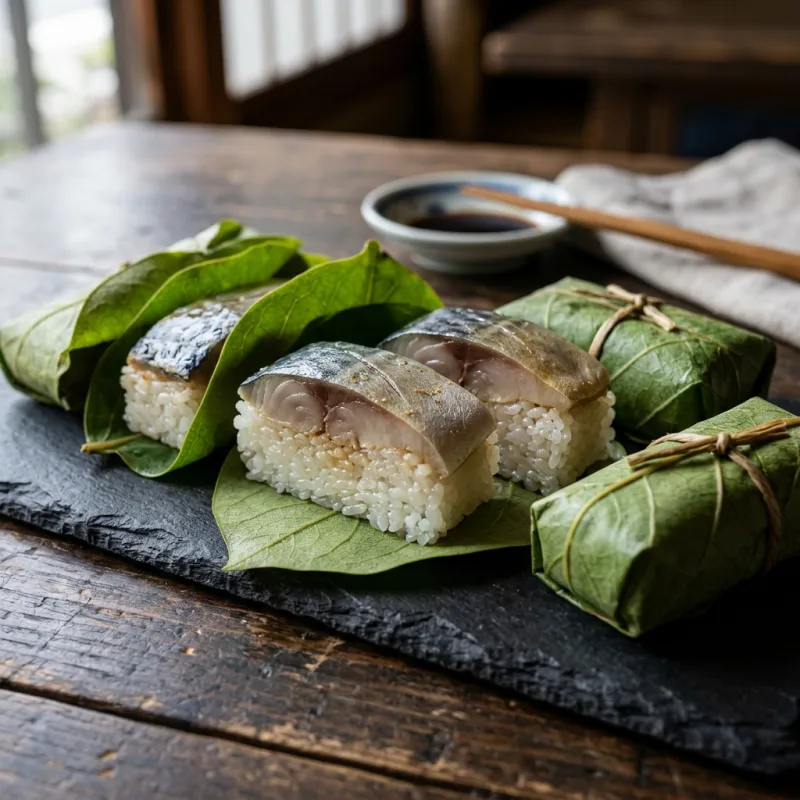
Yoshino's gastronomy reflects its deep mountain geography and ancient ascetic traditions. The local signature is Kaki-no-Ha Sushi, consisting of lightly cured mackerel or salmon pressed over vinegared rice and wrapped tightly in persimmon leaves for natural antibacterial preservation. Yoshino is also nationally famous for Yoshino Kuzu, a pure starch extracted from arrowroot used to craft translucent, silky noodles (kudzukiri) and delicate Wagashi sweets served alongside matcha tea. Mountain river fish like sweetfish (ayu) and wild edible mountain herbs (sansai) feature prominently in ryokan course meals.

Must Try Dish

Kaki-no-Ha Sushi - Cured mackerel or salmon nestled on fragrant seasoned rice, wrapped in wild persimmon leaves that impart a subtle earthy aroma. It is an ingenious centuries-old preservation delicacy historically carried by mountain travelers and monks.
Authentic Kaki-no-Ha sushi wrapped in natural persimmon leaves served on a slate tray

Maya’s Final Checklist for Yoshino

Logistics shouldn’t be the focus of your trip—the experience should. I’ve hand-vetted these essential partners to ensure your arrival, stay, and exploration are as smooth as an Athenian breeze.

Maya, the human travel expert at TravelingWiz, offering curated, non-AI expertise

Where to Stay

Compare accommodation options and choose a stay that suits your plans and budget.

Air Travel

Compare flight options and find a route that fits your plans.

Local Guides

Connect with local guides for personalized help planning and exploring.

Travel Protection

The “Engineer’s” rule: always have a backup. Secure your trip with a plan that covers every “what if” and unexpected change.

Car Rentals

Compare rental options and choose a car that suits your trip.

Visa Information

Don’t let paperwork slow you down. Get expert assistance with your application to ensure all your entry documents are in order.

FAQs

Take the Kintetsu Railway Limited Express directly from Osaka-Abenobashi Station straight to Yoshino Station in about 75 minutes. From Kyoto, take the Kintetsu Limited Express, transferring at Kashiharajingu-mae, which takes around 100 minutes total.
Peak bloom generally occurs from late March through mid-April. Because of the elevation difference between the four tiers (Shimo, Naka, Kami, and Oku Senbon), the blooming window lasts longer than in lowland cities like Kyoto or Tokyo.
Yes, Yoshino is a straightforward day trip from Osaka, Nara City, or Kyoto. However, staying overnight in a traditional ryokan allows you to enjoy early morning temple walks without day-tripper crowds.

Your Insights Matter

TravelingWiz grows through the stories of our community. If you’ve recently explored ,Yoshino share your tips and stories to help us perfect our guides for the next traveler.

Where should we send your offline card?

We hate spam just as much as you do

newsletter_consent *