Disclosure: This site contains affiliate links. We may earn a commission if you make a purchase, at no extra cost to you.

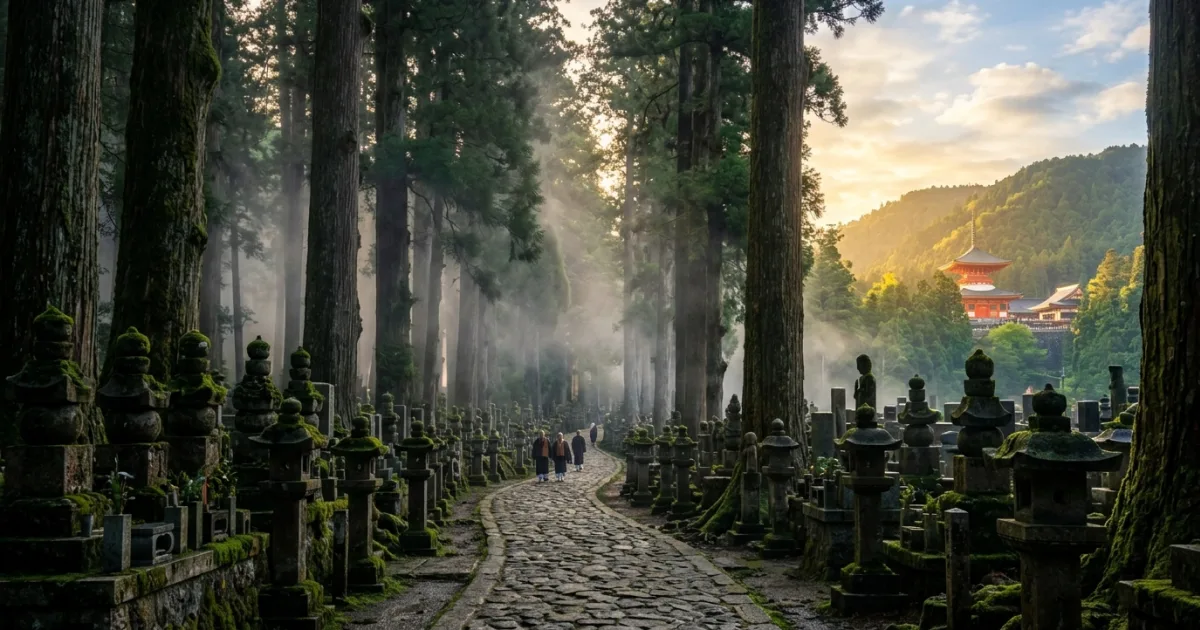
Ancient stone lanterns and towering cedar trees lining the mist-veiled sacred path of Mount Koya in Wakayama Japan

Mount Koya Overview & Key Highlights

Mount Koya stands as the secluded spiritual epicenter of Shingon Esoteric Buddhism, situated on an 800-meter-high alpine plateau surrounded by eight forested peaks in northern Wakayama Prefecture. Established in 816 CE by the monk Kobo Daishi (Kukai), this sacred settlement comprises over one hundred active temples, including the grand administrative head temple of Kongobuji and the sacred Danjo Garan precinct. Towering Japanese cedar trees shade Okunoin, Japan's largest cemetery, where more than two hundred thousand stone monuments and mausoleums lead toward Kobo Daishi's eternal resting place. Visitors ascend the mountain primarily to experience shukubo, an authentic temple lodging practice offering overnight stays in serene monastery sub-temples. Guests partake in elaborate multi-course Shojin Ryori vegetarian dining, participate in dawn chanting ceremonies, and attend the esoteric Goma fire ritual. Beyond its profound spiritual architecture, Mount Koya functions as a tranquil alpine sanctuary with cool highland summers, vibrant maple foliage in autumn, and snow-dusted pagodas through winter, delivering an atmospheric immersion into classical Japanese religious tradition.

Mount Koya Travel Guide: Logistics & In-Depth Tips

Mount Koya, known locally as Koyasan, is an ancient monastic complex perched atop a highland basin 800 meters above sea level in Wakayama Prefecture. Founded in 816 CE by the monk Kukai (posthumously revered as Kobo Daishi), the settlement serves as the world headquarters of the Shingon sect of Esoteric Buddhism. The geography of the plateau, encircled by eight mountain ridges resembling the petals of an unfolding lotus flower, was selected specifically to cultivate profound spiritual contemplation and monastic discipline.

Over twelve centuries, Mount Koya evolved into a sprawling religious settlement featuring 117 active temples, world-class historic art collections, and Japan's most sacred necropolis, Okunoin. A designated component of the UNESCO World Heritage Site 'Sacred Sites and Pilgrimage Routes in the Kii Mountain Range', the town seamlessly blends vibrant timber pagodas such as the vermilion Konpon Daito with contemplative dry-landscape Zen gardens like the Banryutei at Kongobuji. It offers visitors rare firsthand access to living Buddhist rituals, meditative monastic life, and pristine Japanese cedar forests.

Reasons to Visit

  • Authentic Shukubo Temple Lodging: Experience overnight hospitality within historic sub-temples, waking to solemn morning sutra chanting and hypnotic Goma fire ceremonies.
  • Atmospheric Okunoin Cemetery: Stroll beneath towering centuries-old cryptomeria trees past two hundred thousand moss-covered stone stupas marking the path to Kobo Daishi's mausoleum.
  • Exquisite Shojin Ryori Cuisine: Taste masterfully executed Buddhist vegetarian gastronomy emphasizing seasonal mountain roots, wild herbs, and handmade Goma-dofu.
  • Danjo Garan Sacred Compound: Marvel at the towering Konpon Daito, a monumental two-tiered vermilion stupa enshrining cosmic representations of the Dainichi Nyorai Buddha.
  • Pilgrimage Heritage: Hike sections of the ancient Choishi Michi trail or Kumano Kodo connector paths walked by emperors, samurai, and monks for over a millennium.

Things to Avoid

  • Avoid walking on tatami mats while wearing outdoor shoes or indoor slippers; step only in clean socks or bare feet.
  • Do not photograph, film, or consume food past the Gobyo-bashi bridge at Okunoin, which marks the entrance to Kobo Daishi's sacred mausoleum grounds.
  • Avoid arriving late for shukubo check-in; temple lodgings adhere strictly to precise evening dinner hours (typically 5:30 PM to 6:00 PM) and morning wake-up calls.
  • Do not rely entirely on cashless payment methods; local mountain buses and small temple stalls frequently require physical yen coins and small notes.
  • Avoid loud talking or phone calls in temple corridors, where paper shoji partitions transmit sound easily across guest quarters.

Local Transportation Tips

Navigating Mount Koya is straightforward via the town's efficient Nankai Rinkan bus network, which links Koyasan Cable Car Station with central areas including Senjuinbashi, Danjo Garan, and the Okunoin bus stop. Buses depart every 15-30 minutes and align with incoming cable car arrivals. Walking between central sights is pleasant and pedestrian-friendly, with the flat main thoroughfare measuring roughly 3 kilometers from end to end. Private vehicles face limited parking during peak autumn weekends, making public transport the optimal choice.

Travel Etiquette

  • Bow gently when entering temple grounds and when greeting monastic hosts or fellow pilgrims.
  • Keep voices low throughout temple corridors, particularly during evening hours and early morning services.
  • At temple purification basins (chozuya), rinse hands and mouth respectfully using the wooden ladle without drinking directly from it.
  • Wear quiet, modest clothing covering your shoulders and legs when entering prayer sanctuaries or cemetery grounds.

Recommended Age Group

Mount Koya is a contemplative cultural and spiritual sanctuary that best suits mature travelers capable of appreciating quiet reflection, traditional etiquette, and historic walking routes.

  • Babies (0-2 years): Not Recommended. Traditional temple lodgings feature thin paper shoji partitions, shared wooden corridors, and silent morning meditation schedules that make managing infant crying challenging, while stone trails and staircases are ill-suited for strollers.
  • Kids (3-12 years): Neutral. Older children with an interest in samurai history, lantern-lit night walks, and nature trails may enjoy the excursion, though strict temple silence and strictly vegetarian dining may present hurdles for picky eaters.
  • Teens (13-19 years): Neutral. Ideal for teens intrigued by Japanese history, martial arts lore, photography, or anime cultural roots, provided they are comfortable sleeping on futons and forgoing bustling entertainment.
  • Adults (20-64 years): Recommended. Perfect for cultural travelers, solo explorers, couples, and hikers seeking deep historical context, world-class architecture, and meditative wellness.
  • Seniors (65+ years): Recommended. Highly rewarding for mature travelers interested in heritage, scenic nature, and slow travel, though individuals with mobility constraints should note that traditional accommodations require sitting on the floor and ascending occasional steep temple stairs.

Accessibility Level: Medium

  • Major central temples including Kongobuji have installed wheelchair ramps at select entrance halls, though historical wooden thresholds and high door ledges remain common throughout.
  • The paved central avenue and sections of Okunoin up to the Ichinohashi entrance are relatively flat, but the older forested cemetery paths feature uneven flagstones, moss, and stone steps.
  • Local Nankai Rinkan buses operating between Koyasan Station and town centers feature low-floor boarding accessible for manual wheelchairs.
  • Temple shukubo accommodations predominantly require sleeping on floor futons and walking up internal wooden staircases, though a small number of modernised lodgings now offer barrier-free Western-style twin bed suites upon advance request.

Did You Know?

According to Shingon Buddhist doctrine, Kobo Daishi did not die when he entered his mausoleum at Okunoin in 835 CE; rather, he entered 'Nyujo'—a state of eternal meditative absorption to pray for the liberation of all beings. Every single day for over a thousand years, head monks have ritually prepared two elaborate meals at the Goma-do kitchen and transported them in a sealed wooden box to his tomb during the sacred Shojingu ceremony.

Cool Statistics

  • 117: Number of active Buddhist temples surviving on the mountain plateau today
  • 200,000+: Ancient and modern stone monuments, moss-laden graves, and memorial stupas in Okunoin
  • 800 meters: Elevation of the mountain basin above sea level, creating a cool microclimate
  • 816 CE: Year the sacred sanctuary was officially sanctioned by Emperor Saga for Kobo Daishi
  • 2 kilometers: Length of the central stone-paved path stretching through Okunoin forest to the mausoleum


Address:

Mount Koya, Koya-cho, Ito-gun, Wakayama Prefecture, Japan

Find Nearby Accommodations

Basic Info

address icon

COUNTRY & Region

Japan,
Asia

ACCESSIBILITY LEVEL​

Medium
Currency icon

LOCAL CURRENCY​

Japanese Yen (JPY)
Price level icon
High
Safety Level icon

SAFETY LEVEL

Duration icon

Recommended Duration

• Overnight
• 1-7 days

Electricity

electricity icon

Electricity

100-110V, 
60Hz
Plug Socket icon

Plug Type

• Type A (Flat blade)
• Type B (Flat blade with grounding pin)
Plug types
Click To View Plug Types
Mount Koya is part of our
Coolcation collection

Activities To Do In Mount Koya

Best Time To Visit Mount Koya

Mount Koya experiences a cool mountain climate characterized by crisp air, distinct seasonal foliage, and heavy alpine mist.

  • Spring (April to May): Comfortable daytime temperatures hovering around 12°C to 18°C, bringing weeping cherry blossoms to temple courtyards and fresh greenery across cedar groves.
  • Summer (June to August): Pleasantly cool refuge from Kansai's stifling plains, though July brings higher humidity and seasonal rainfall.
  • Autumn (October to mid-November): The premier season for vivid scarlet and golden maple leaves framing Danjo Garan and Kongobuji, with crisp daytime temperatures dropping sharply after sunset.
  • Winter (December to March): Quiet and contemplative with periodic snowfall transforming Okunoin cemetery into a monochrome landscape; temple rooms rely on traditional kerosene heaters.

Average Temperatures Per Month

Remember to check the weather forecast a few days before the trip and before heading to the airport.

Safety Level icon

Safety Level

Mount Koya exhibits an exceptionally low crime rate with virtually non-existent violent offenses. The primary safety concerns are environmental: stone walkways through Okunoin cemetery become slick when wet or moss-covered, requiring sturdy footwear. Temple corridors feature low doorframes and steep polished wooden stairs that demand careful foot placement. When exploring cemetery paths after dusk, carry a pocket torch or ensure your mobile phone battery is charged to avoid tripping over exposed cedar roots.

The rating is based on multi-year peace, crime, and security indices. Before you go, always verify current conditions through official government travel advisories.

Emergency Numbers

Police: 110
Ambulance: 119

No internet needed • Includes local translations • Free for TravelingWiz readers

Spoken Languages

Japanese (Standard & Kansai dialect). Basic English is spoken by monks at major shukubo and at the Koyasan Tourist Information Centers.

Learn The Language

  • Konnichiwa — Hello / Good afternoon
  • Arigatou gozaimasu — Thank you very much
  • Sumimasen — Excuse me / Pardon
  • O-negai shimasu — Please
  • Kore wa ikura desu ka? — How much is this?
  • Shojin ryori wa doko desu ka? — Where can I find Buddhist vegetarian cuisine?
  • O-tearai wa doko desu ka? — Where is the restroom?
  • Sayounara — Goodbye
Travel Booking Partner - TravelingWiz

Trip Cost & Budgeting for Mount Koya, 2026

Everything you need to know about money while traveling
Is Mount Koya expensive for tourists in 2026? Yes, Mount Koya is relatively high cost compared to standard Japanese towns, mainly due to sought-after temple lodgings. Travelers can expect to pay around 550 JPY for a coffee, 650 JPY for a pint of beer, and 2,000 JPY for a mid-range lunch meal. Our Human Verified prices show that accommodation and unique vegetarian cuisine drive up daily expenses. Use the data table below to calculate your specific daily budget based on your travel style.
Currency icon

LOCAL CURRENCY​:

Japanese Yen (JPY)
Price level icon
High
Major temple stays accept credit cards, but cash is needed for small souvenir shops, bus fares, and temple entry.

Per person, per day – pocket cash for small purchases.

Local: 2150
Japanese Yen (JPY)
≈ 67 USD

Full daily spend estimation (accommodation, food, transportation, attractions).

Travel Style
Japanese Yen (JPY)
≈ USD ($)
Budget
11850
60
Mid-range
21500
150
Comfort
47300
300

The Prices, Daily costs, and calculator results are estimates for planning purposes only. Actual costs may vary based on season, booking timing, personal spending habits, and currency fluctuations. TravelingWiz cannot be held responsible for discrepancies between these estimates and your final trip expenses.

  • • Buy the Nankai Koyasan World Heritage Ticket for discounted round-trip rail, cable car, and unlimited local bus transport.
  • • Opt for lunch-only Shojin Ryori set menus at local cafes if overnight temple stay pricing exceeds your accommodation budget.
  • • Withdraw sufficient yen before heading up the mountain as foreign ATM access can be limited in Mount Koya.
  • • Explore the extensive free areas of Okunoin Cemetery and temple precincts early in the morning to skip admission fees.

Pre-Order Tickets

Avoid disappointment when tickets sell out — and skip the long lines by booking online in advance. You’ll often save up to 20% too.
Save up to 20%

Travel Discounts & Coupons

Save on hotels, attractions, transport, and gear — find verified discounts for smarter travel spending.
Verified Coupons

What To Pack

  • Slip-on walking shoes for effortless removal at temple thresholds and verandas
  • Thick, comfortable socks for walking across unheated wooden temple floors and tatami mats
  • Warm layering clothing such as a fleece or light down jacket, as mountain temperatures remain 5-8°C cooler than Osaka year-round
  • Modest, respectful attire covering shoulders and knees for temple sanctuaries and cemetery grounds
  • Compact umbrella or waterproof shell for frequent mountain mist and sudden alpine showers
  • Small portable cash pouch, as several smaller shrines, bus lines, and heritage stalls operate cash-only
We couldn't find tips for Mount Koya.
If you got any, please share

Recommended Itineraries for Traveling to Mount Koya

We couldn't find itineraries for Mount Koya.
you can contact us for custom trip plan

Food & Drink Highlights

Local Food Overview

Dining on Mount Koya is intrinsically anchored in Shojin Ryori, the centuries-old vegetarian culinary tradition of Buddhist monks designed to nourish body and mind without harming sentient beings. Prepared strictly without meat, fish, garlic, onions, or other pungent root aromatics, dishes rely on seasonal mountain vegetables (sansai), konjac, edible wild mushrooms, and soy derivatives. Mount Koya is particularly famous for its artisanal Goma-dofu (velvety sesame curd ground by hand with mineral water and arrowroot) and Koya-dofu (freeze-dried sponge tofu prized for absorbing aromatic kombu kelp broths). Local confectioneries also craft delicate sweet bean cakes and roasted sesame crackers served alongside steaming bowls of ceremonial matcha.
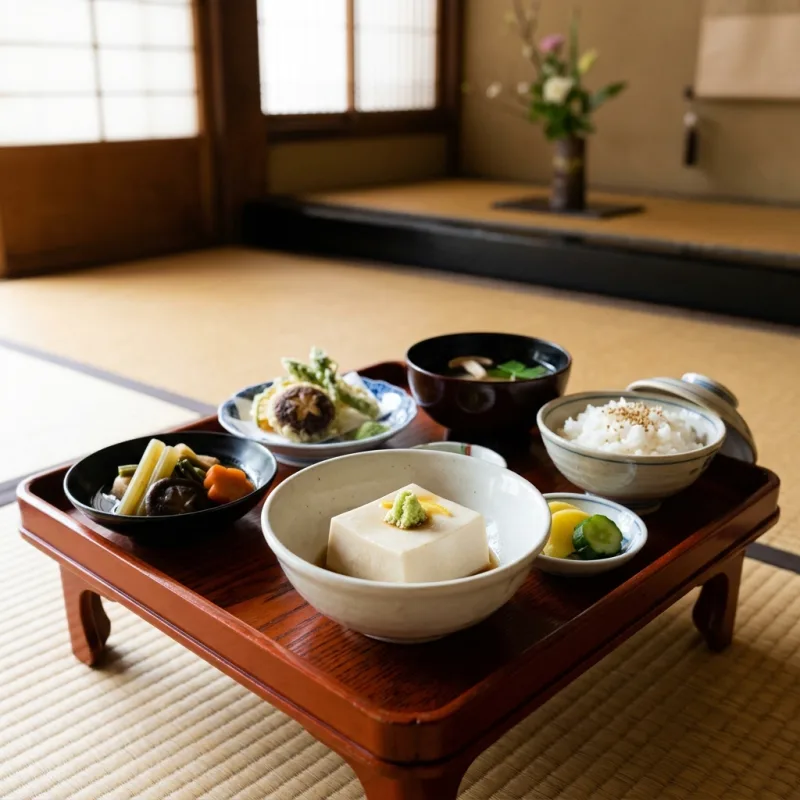
Authentic Japanese Shojin Ryori Buddhist vegetarian cuisine set served on red lacquer trays at a Mount Koya temple

Must Try Dish

Shojin Ryori Goma-Dofu Set — A ceremonial multi-course Buddhist meal anchored by silky homemade sesame tofu garnished with freshly grated wasabi and sweet soy dashi. Accompanied by seasonal tempura wild mountain herbs, simmered freeze-dried Koya-dofu, and pickled daikon, it provides an exquisite balance of delicate earthy flavors.
Food Experiences Title Icon

Food
Experiences

Discover cooking classes, tastings and local food tours

No food experience found
Maya, the human travel expert at TravelingWiz, offering curated, non-AI expertise

Maya’s Final Checklist for Mount Koya

Logistics shouldn’t be the focus of your trip—the experience should. I’ve hand-vetted these essential partners to ensure your arrival, stay, and exploration are as smooth as an Athenian breeze.

Where to Stay

From boutique hotels to local apartments—compare thousands of options and find the perfect stay in the best neighborhood.

Air Travel

Getting there should be seamless. Compare the best routes and prices across top airlines to start your journey on the right note.

Local Guides

Connect with experts who know the destination best. Get personalized advice and insider tips to help you plan your perfect trip.

Travel Protection

The “Engineer’s” rule: always have a backup. Secure your trip with a plan that covers every “what if” and unexpected change.

Car Rentals

Explore at your own pace with total freedom. Compare reliable rental options and find the right vehicle for your adventure.

Visa Services

Don’t let paperwork slow you down. Get expert assistance with your application to ensure all your entry documents are in order.

FAQs

Take the Nankai Koya Line express train from Osaka’s Namba Station to Gokurakubashi Station (approximately 90 minutes). From Gokurakubashi, board the Koyasan Cable Car for a scenic five-minute mountain ascent to Koyasan Station, followed by a dedicated local bus into the town center.
A shukubo is an authentic overnight stay in an active Buddhist monastery. Guests sleep on futons laid out over traditional tatami straw mats, dine on multi-course Shojin Ryori vegetarian cuisine served in their room or a communal hall, and are invited to join dawn sutra chanting and esoteric fire rituals.
Yes, walking the stone-paved path of Okunoin after sunset is considered peaceful and spiritual. The trail is illuminated by stone lanterns (toro), though visitors must remain on marked paths, keep noise to a minimum, and refrain from photography or eating within the sacred inner precinct beyond Gobyo-bashi bridge.
No. Footwear must be removed at the genkan entrance of every temple and shukubo. Slippers are provided for walking along wooden corridors, but only bare or sock-covered feet are permitted on tatami mats.

Your Insights Matter

TravelingWiz grows through the stories of our community. If you’ve recently explored ,Mount Koya share your tips and stories to help us perfect our guides for the next traveler.

Related Articles

Check out our related articles and blog posts to learn even more about the destination.

No related articles found

Don’t Travel Alone

Share with your friends and family

Where should we send your offline card?

We hate spam just as much as you do

newsletter_consent *